Resistance Through Art III: Remembering Roma Resistance and Celebrating Five Years of „Starea Romilor” (Roma Status) in Bucharest, Romania
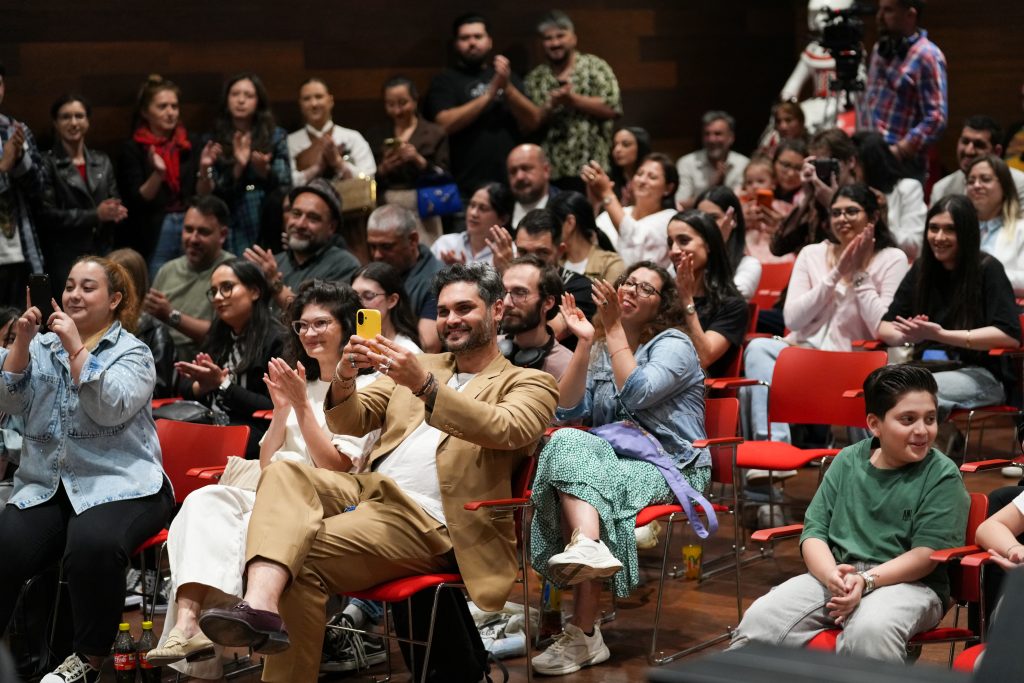
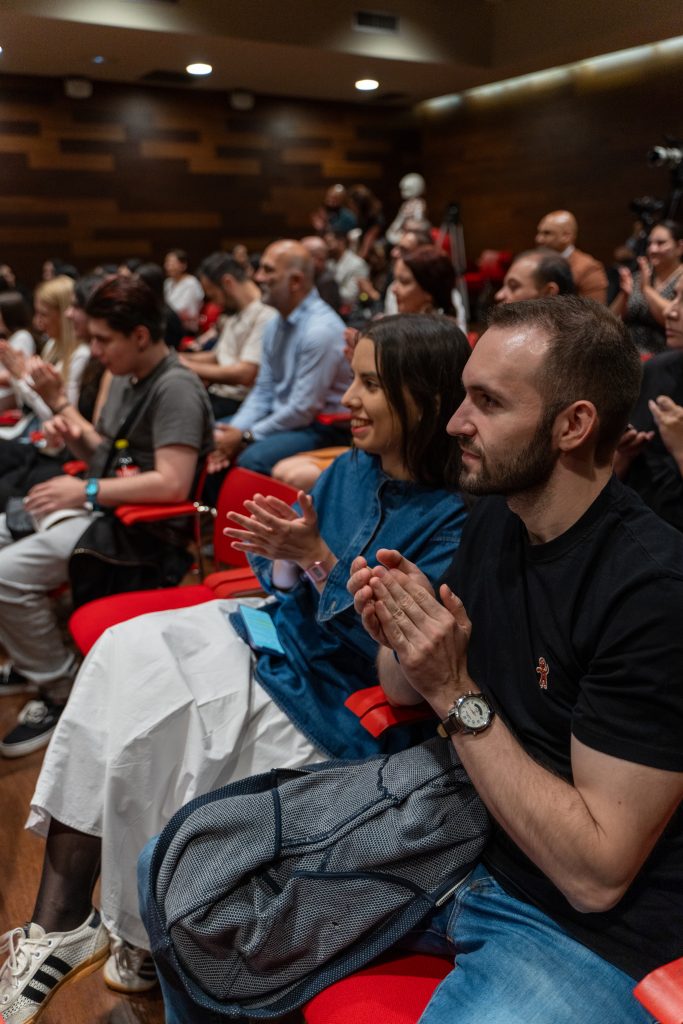
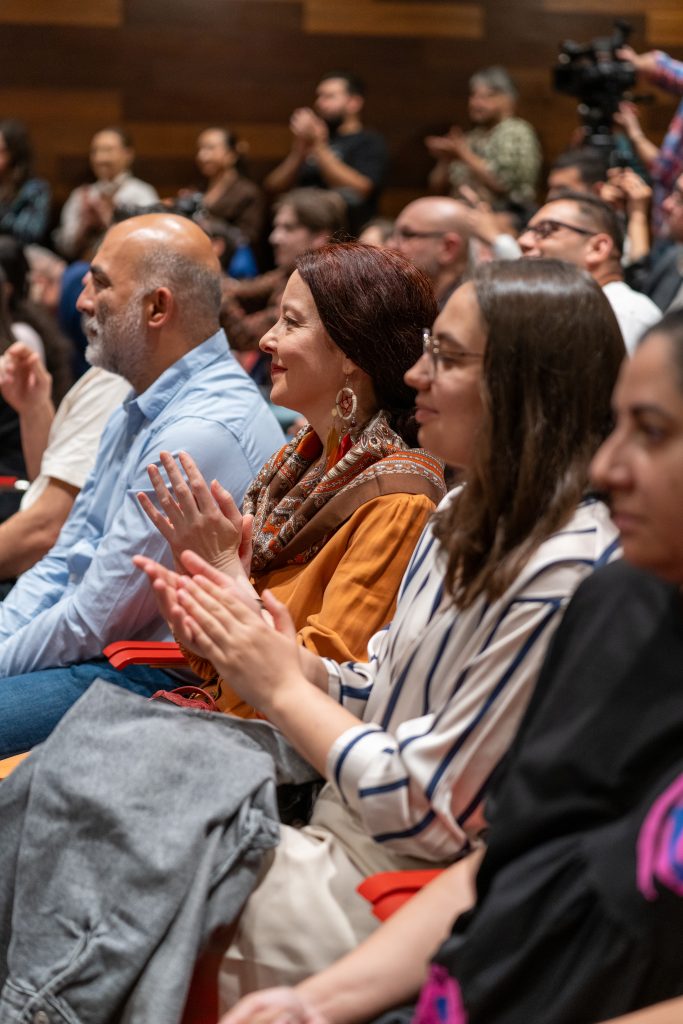
On May 15, the third edition of Resistance Through Art event transformed the Cervantes Institute into a space of remembrance, reflection, and cultural expression, bringing together artists, civic leaders, institutions, and members of the community to mark Roma Resistance Day and celebrate five years of activity of the “Roma Status” digital platform and community.
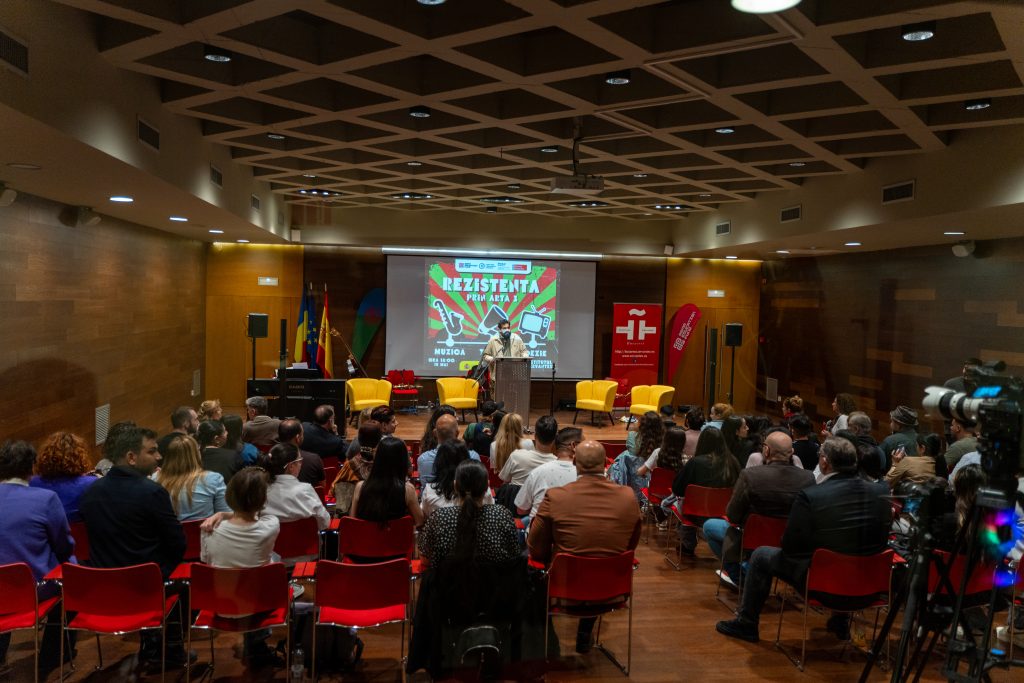
Organized by REF Romania and Roma Status digital platform in partnership with Cervantes Institute in Bucharest, European Roma Institute for Arts and Culture – ERIAC Romania and Roma for Democracy Romania, the event explored how memory, culture, and public engagement continue to shape contemporary forms of Roma resistance. Through artistic interventions, poetry, visual arts, and music, the event created a dialogue between past and present.
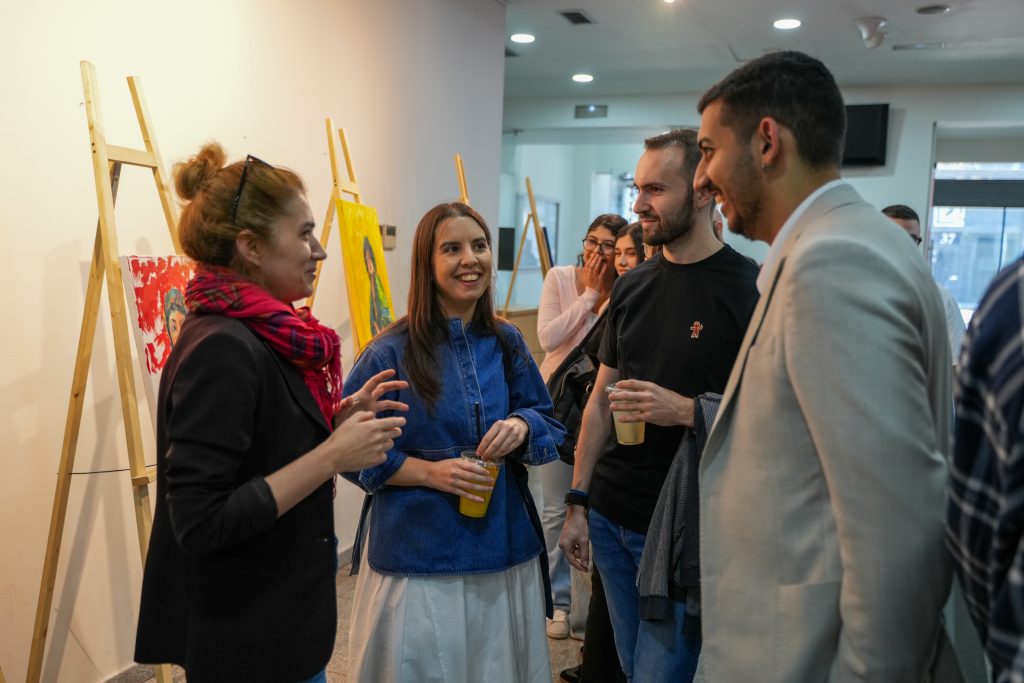
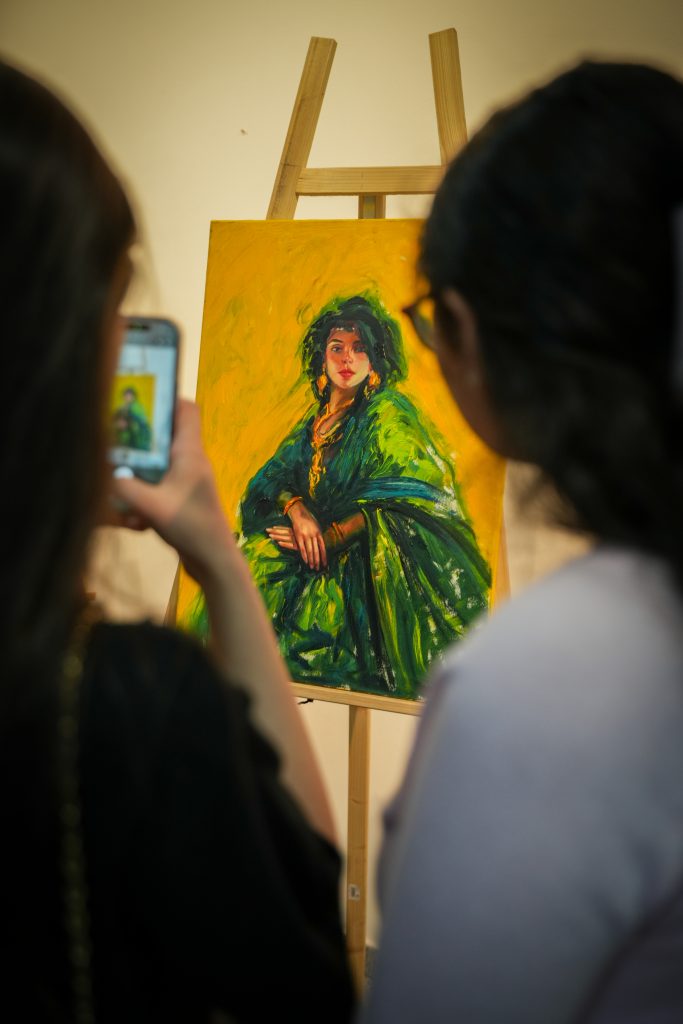
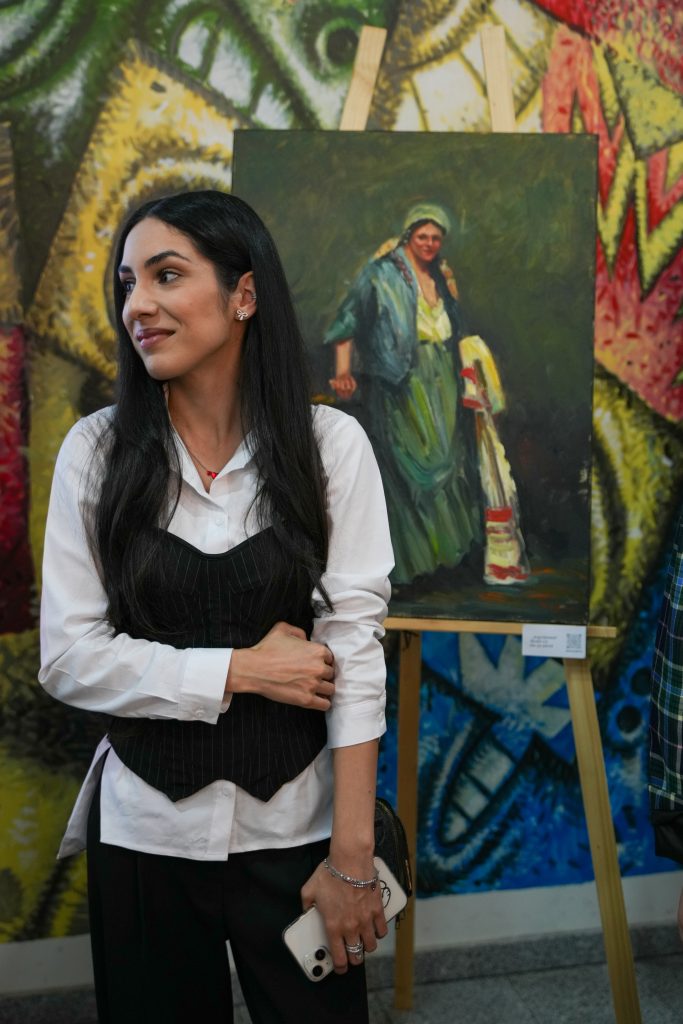
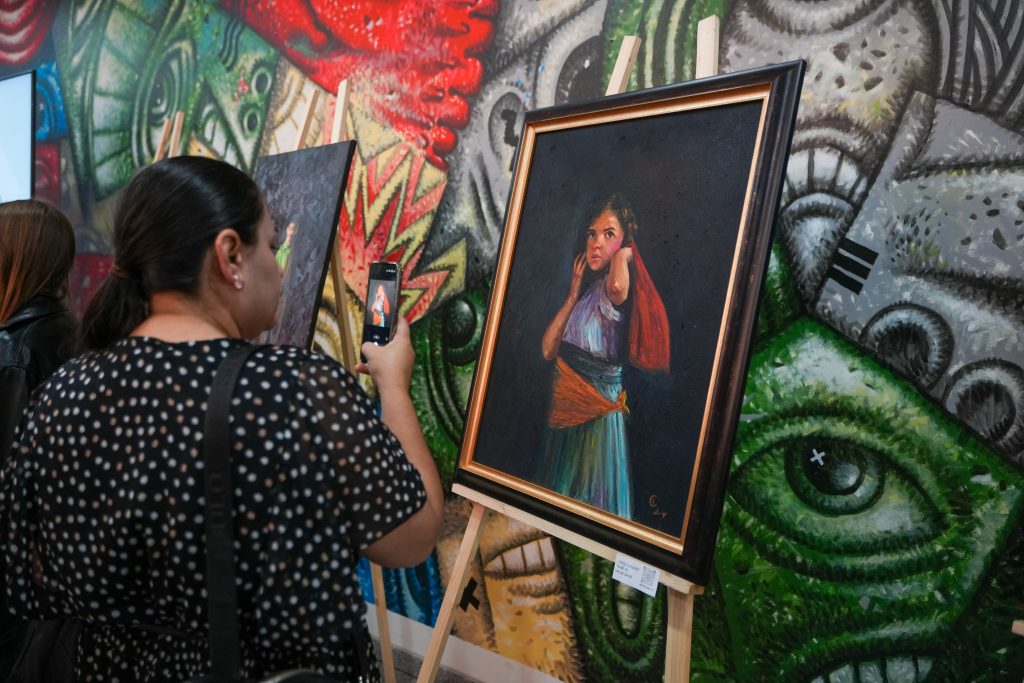
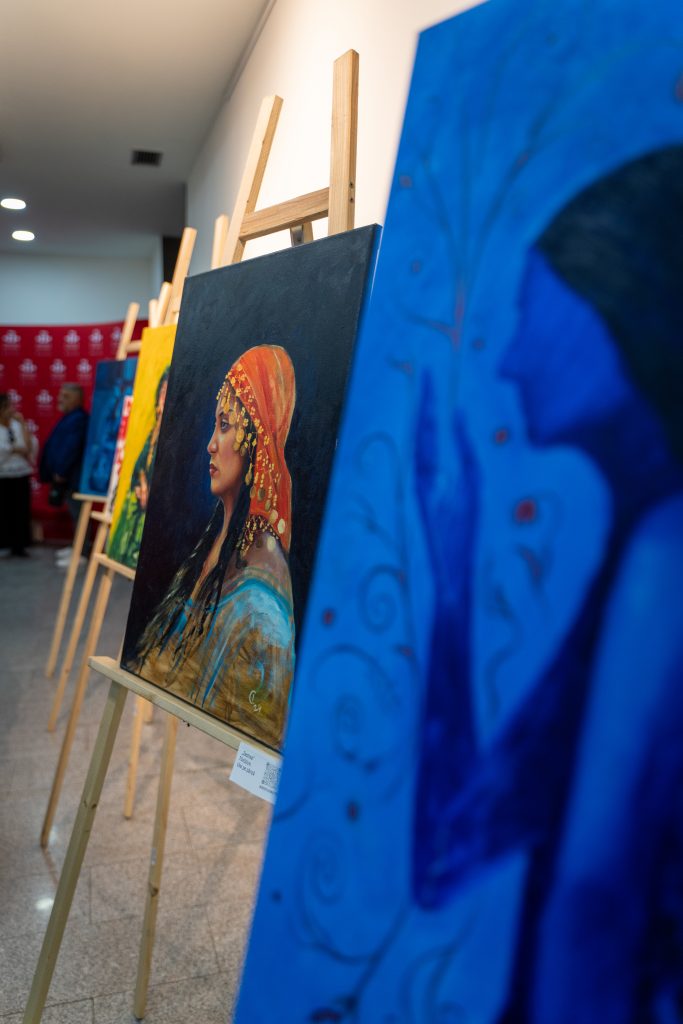
Moderated by Gabriel Zorilă, communication officer at REF Romania and host of the Roma Status community, the event opened with the exhibition „Old Roots” by Romanian Roma artist Cristea Ionuț. Through oil paintings inspired by the history and collective memory of Roma communities, the exhibition established the evening’s central theme: continuity. His works explored the relationship between memory, identity, and survival, showing how cultural heritage continues to move across generations despite centuries of marginalization and persecution.
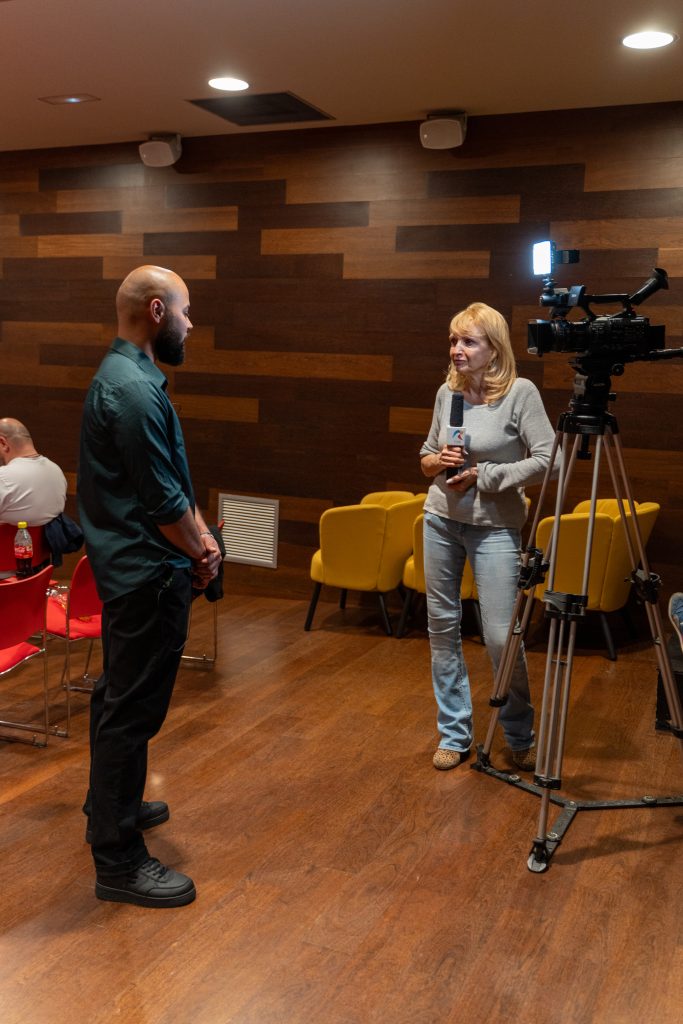
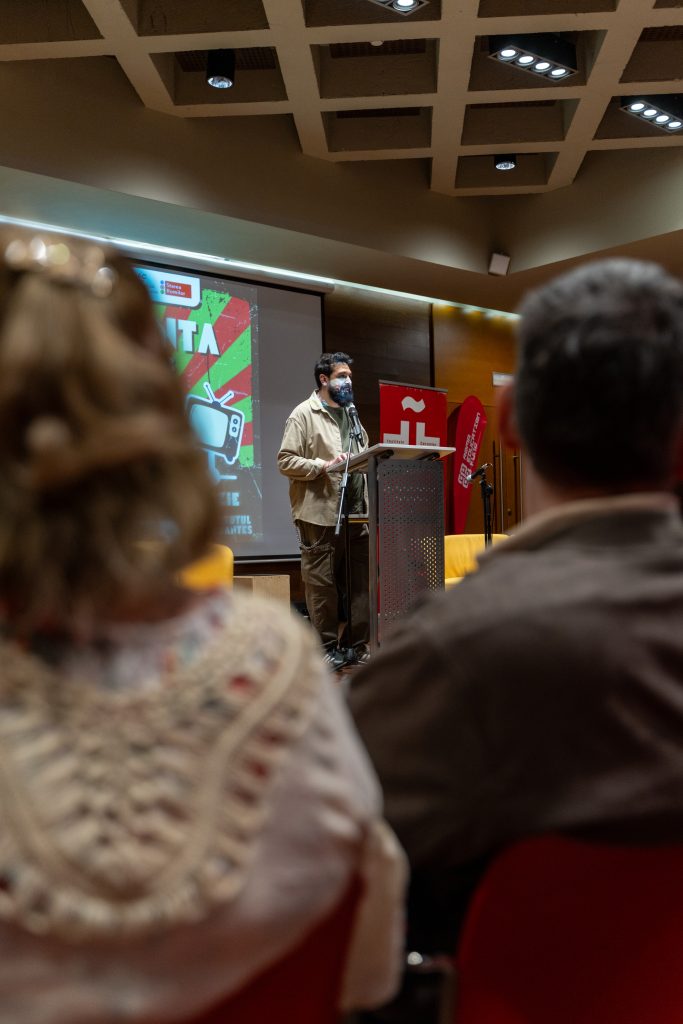
„Starea Romilor is a multi-channel social media platform developed by Roma Education Fund Romania. Through card-based posts and video content, the platform aims to contribute to building a more authentic and diverse public image of Roma people, with a focus on identity affirmation. Through our content, we promote Roma individuals who can serve as sources of inspiration for other young Roma, as well as for society at large.” – Gabriel Zorilă, coordinator of Roma Status
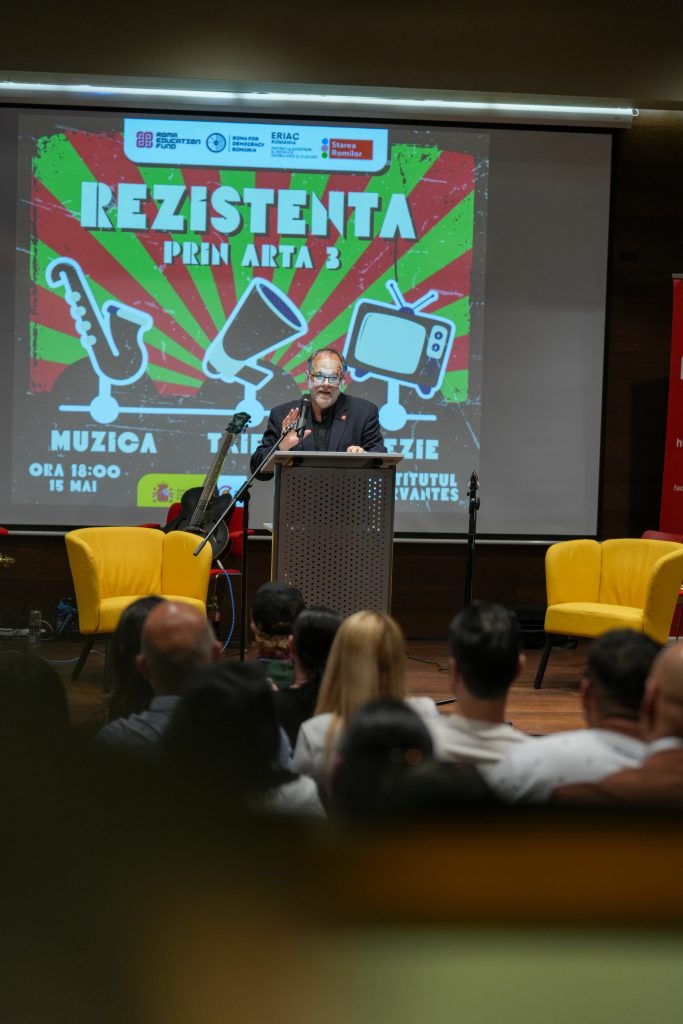
In his opening remarks, Mr. Abel Murcia Soriano, director of the Cervantes Institute, highlighted Spain’s declaration of 2025 as the “Year of the Roma People,” marking 600 years since the arrival of Roma communities on Spanish territory. His intervention reflected on the profound contribution of Roma culture to European identity while emphasizing the need to confront both historical and contemporary forms of discrimination affecting Roma communities across the continent.
The full speech here
Throughout the evening, speakers returned to the significance of May 16 as a defining moment in Roma history. The resistance at Auschwitz-Birkenau was framed not only as an act of survival, but as a symbol of collective dignity and historical continuity.
Mihaela Zătreanu, director of ERIAC Romania, reflected on the dual meaning of the date: one of mourning, but also one of courage and resilience. Referring to the Samudaripen, the Roma genocide during the World War II, she stressed that memory must become a resource for education, culture, and visibility, arguing that contemporary resistance now takes the form of education, artistic expression, leadership, civic participation.
Find the full speech here
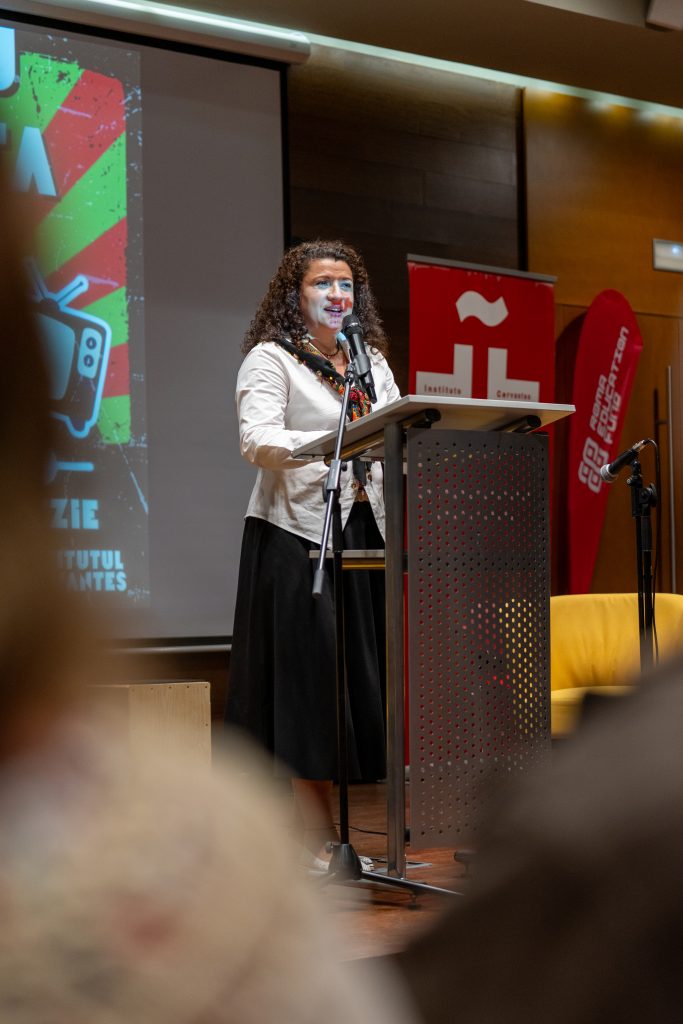
Ciprian Necula, executive president of the REF Network, addressed the question of Roma identity and the historical burden of discrimination attached to it. His speech explored how Roma identity has been preserved across generations through language, family, music, craftsmanship, and collective memory, despite forced assimilation policies, persecution, and systemic racism.
„For us, Roma Resistance Day is not only about the past. It is also about the present and the future. It is about the difference between existence and disappearance, between dignity and silence,” he stated during the event.
Find the full speech here
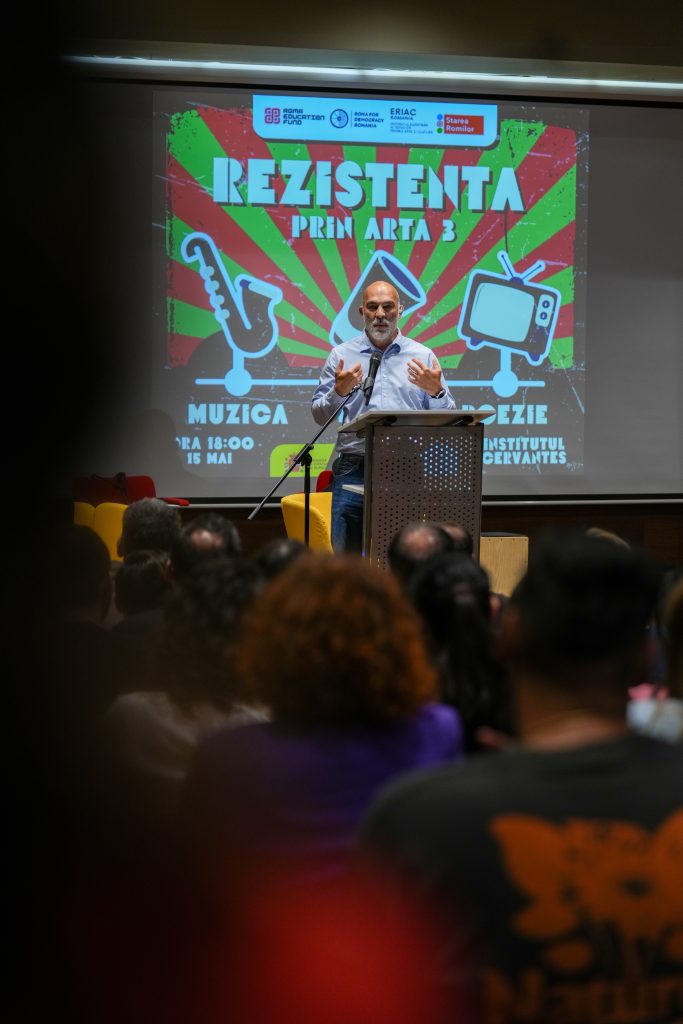
The evening also connected historical remembrance with current political realities. Alin Banu, director of Roma for Democracy, warned about the resurgence of extremism, racism, and hate speech across Europe, emphasizing that remembrance must generate vigilance, institutional responsibility, and public action capable of protecting vulnerable communities.
Find the full speech here
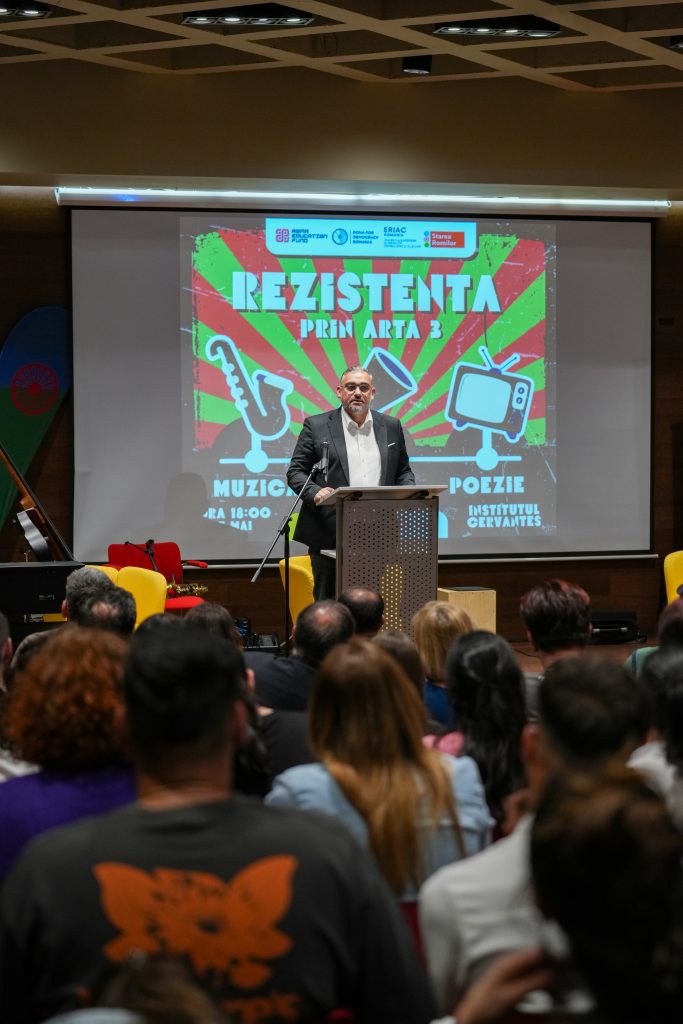
One of the most emotional moments of the evening came through the artistic intervention of actress Oana Rusu, who recited the poem „What Are We?” by Izabela Marin. Through the image of a child trying to wash their skin white with milk, the performance explored the painful realities of internalized racism, shame, exclusion, and inherited trauma, while also portraying the resilience transmitted through family memory and care.
„Today we resist through art. My form of resistance is poetry,” Oana Rusu said during the event. „I wish for all of us to resist until the day when we no longer ask ourselves what we are, or at least until that question no longer comes from pain, but from curiosity.”
Find the moment here
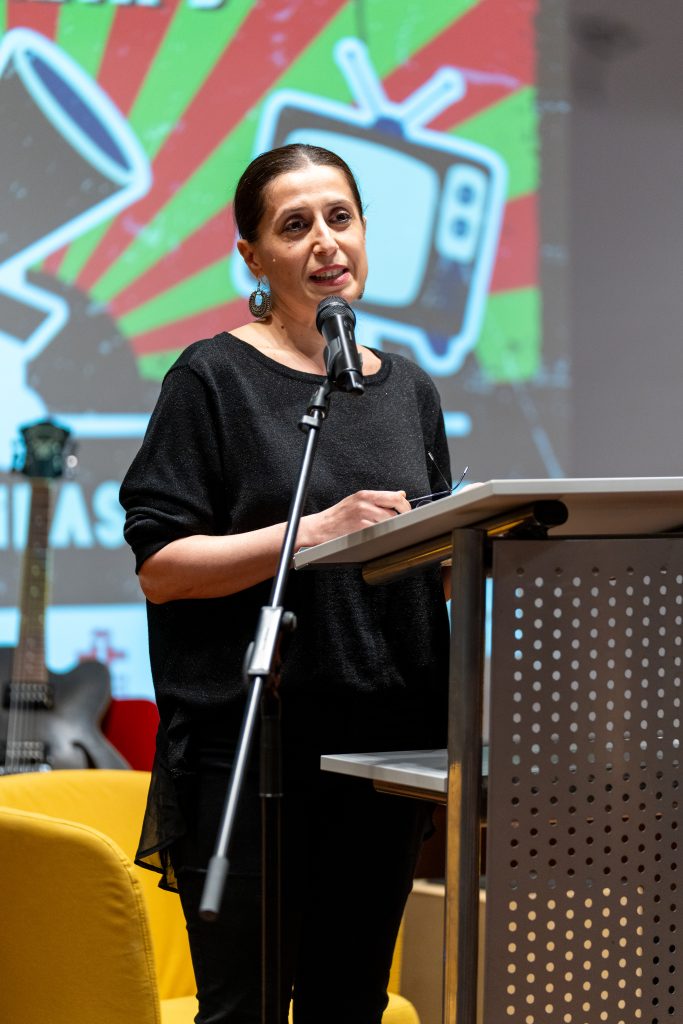
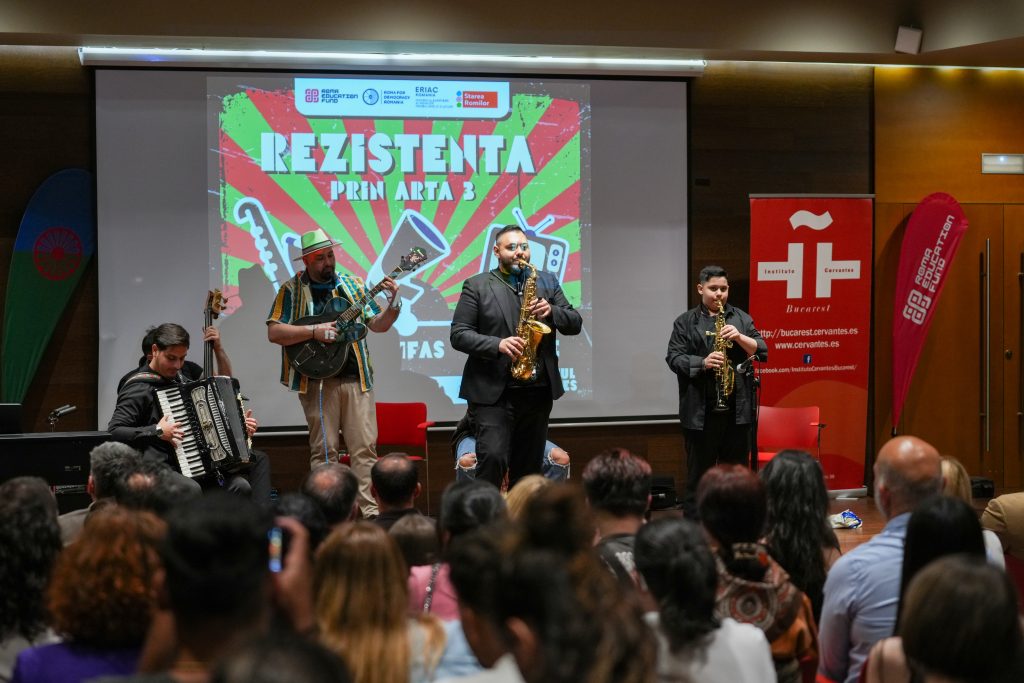
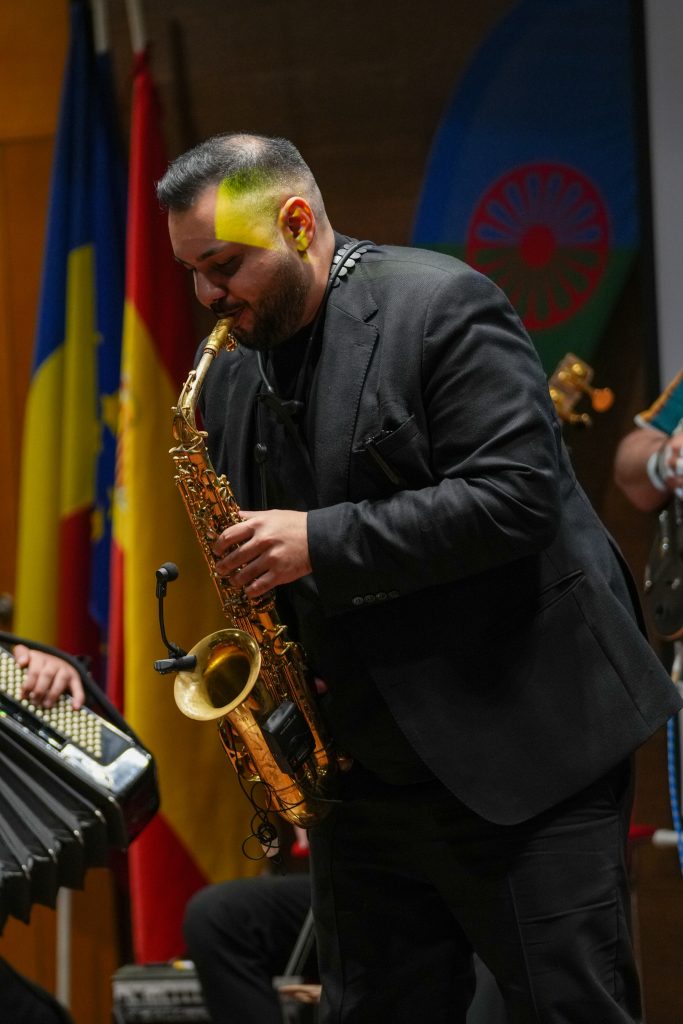
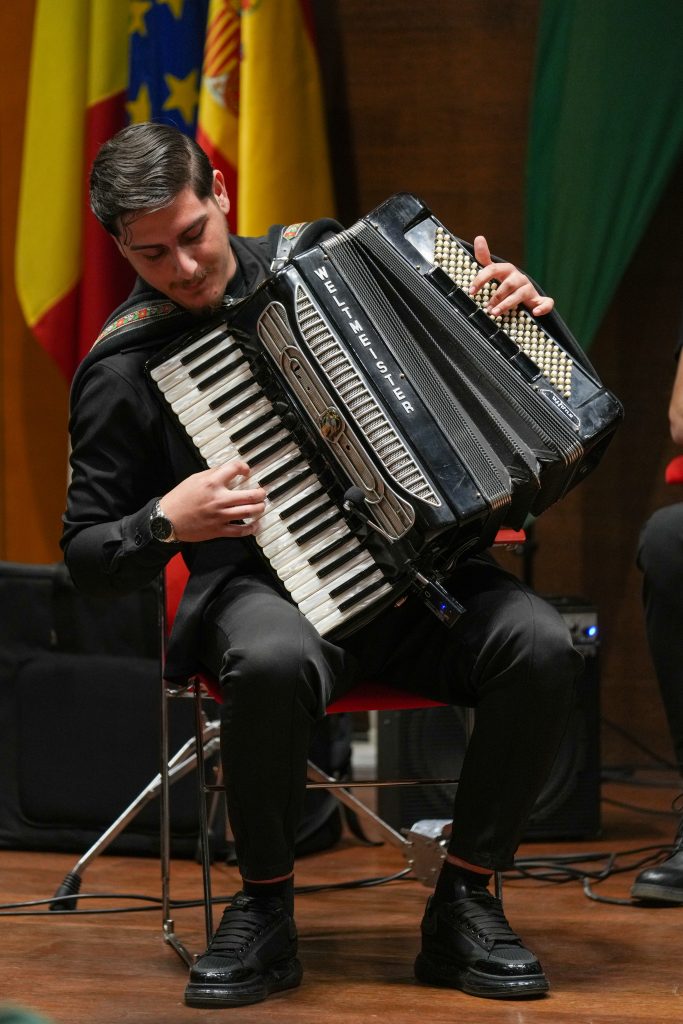
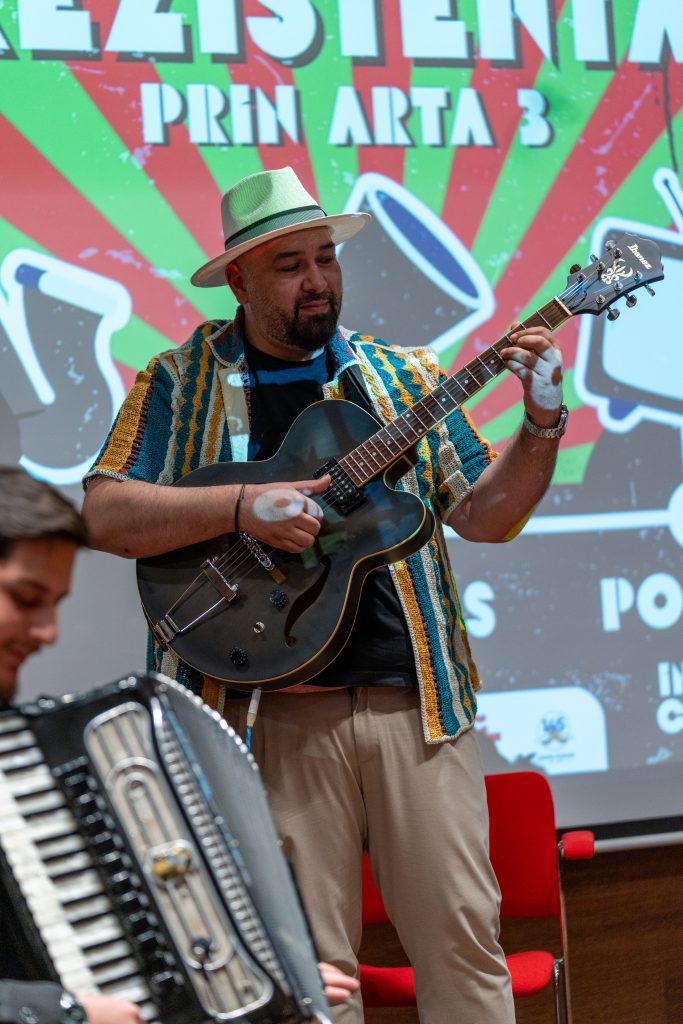
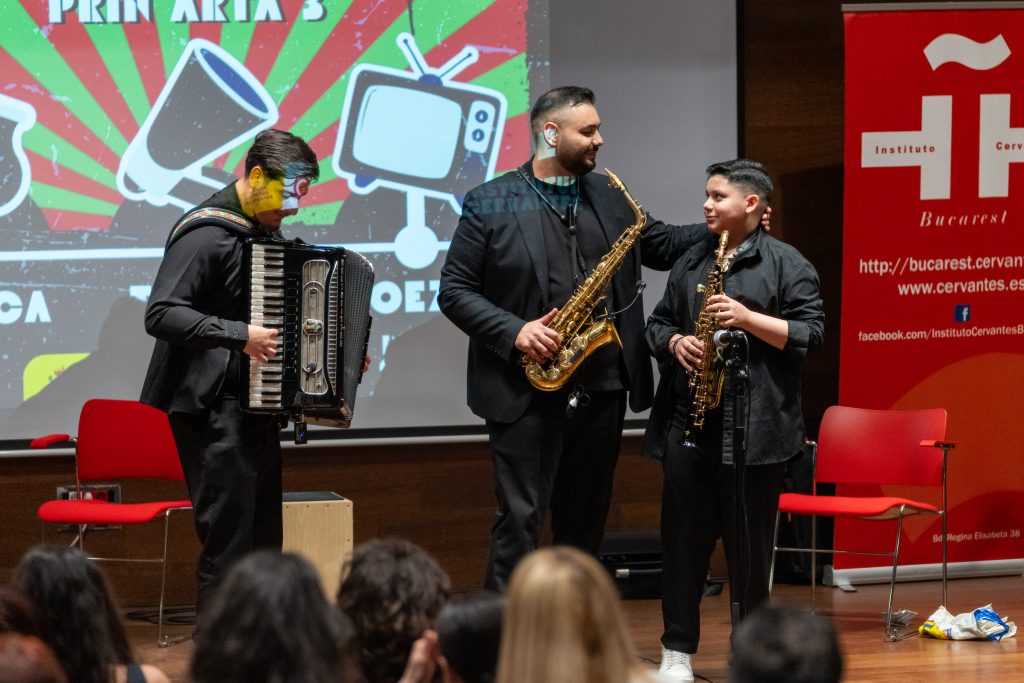
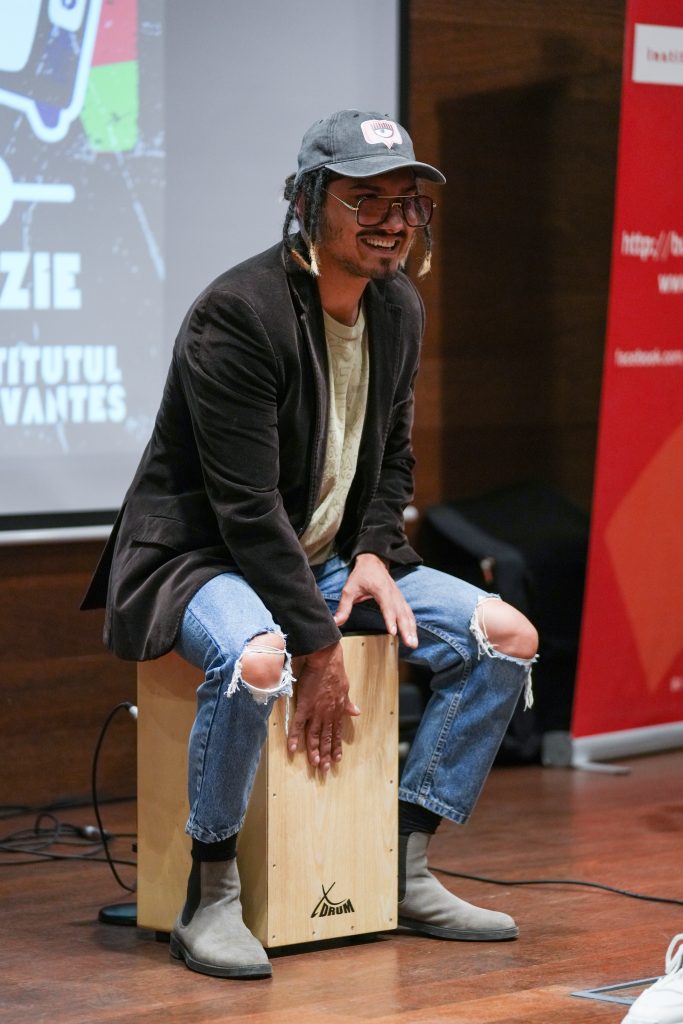
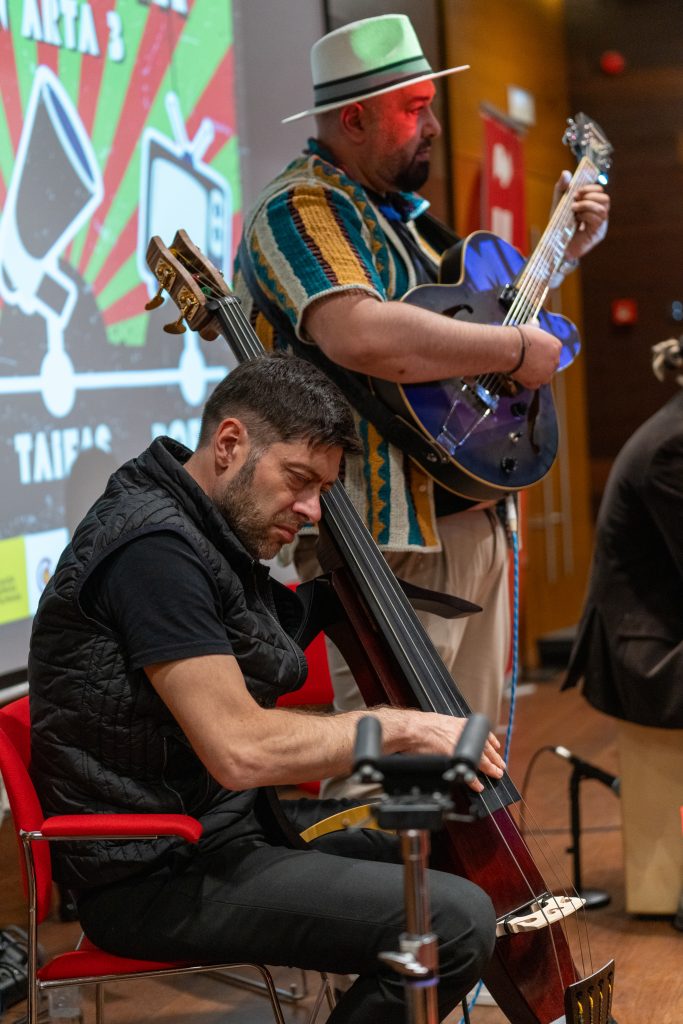
The evening concluded with a concert by Urban Romano, whose performance brought forward another powerful form of cultural resistance: music. Reinterpreting traditional Roma music through contemporary influences such as jazz, funk, and bossa nova, the band demonstrated how Roma cultural heritage continues to evolve while remaining deeply rooted in collective identity and intergenerational transmission. This continuity became especially visible through the presence of saxophonist Sorin Niculae and his son, Antonio Niculae, a 10-year-old musician who performed on stage publicly for the first time this musical genre.
Find the concert here
The third edition of Resistance Through Art reaffirmed that May 16 remains more than a date of historical remembrance. It continues to represent a living call for dignity, visibility, education, culture, civic participation, and the refusal of silence in the face of racism and exclusion. Through art, public dialogue, and collective memory, the event demonstrated that resistance continues through the ongoing affirmation of identity, culture, and community.