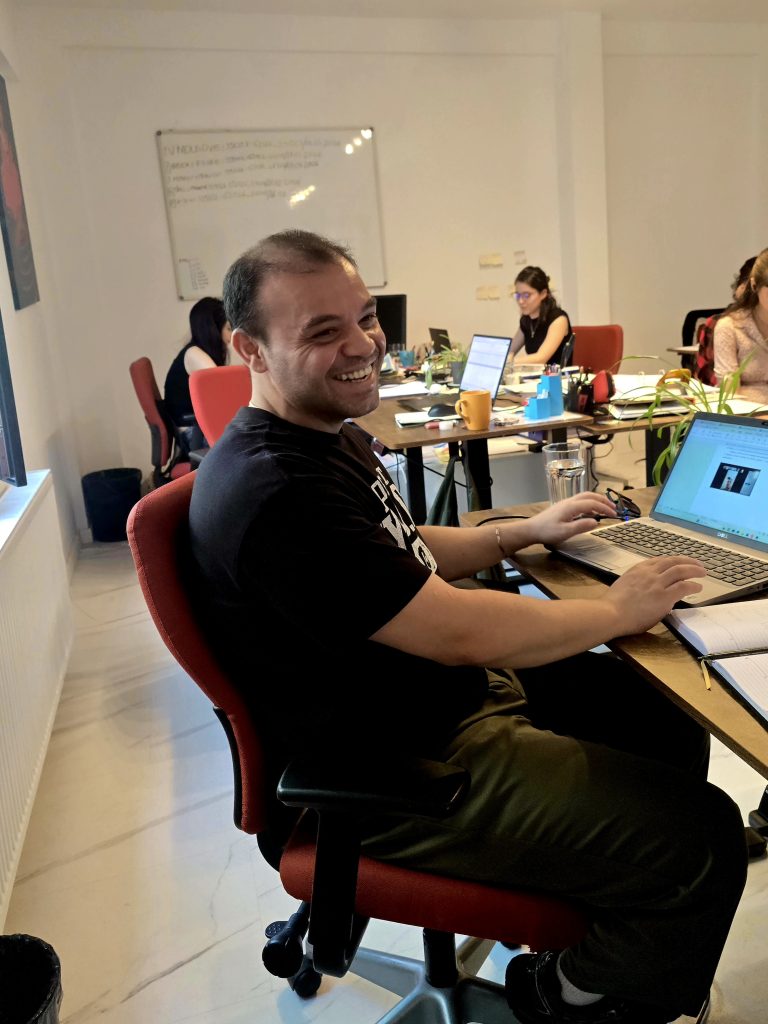
“Every Child Deserves to Feel They Belong” – Meet George Buluc, Educational Mentor in REF Romania’s CERC Projects
Behind every successful educational programme are the people who dedicate their knowledge and passion by supporting teachers and, consequently, helping children reach their full potential. One of them is George Buluc, an educational mentor within the Remedial and Complementary Education Centres (CERC) implemented by Roma Education Fund (REF) Romania.
With an impressive academic background and years of teaching experience, George believes that education is not only about academic achievement, it is about building confidence, breaking stereotypes, and creating opportunities for every child.
In this interview, he shares what motivates him, the challenges he encounters, and why mentorship can change lives.
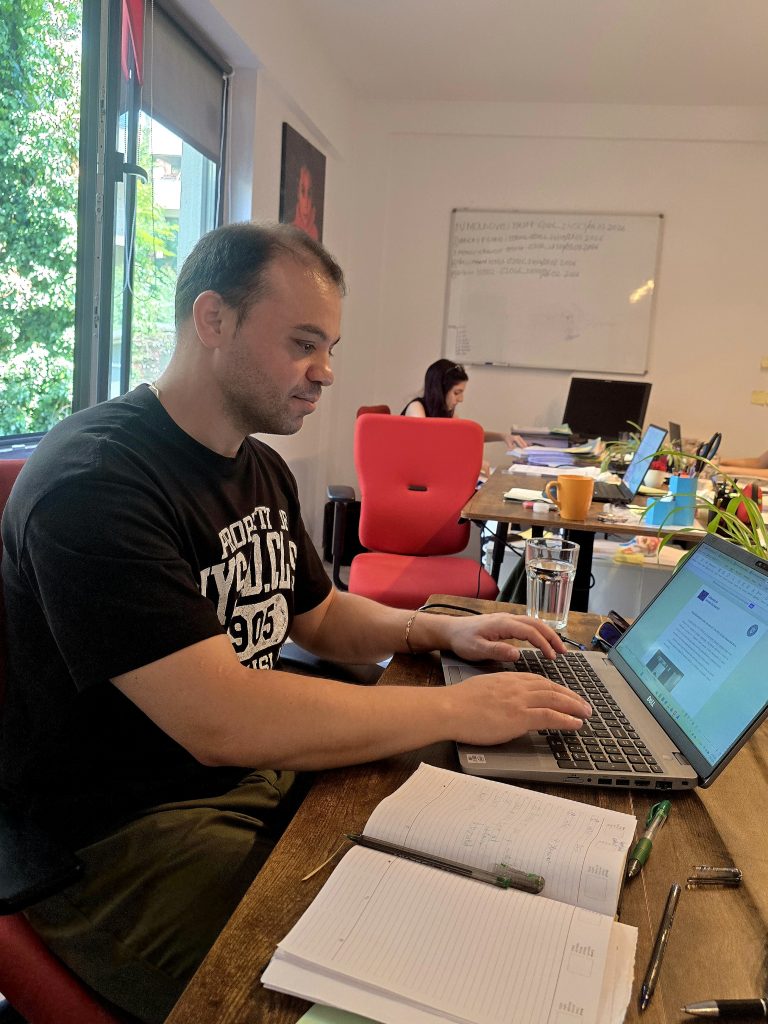
Could you tell us a little about yourself? Who is George Buluc, and what inspired you to become an educational mentor?
I am a tenured mechanical engineering teacher at “Dinicu Golescu” Technical College in Bucharest and an educational mentor with Roma Education Fund Romania.
My academic journey has always been driven by a passion for learning. I graduated from the Faculty of Materials Science and Engineering at the Gheorghe Asachi Technical University of Iași in 2007, completed a Master’s degree in Advanced Technologies in Materials Processing Engineering in 2013, and earned my PhD in 2017 with research focused on high-entropy wear-resistant alloys. Later, I also graduated from the Faculty of Law and completed a Master’s degree in Educational Management at the University of Bucharest.
Joining Roma Education Fund Romania as an educational mentor represented a unique opportunity to contribute directly to transforming the lives of Roma children. Through educational guidance and personal support, I can help reduce educational inequalities and prevent early school leaving.
What motivates me most is helping children build self-confidence and giving them the tools they need to overcome barriers created by social circumstances. I also wanted to use my teaching experience to create safe, inclusive learning environments for children growing up in some of Romania’s most disadvantaged communities.
What does the role of an educational mentor in a CERC Centre look like in practice?
Being an educational mentor means much more than supporting students. It also means supporting teachers.
Our role is to help educators transform classrooms into inclusive learning environments where intercultural education becomes part of everyday teaching through practical activities and participatory methods.
One of my goals is to support teachers in integrating Roma history, traditions, and cultural values into the learning process. In doing so, we help challenge stereotypes while promoting mutual respect among children from different backgrounds.
Has there been a particular experience that deeply moved you?
One story has stayed with me.
A primary school teacher once told me that some parents still tell their children, “Don’t play with Roma children.”
These words may come from prejudice, fear, or beliefs passed down through generations, but their consequences are profound.
When children are taught to avoid others simply because they are Roma, they learn to judge people based on ethnicity rather than character. At the same time, the Roma child who is rejected begins to believe they are somehow less valuable, that they do not belong.
Experiencing discrimination at such a young age can lead to lower self-esteem, anxiety, social isolation, poorer academic performance, and difficulties in building relationships later in life.
The children who are taught to exclude others are also harmed. They grow up with prejudice, fear of diversity, and a limited understanding of the world around them.
Children are not born with prejudice. They learn from what they see and hear.
That is why we, as adults, have the responsibility to teach respect, empathy, and openness. Friendships between children should be built on kindness, curiosity, and shared experiences, not ethnicity.
CERC combines remedial education with robotics, technology, arts, and personal development. How do children respond to these activities?
The response has been overwhelmingly positive.
When remedial education is combined with robotics, arts, technology, and personal development activities, learning becomes exciting instead of repetitive. Children participate with enthusiasm, curiosity, and genuine motivation.
These activities transform education into an engaging experience that encourages creativity, teamwork, problem-solving, and confidence, skills that are just as important as academic knowledge.
Beyond school results, what impact does mentorship have on a child?
Mentorship goes far beyond grades.
For many children, a mentor becomes a trusted adult who provides emotional security and encouragement. In that safe space, children learn that mistakes are not failures but opportunities to grow.
A mentor helps build self-confidence while encouraging values such as empathy, resilience, responsibility, and respect for others.
Personalised guidance also helps children discover their talents, interests, and aspirations. By developing critical thinking and communication skills, mentorship equips young people with the confidence to make informed decisions throughout their lives.
Ultimately, mentorship helps shape character and provides the moral compass that children need to navigate their future.
Why is it important for Roma communities to have Roma mentors and positive role models?
Positive Roma role models are essential because children need to see people from their own community who have succeeded through education.
When they see someone who shares their background achieving professional success, they begin to believe that they can achieve the same.
Roma mentors also understand the cultural and social barriers that children face. They provide inspiration, emotional support, and build trust between schools, families, and local communities.
Their presence motivates young people to continue their education and believe in their own future.
What message would you like to share with parents?
Education is the most valuable legacy parents can give their children.
I encourage parents to support their children every day, motivate them to attend school, and show them that they believe in their abilities.
Every great success begins with encouragement and support at home.
What would you say to a child who feels school is too difficult?
It is completely normal to find school challenging sometimes.
Every mistake is simply another step toward learning, not proof that you cannot succeed.
Every child has unique strengths and enormous potential. With patience, perseverance, and support, any obstacle can be overcome.
Believe in yourself, you are much stronger than you think.
How do you see the future of the CERC projects?
I see CERC becoming a long-term pillar of support for vulnerable communities.
I hope these projects leave behind strong partnerships between schools and families, where education becomes a shared priority.
The methods, resources, and non-formal educational activities introduced through CERC can continue supporting schools long after the projects end, creating inclusive environments where every child feels welcome.
Most importantly, I hope CERC helps raise a generation of confident Roma children who continue their education, pursue their ambitions, and realise their full potential.
Finally, what does success mean for an educational mentor?
Success is not measured only by better grades or improved attendance.
For me, success happens when a vulnerable child begins to believe in themselves and starts building their own future through education.
It is seeing children dream about higher education and meaningful careers, while also helping families and schools build relationships based on trust and mutual respect.
If we can replace hopelessness with confidence and create opportunities where none seemed possible before, then we have truly succeeded.