Roma Culture and History as Resources for Education and Intercultural Dialogue in Videle Schools, Romania
Education plays an essential role in shaping how children understand cultural diversity, develop their own identity and relate to those around them. Integrating Roma culture and history into learning experiences contributes both to strengthening the cultural identity of Roma children and to developing a broader understanding of the Roma contribution to Romanian history, culture and society.
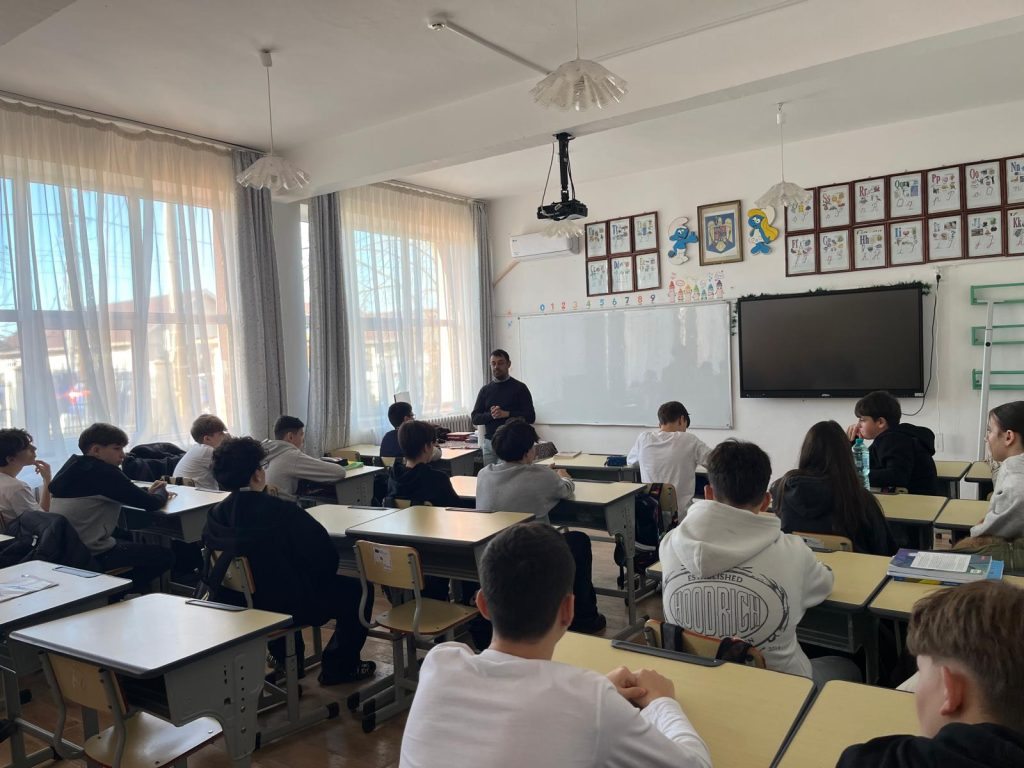
With this perspective in mind, the Roma Education Fund Romania team visited Secondary School No. 1 and Secondary School No. 2 in Videle as part of the Roma Voices project. The visit included the donation of educational materials developed by the Foundation and its partners, as well as two intercultural dialogue workshops tailored to the pupils’ age groups.
Children’s literature as a tool for intercultural education
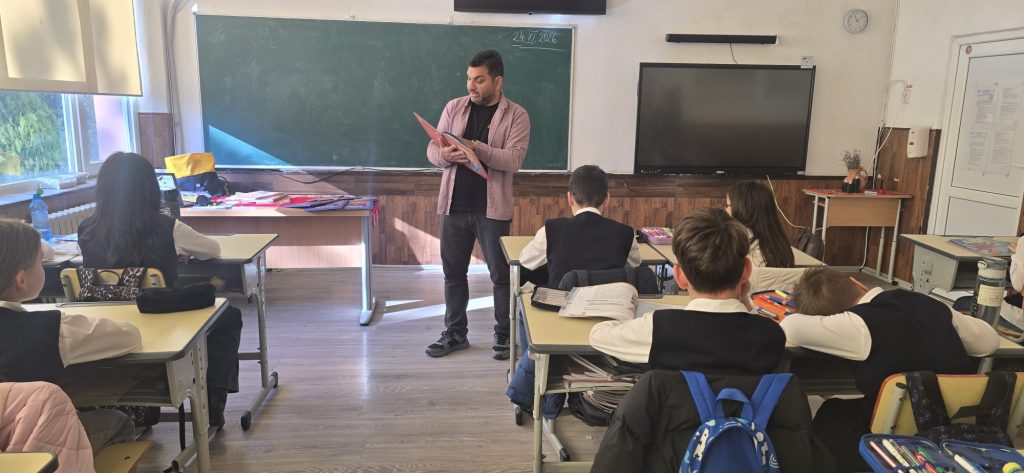
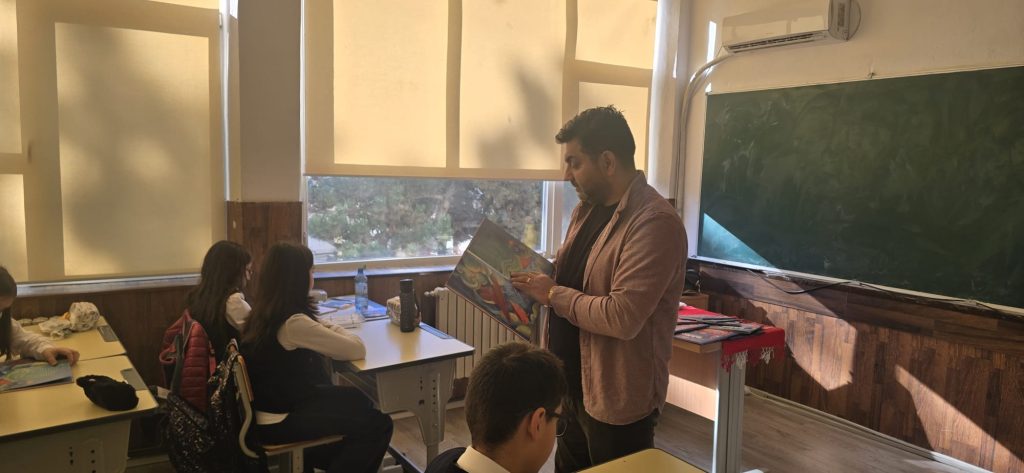
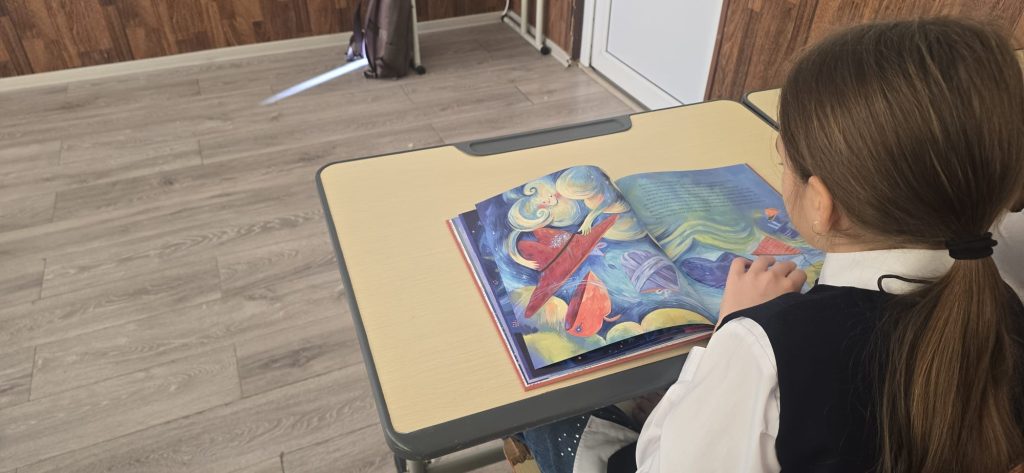
Fourth-grade pupils participated in an intercultural dialogue workshop centred on the Bariș book series, written by Alexandru Zamfir. Through literature, children had the opportunity to explore elements of Roma culture, discuss identity and diversity, and discover new characters and imaginary worlds. The workshop also included the presentation of the latest book in the series, Bariș. Talking to the Wind, building on the reading experiences of pupils who had already discovered the first two books.
“I was delighted to learn that the pupils had already read the previous Bariș stories, those about the rain and the sun, and were familiar with some of the characters and the stories behind their names. Bariș. Talking to the Wind was therefore a natural continuation for them, and they were eager to read the new story and discover its new characters,” said Alexandru Zamfir, project manager.
The presence of Roma stories and characters in children’s literature addresses an important educational need. Roma children need literary resources in which they can see themselves reflected and through which they can discover and appreciate their cultural identity. At the same time, all children should have opportunities to explore Roma culture beyond the stereotypes and limiting representations often encountered in public discourse.
Understanding Roma history and developing critical thinking
For seventh-grade pupils, the intercultural dialogue workshop drew on an episode of the Romstoria series dedicated to Ștefan Răzvan and the book The Untold History of the Roma, written by our colleague in Romania, historian Ioan Valentin Negoi, PhD. These two educational resources provided the foundation for a discussion about Roma history, the contributions of Roma historical figures and their place in Romania’s shared historical heritage.
Learning about Roma history is an essential part of understanding Romania’s shared historical and cultural heritage. By providing all pupils with opportunities to explore the contributions and experiences of Roma communities, education can foster mutual understanding, challenge prejudice and strengthen social cohesion.
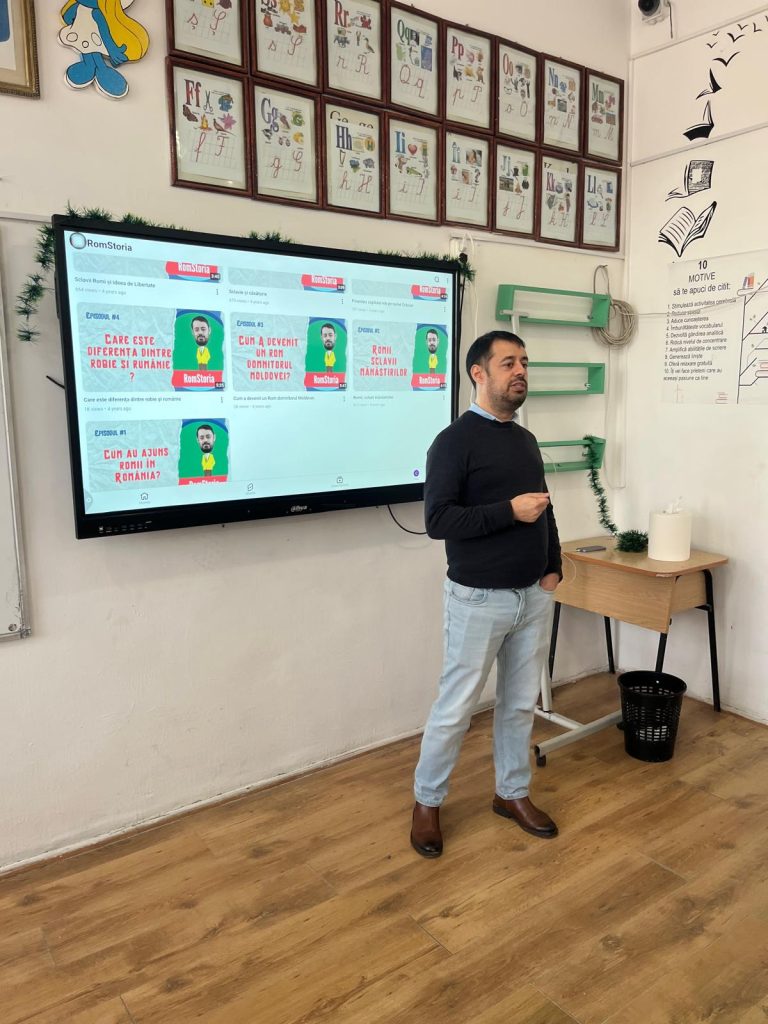
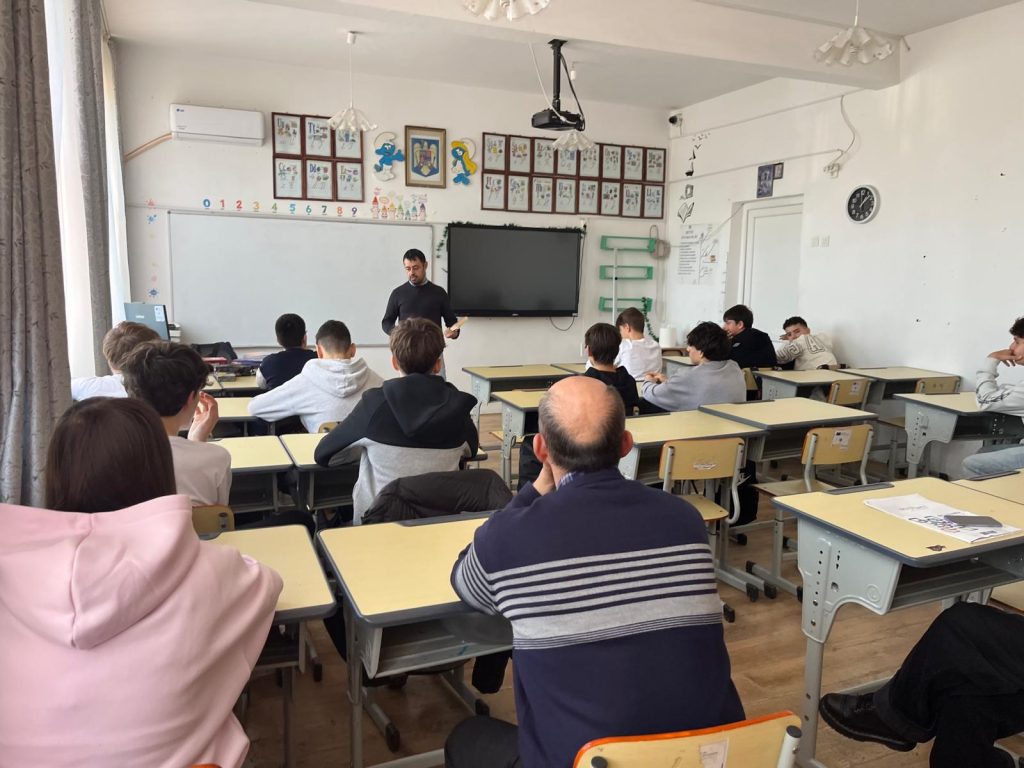
By developing and using educational materials in a variety of formats, ranging from children’s literature and history books to audiovisual productions, Roma Education Fund Romania aims to provide pupils and teachers with resources that complement existing educational content and support intercultural dialogue in schools.
Complementarity of interventions at local level
The two schools in Videle are local partners in the ASPIR project, Social Assistance for Roma Integration, implemented under Component 1 of the Social Inclusion Programme, administered by the Ministry of Labour, Family and Social Solidarity through the Second Swiss Contribution to Romania. Under Component 2 of the same program, the Roma Voices project, coordinated by Roma Education Fund Romania in partnership with the European Roma Institute for Arts and Culture (ERIAC) and the Amphitheatrrom Cultural Association, implements measures to promote non-discrimination at national and local levels, including through Roma culture and history. The project adopts an integrated approach in which art, historical memory and cultural education become practical tools for strengthening social cohesion, valuing diversity and combating discrimination.
“For me, the workshops were an opportunity to see how important it is to provide young people with learning experiences that differ from those they are accustomed to at school. Whether discovering culture through storytelling or exploring history from lesser-known perspectives, these experiences encourage them to approach diversity with greater openness and empathy, become more curious about the unfamiliar, and be more receptive to the experiences and perspectives of others.” – Iuliana Cebotari, project assistant.
The visit to Videle also included a meeting at the Town Hall with members of the ASPIR project team to discuss implementation progress and plan complementary activities. Cooperation between the two components of the program lays the foundations for a coherent approach at local level, in which social and educational interventions are reinforced by measures promoting mutual understanding, respect and non-discrimination.
For Roma Education Fund Romania, strengthening cultural identity, ensuring access to quality education and developing learning environments free from discrimination are interconnected elements of the same strategic mission: building resilient Roma communities through education.
The Roma Voices project is implemented by REF Romania in partnership with ERIAC Romania and the Amphitheatrrom Cultural Association, and is funded through the Second Swiss Contribution to Romania under the Social Inclusion Programme, managed by the Ministry of Labour, Family and Social Solidarity.