When schools fail, democracy pays the price
Posted on October 22, 2026 by admin3
Educational equality does not mean investing equally in unequal communities. It means investing more where the disadvantage is greatest, so that every child has a genuine chance to succeed
op-ed by Ciprian Necula, PhD and Sara Vasile, PhDC
Europe pays attention to failing schools when the streets erupt. It pays far less attention when generations of children endure the same failures quietly.
Since September, French high school students have been demanding something that should hardly be controversial: enough teachers, buildings without leaks and rats, manageable classrooms and an education that gives them a fair chance. The movement began in the deprived suburbs of Paris. By early October it had disrupted more than five hundred of the country’s 3,700 high schools and brought around a quarter of a million students, teachers and parents into the streets. Some demonstrations turned violent, and nothing justifies that violence. But the movement started where the gap is widest, and that is the point.
What the students are contesting is, at its core, a question of priorities. In a year of austerity, the French state has decided that schools can wait. The draft budget for 2027 raises spending on schooling by less than inflation and cuts around 1,600 teaching posts, while some classes in the suburbs have gone without a teacher since the start of term. The message received in those classrooms is simple: other things come first. The students have understood it, and they have refused it.
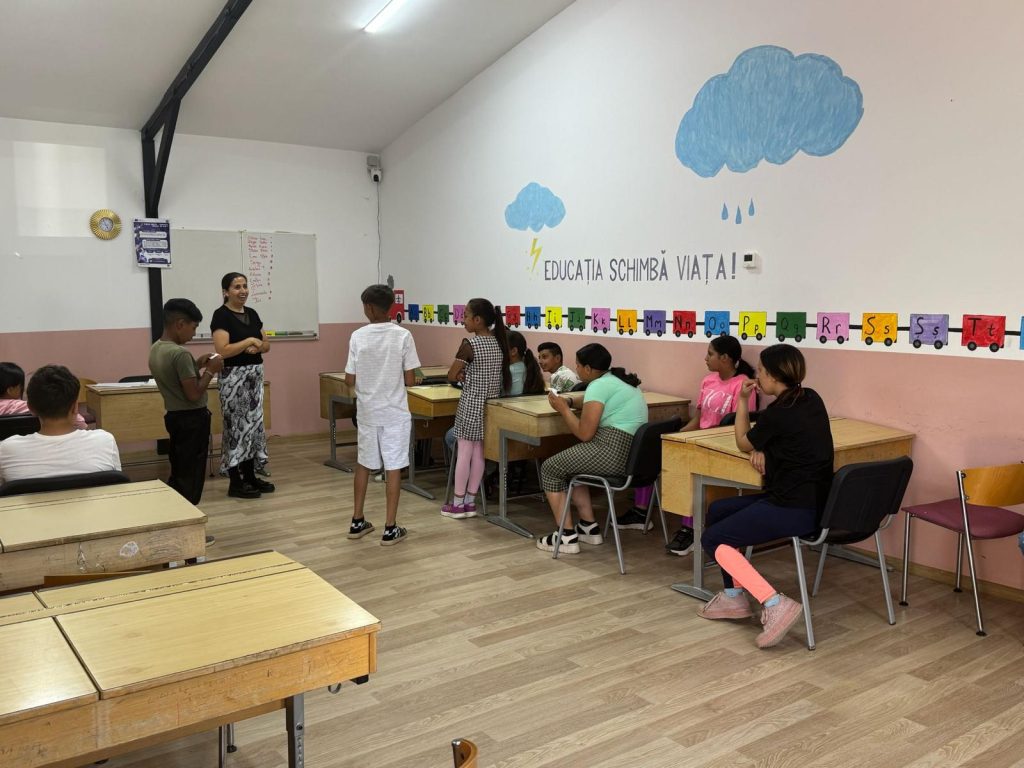
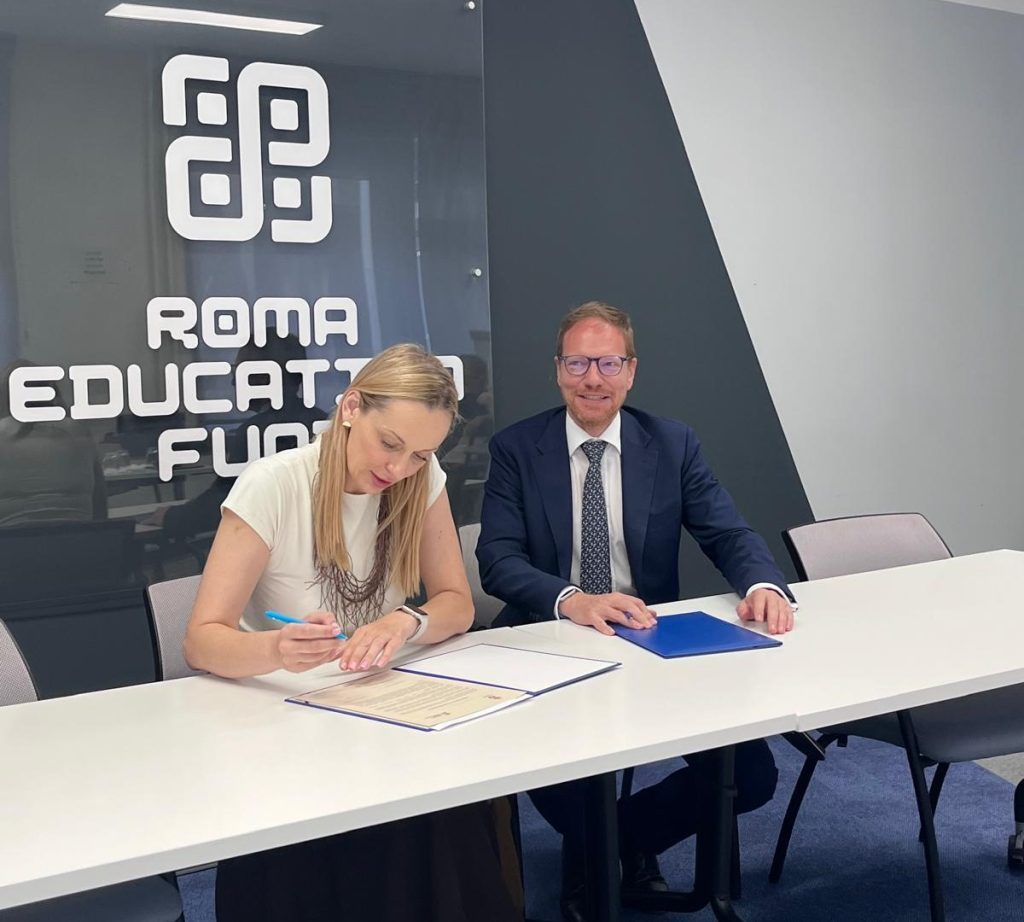
It is impossible to watch this without thinking of Roma communities across Europe, where the same message has been received for generations. We know how this feels. The Roma Education Fund, alongside many other organizations, has spent more than twenty years documenting it: under-resourced schools, a shortage of qualified teachers, segregated classrooms, children whose results reflect their address and ethnicity rather than their ability. The circumstances differ. The question is the same. Why do public education systems still offer different opportunities to children depending on the community into which they were born?
Our solidarity with the French students is therefore not abstract. But solidarity also obliges us to say what their protest should win. If the answer is simply to move education back up the list, with more money distributed across the system as it stands, the schools that were already better placed will absorb the gains first, and the suburbs where the movement began will remain where they were. Restoring education as a priority is necessary. It is not sufficient. The demand must be not only that schools matter more, but that they matter most where disadvantage is deepest. Otherwise the crisis will be solved for some children and not for others, and then it will be declared solved.

For most children, kindergarten and primary school are their first meaningful encounter with the state. They know nothing about public budgets or institutional discrimination. They know the difference between a neglected school and a well-equipped one. They notice when the classroom is deteriorating, when the teacher does not come, when children elsewhere have what they do not.
And they draw conclusions that reach far beyond education. A child treated unequally at school learns how society works: who receives attention, whose future matters, who can be ignored. The way the school treats them becomes their understanding of how society treats people like them. Institutional distrust begins long before a young person is old enough to vote.
Part of what makes this so hard to see from the outside is that a crisis rarely has an objective duration, it has a perceived one. It is not measured only in data and indicators, but in how it is lived and internalised collectively, and a hardship perceived as temporary is treated very differently from one perceived as permanent. A failing school is not, for the families inside it, an emergency with a foreseeable end, it is a condition absorbed over years, sometimes generations, until it stops registering as a crisis at all and becomes simply “how things are.” That is precisely what should alarm us. A crisis that is loud and recent, students blockading three thousand schools in a matter of weeks, triggers negotiation, media attention, a government response. A crisis that has quietly become someone’s normal produces no such urgency, because insecurity that spreads slowly over decades rarely looks, from the outside, like an emergency at all.
This is why educational inequality is not only a matter of test scores, employment or productivity. It is a matter of citizenship. A democracy that teaches some of its children, through the condition of their schools, that they count for less should not be surprised when those children later stop believing in it.
For Roma communities, present disadvantage is compounded by generations of poverty, discrimination and institutional neglect. It should be said plainly: Roma children have never come close to receiving even equal investment. Segregated schools and schools in Roma neighbourhoods have routinely had the poorest buildings, the least experienced teachers and the thinnest support. Equal funding would, for many of them, be an improvement. It would still not be enough. Governments must abandon the comfortable assumption that equal treatment is the destination. For Roma pupils, it has not yet been the starting point.
A school in a prosperous neighbourhood, with modern facilities, experienced teachers and parents who can pay for extra support, does not face the challenges of a school serving a community marked by generations of exclusion. Giving both the same allocation would look administratively fair. It would leave the distance between them intact. A government that funds unequal schools equally is not correcting inequality; it is financing its continuation. A government that funds them unequally in favour of those already ahead, which is what Roma children have mostly known, is widening it.
None of this is only about budgets, either. A school, like any institution, does not just transmit a curriculum; through its tone and daily conduct, it also sends a message about who is listened to, who is invested in, and who is expected to manage on their own. Children absorb this long before they can name it as policy. When the institution they depend on communicates, implicitly, that their needs are secondary, the damage is not only academic; it reaches the sense of trust and belonging that underpins a child’s wellbeing. Rebuilding that trust cannot be done through isolated projects or seasonal funding calls, it requires the same thing any resilient institution requires in a crisis: consistency, clarity and a tone that treats the people inside it as worth the investment.
Closing historical gaps requires disproportionate investment where they are greatest: better infrastructure, stronger teaching support, quality early childhood education and learning environments able to compensate for accumulated disadvantage. Some will call this preferential treatment. It is, in fact, the practical meaning of educational justice. The principle is not specific to Roma. It applies equally to the suburbs of Paris, to rural Romania and to marginalized neighborhoods anywhere in Europe.
It also means that education in disadvantaged communities can no longer be treated as a peripheral issue of social inclusion, handled through temporary projects and occasional calls for funding. It belongs at the centre of national education policy, with adequate budgets, measurable improvement in learning outcomes and long-term commitments to the schools that serve historically neglected populations.
Desegregation remains essential, and discrimination must be confronted wherever it occurs. But ending segregation and raising the quality of education are two halves of the same obligation, not alternatives. Every child deserves a good school, including those in the poorest and most marginalized or compact communities. The aim is to remove the disadvantage attached to a child’s background, not to relocate it.

What ultimately sustains a society through difficulty is not the difficulty itself, hardships, by definition, pass, but the capacity to keep renewing the social contract: the mutual trust between citizens and institutions, between the right to belong and the duty of institutions to make that belonging real. A child’s school is where that contract is first tested, long before they are old enough to understand it as one. When a state funds some schools lavishly and others in name only, it is quietly breaking that contract with its youngest citizens, and asking them, later, to believe in institutions that never behaved as though they believed in them.
Roma communities have pursued better education through peaceful advocacy, litigation, dialogue and sustained engagement with public authorities. Their experience shows that the absence of confrontation is not the absence of injustice. No one should have to organise demonstrations or generate political pressure to receive public services to which they are already entitled. The responsibility for quality education belongs to the state, not to the communities forced to demand it.
Europe cannot keep speaking of social cohesion, equal opportunity and democratic values while accepting that the quality of a child’s education depends on the neighbourhood, family or ethnic community into which that child was born. The measure of a fair education system is not whether every school receives the same resources, but whether every child has a genuinely comparable chance to succeed.
Children should not learn from the condition of their schools that society considers them less important. Roma parents have asked peacefully, for decades, and have been answered with patience. French students blockaded their schools and had a government crisis meeting within weeks. Europe should be careful about which of these lessons it teaches.