Donate

More than 250 Roma Students Supported Through RARE II Project in Montenegro

Posted on June 5, 2026 by admin3

Podgorica, Montenegro – June 2, 2026 | The Roma Education Fund (REF) participated in the closing event of activities implemented in Montenegro by HELP Montenegro and the Parents Association under the project EU Regional Action for Roma Education: Increased Education Support and Opportunities for Roma Students in the Western Balkans and Türkiye (RARE) Phase II (RARE II). Funded by the European Union through Directorate-General for Enlargement and Eastern Neighbourhood (DG ENEST) and implemented by the Roma Education Fund Serbia and Romania, the project supports increased educational opportunities and inclusion for Roma students across the Western Balkans and Türkiye.

Over the past two academic years, the project has provided comprehensive educational support to more than 250 Roma children and young people across Montenegro. Through scholarships, learning materials, paid internship opportunities, and the support of local volunteers, facilitators, and educators, the initiative helped strengthen learning outcomes, improve literacy, and support the development of essential skills for educational and professional success.
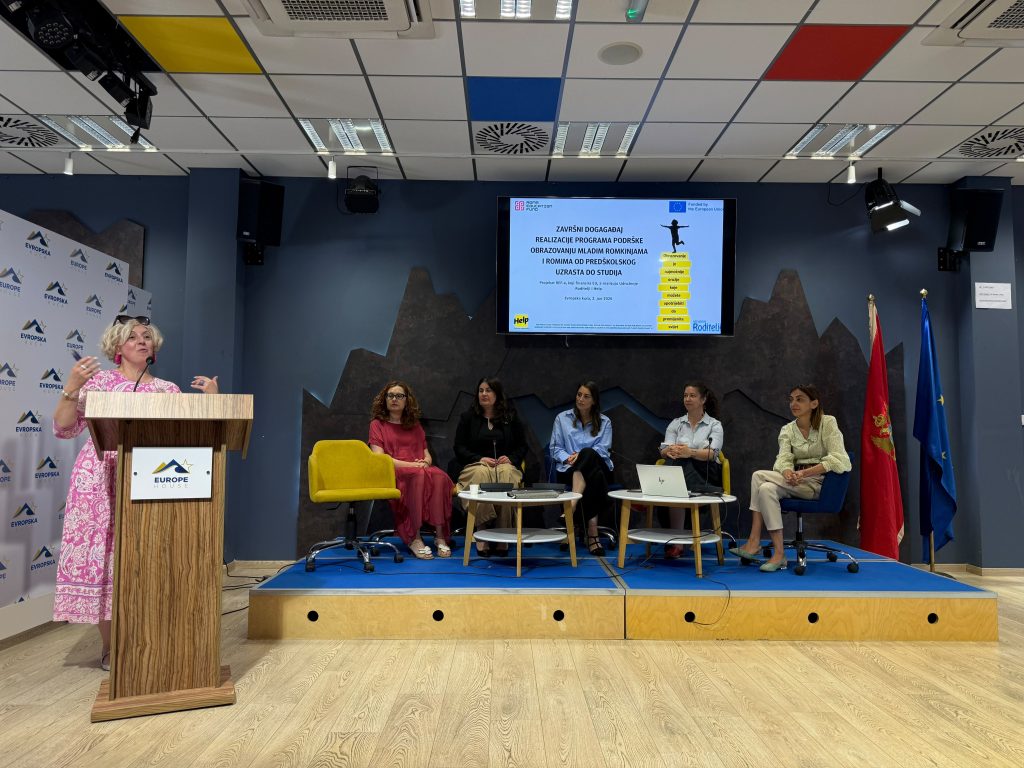
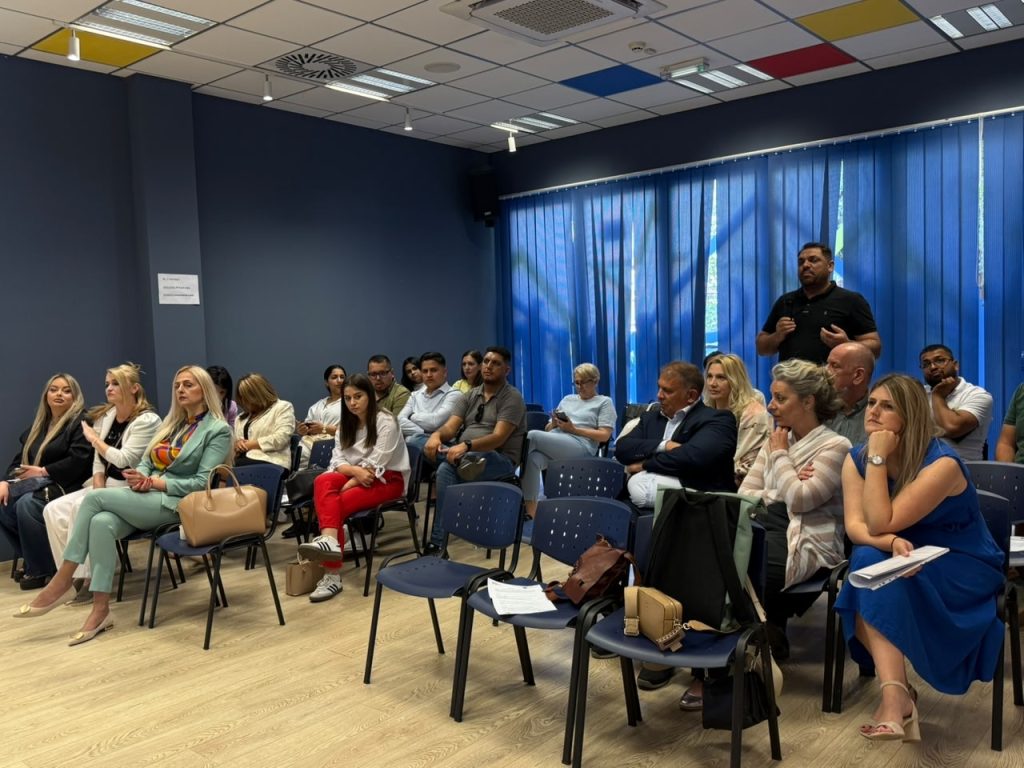
The closing event, held at the European House in Podgorica, brought together representatives of public institutions, civil society organizations, educators, and development partners committed to advancing the educational inclusion of Roma children and youth in Montenegro. The gathering provided an opportunity to reflect on the project’s achievements, share lessons learned, and discuss ways to sustain and further strengthen support mechanisms for Roma students within the education system.

Addressing participants at the event, Ms. Mladenka Tešić, representative of the European Union Delegation to Montenegro, emphasized the importance of ensuring the sustainability of successful interventions through their integration into public systems and policies. She noted that lasting progress depends on creating institutional mechanisms capable of supporting Roma and Egyptian children and youth throughout their educational journey.

Speaking on behalf of the Roma Education Fund, Ana Duraki highlighted the commitment of local partners and frontline practitioners whose work made these results possible.

“Anyone who has had the opportunity to follow the development of this project in Montenegro over the past years can clearly see that the results we discussed today were achieved through the extraordinary dedication of the people working on the ground. Their continuous efforts supported the education of more than 250 Roma children and helped address their needs throughout the school year. Both the Roma Education Fund and the European Commission remain committed to supporting the education and employability of Roma communities in Montenegro, and we look forward to continuing this successful partnership and building on these achievements in the years ahead.”
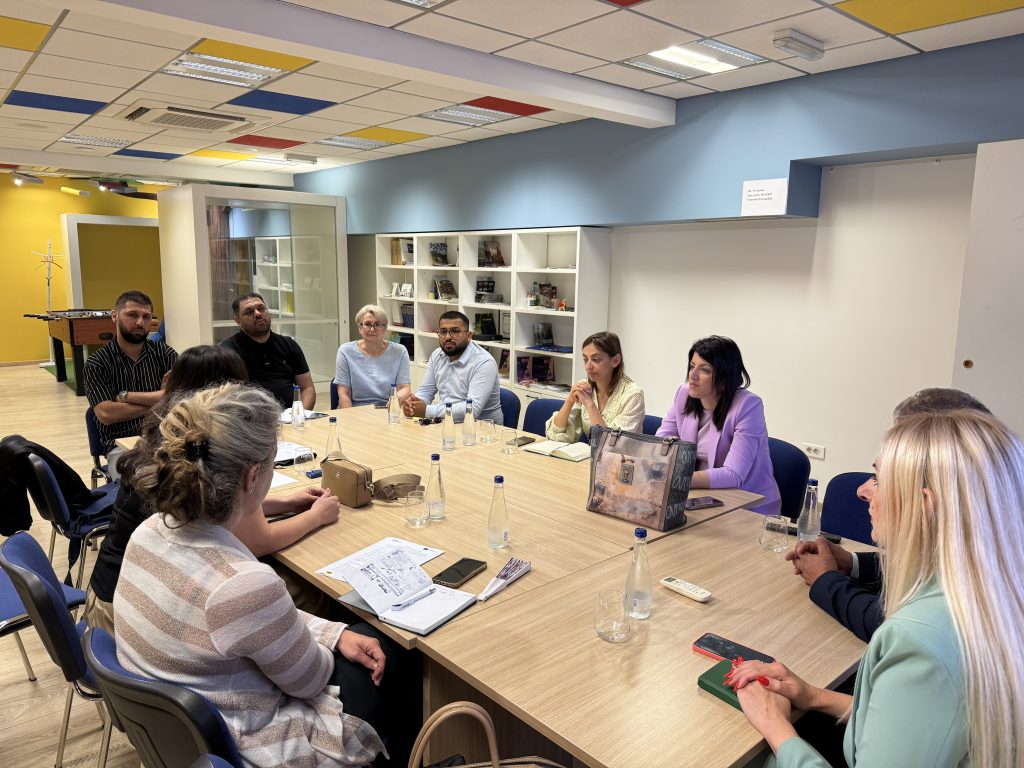
Ahead of the closing event, members of the project’s Working Group met to review progress, discuss challenges, and identify opportunities for strengthening the educational inclusion of Roma children in Montenegro. Bringing together representatives of public institutions and other relevant stakeholders, the discussion focused on the institutionalization of services and support mechanisms that have proven effective in supporting Roma students, with the goal of ensuring their long-term sustainability within the public education system.
The experience in Montenegro demonstrates that meaningful educational inclusion requires coordinated action between institutions, civil society, local communities, and development partners. However, educational inclusion cannot be viewed as an end in itself. As highlighted in REF’s recent regional policy analysis, Bridging Education and Employment: A Comprehensive Policy Analysis of VET Pathways for Roma Youth in the Western Balkans and Türkiye, Roma youth continue to face significant barriers when transitioning from education to employment, despite progress in access to education. The study, which examined seven countries across the region, underscores the need for integrated approaches that connect educational support, skills development, and labour market opportunities, while strengthening the systems that enable Roma young people to successfully navigate this pathway. The Roma Education Fund remains committed to advancing both educational achievement and employability, supporting Roma children and youth build the knowledge, skills, and opportunities needed to thrive in the future

Four Years Cultivating a New Narrative for Roma Youth: the Gallery of Roma Role Models

Posted on April 14, 2025 by admin1

BUCHAREST, Romania – April marks the anniversary of Roma Status (Starea Romilor), a project that began with a single spark on our Facebook page. For four incredible years, our dedicated team in Romania has been building a vibrant Gallery of Roma Role Models. We’ve proudly showcased the inspiring journeys of accomplished young professionals who’ve thrived through our scholarship programs and the powerful stories of remarkable Roma individuals. Every weekday, we share the extraordinary lives of young Romanian Roma, weaving a tapestry of inspiration for all.

The core mission of the Roma Status project is to shine a spotlight on accomplished young Roma professionals – many of whom have benefited from our scholarship programs – and other inspiring individuals with compelling life stories. Five days a week, Roma Status delivers a steady stream of these narratives, aiming to build a powerful legacy of inspiration for our often-misrepresented Roma community.

At the helm of this digital endeavor is Gabriel Zorilă, our project’s spokesperson and the host of our podcast, “Inspiring Stories,” launched three years ago. Gabriel, a passionate advocate for Roma empowerment, articulated the project’s genesis with a personal resonance.

“‘Starea Romilor” emerged from a deep desire to showcase not only our REF students but also the extraordinary Roma who often go unnoticed. It’s a space where we share short, powerful stories designed to ignite inspiration. The individuals featured are truly exceptional, many already making significant contributions, and all serve as vital role models, capable of shifting societal perceptions of Roma.”

Gabriel’s motivation is deeply rooted in his own experiences. “Our aim is to build a future where young Roma can effortlessly find figures to admire and emulate – something I desperately sought in my own adolescence. The absence of visible Roma role models left me feeling isolated. I recall the ground-breaking moment in 2006 of seeing Nicolae Gheorghe and Ciprian Necula, fellow Roma, engaging in intellectual discourse – a revelation that such individuals existed. It was years later that I discovered the rich and diverse community of elite Roma, a world I, as a Roma, had no idea existed.”

The project’s impact, according to Gabriel, has been significant within Romania. “In these four years, close to 1,000 extraordinary young Roma from Romania have been put under the spotlight. People across the country read their inspiring stories, they identify with their struggles and successes.”

Looking ahead, Gabriel harbors ambitious goals for our initiative. “My greatest wish is to go international, and to find funds for us to tell the stories of young Roma from all of Europe,” he stated, hinting at a potential expansion of this Romanian success story onto a broader European stage.

“What a privilege it has been over these years to uncover and share the inspiring stories of remarkable young Roma individuals with our Starea Romilor community! We’ve been thrilled to feature incredible people like Rowena Marin, now a Senior Agency Account Manager at Google in New York; Renata Mihaly, a multi-talented painter, children’s book illustrator, and fashion designer; Eugen Brîndaș, a dedicated urologist; George Buluc, who impressively holds a PhD in Materials Engineering, a law degree, and shares his knowledge as a high school teacher. These powerful examples truly showcase the diversity, talent, and unwavering determination that flourishes within our Roma communities”

Roma Status, while operating primarily through social media and our podcast, represents a compelling case study in how targeted, positive storytelling can contribute to shifting societal narratives and fostering a sense of belonging within our community. As we enter our fifth year, the question remains whether our Romanian initiative can indeed scale its impact and become a pan-European platform for Roma empowerment.

If you’d like to support our work, please consider making a donation to:

Raiffeisen Bank | RO98 RZBR 0000 0600 2051 8203 (EUR)

Account Holder | Roma Education Fund Romania

Stay connected

Initial Founders

The World Bank

An international financial institution that provides loans and grants to the governments of low- and middle-income countries for the purpose of pursuing capital projects.
The World Bank

Open Society Foundations

Financially supports civil society groups around the world, with the stated aim of advancing justice, education, public health and independent media.
Open Society Foundations