Donate

The Password for the Future | Complementary Education Center (CEC) in Romania

Posted on October 28, 2025 by admin1

An editorial signed by Stanislav Daniel, team leader for CECs

This October, I crisscrossed five countries and set foot in five capitals, including the one I reside in, each with its own agenda, its own urgency. Policies debated. Priorities negotiated. Commitments renewed.

If I followed only my itinerary, I should remember the month by the sequence of events: first Brussels, then Bucharest, then Sofia, then further journeys where the calendar demanded my presence. But memory, I’m finding, has its own hierarchy. Because what stays with me is not the marble of conference venues or the polished language of official statements. It’s not even the applause lines meant to convince us that progress is underway.

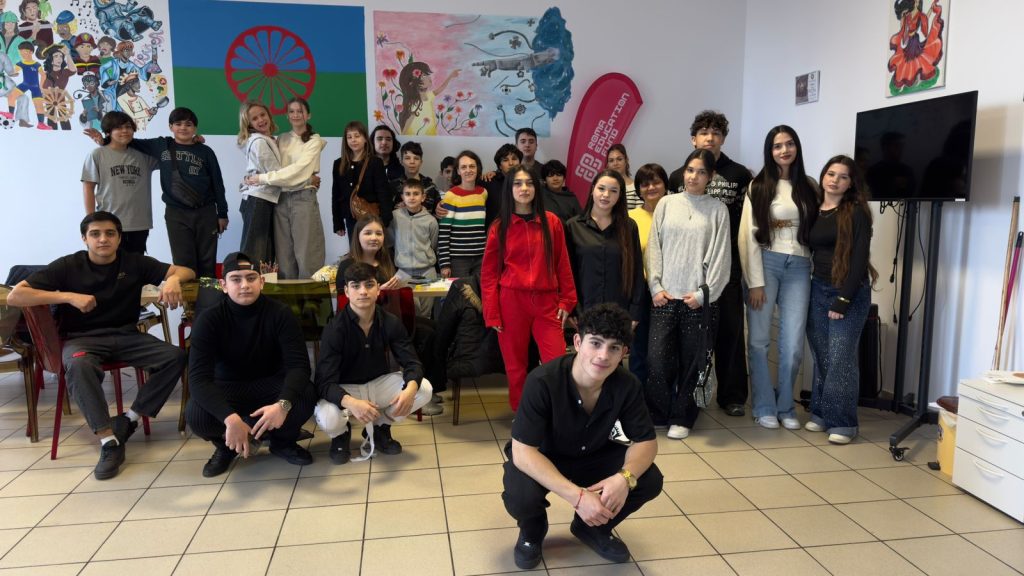
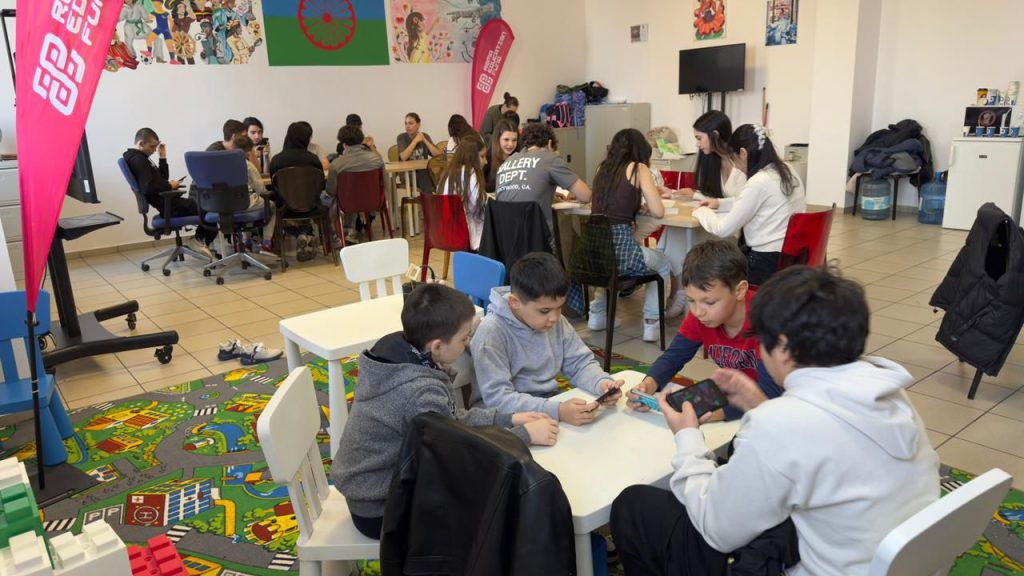
What echoes particularly is a single room in Bucharest, full of life. A room where the air vibrated with children’s laughter and the stubborn determination of climbing up. A room where fall arrived early through paintbrushes dipped in orange and brown. A room where inclusion was not something far in the future, a bullet point in a plan, or a political promise, but something alive, immediate, present.

A Promise in Brussels

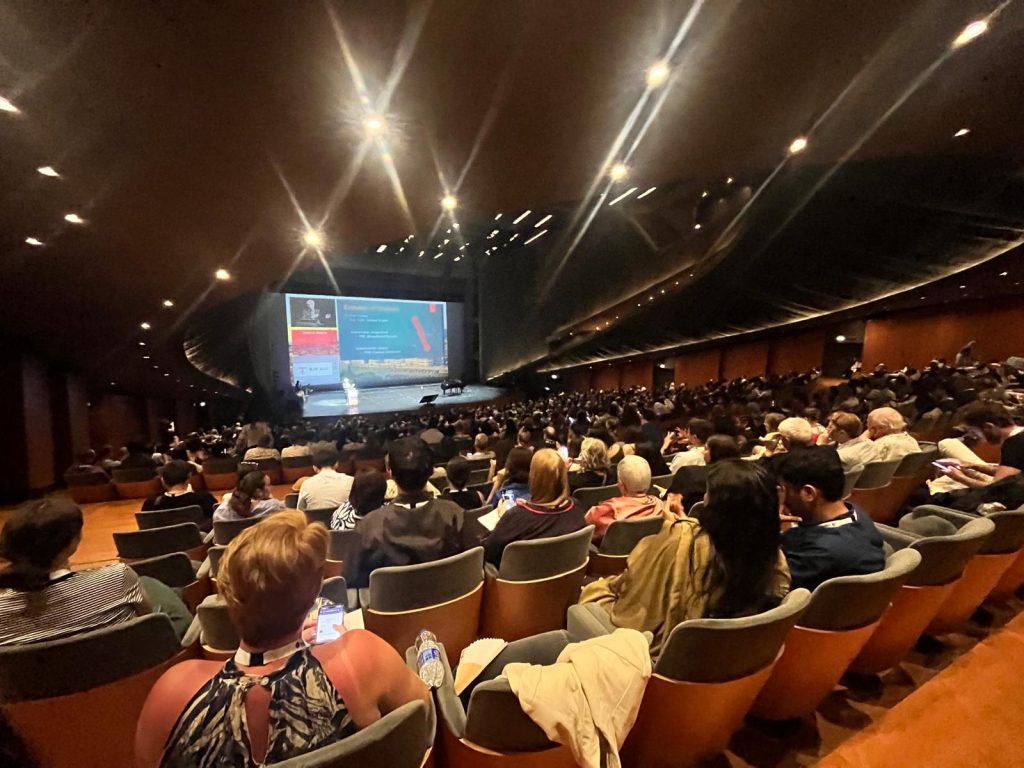
The month began in Brussels, at the European Platform for Roma Inclusion – a checkpoint of sorts, five years into the EU Roma Strategic Framework, which includes plans to improve education for Roma children. We listened to speeches that recognized both progress and the uncomfortable truth: change remains slow, especially in the places where needed it most.

I sat there with the familiar tension in my chest – pride in how far we’ve come, frustration at how far we still must go. Sitting at a podium next to the deputy minister, alumna of our scholarship program, I listened to leaders recognizing the pitfalls. They spoke of accountability, participation, the need for better data and stronger political will. They acknowledged that Roma must shape the policies that concern us.

And then it materialized

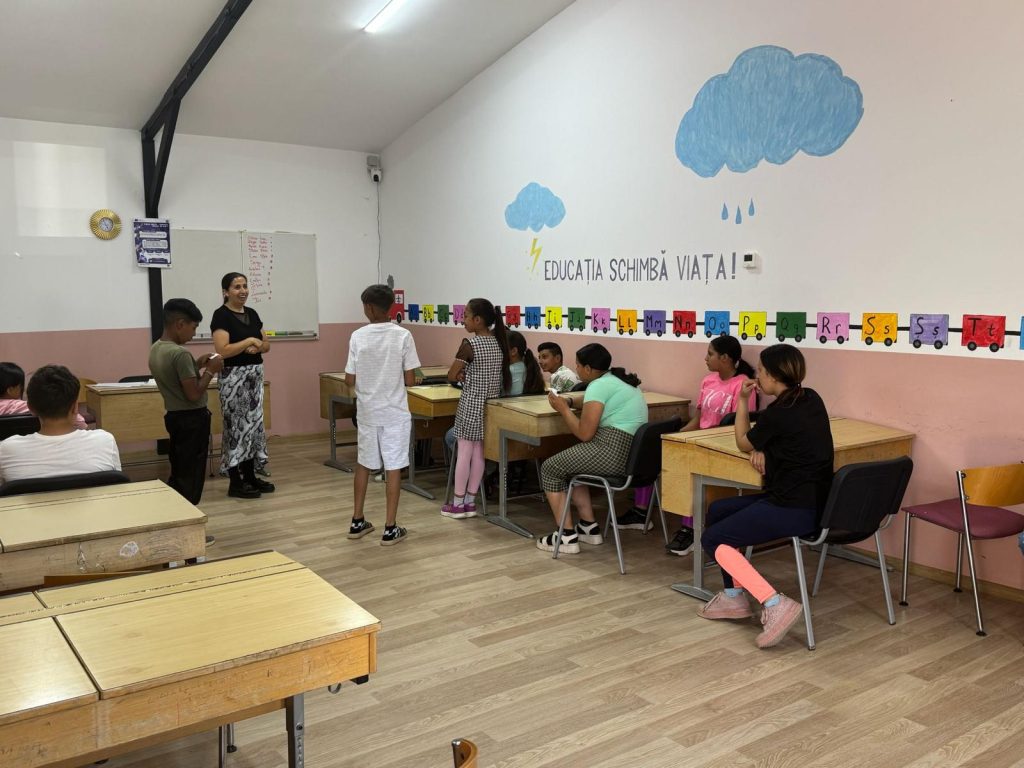
Mid-October can feel like a dull pause between seasons, but not inside REF’s first Complementary Education Center. The moment I stepped in, I felt the energy, a large room buzzing with determination and color.

One side of the space was devoted to mathematics. Children – that day all of them originally from Ukraine, all of them carrying more than children should – leaned over notebooks, trying to catch up to a school system they never planned to join. Their instructor, Ukrainian herself, moved among them with quiet mastery, jumping over age gaps through patience and instinct. When Roman numerals appeared on the board –MCMLXXXIV – a chorus erupted:

“1984!”

The small victory felt like a proof that these kids will not give up!

Screen capture from the Romanian National Broadcaster’s program “Convețuiri,” featuring a story about the CEC.

A few meters away, autumn spilled across watercolor paper. Orange. Amber. Forest green. Here, another group, they weren’t refugees or statistics – just kids, making leaves fall from the trees and capturing movements, mastering stopping of time.

The Complementary Education Center model works because it starts where every child’s story begins — in their community, in their language, with respect for who they are.

Lived Experience

Watching those children learn, I felt something deeply familiar from literature, from our own plans, methodologies. Inclusion, for Roma, has never been a theoretical concept. We learned inclusion and resilience not from policy documents, but from the everyday struggle to belong. We became experts through what researchers might call rigorous participatory action – though most of the time, it simply meant surviving systems not built for us.

At the Platform in Brussels, leaders emphasized that Roma participation is not a favor – it is a democratic necessity, and progress depends on Roma shaping solutions.  I saw that truth right there among the children in Bucharest. This wasn’t charity. It wasn’t a project perfectly aligned to a funding call. It was a community responding to real needs with real knowledge – empathy translated into structure.

We’ll still have to fundraise to keep the activities alive. We’ll need to continue building relationships with authorities. But we know our motivation grows from the grassroots.

Future of Work

At the end of the month, in Sofia at the Future of Work Summit, I found fresh confidence. The agenda read like a mirror held up to our work: skills gaps, AI, digital transitions, inclusive talent pipelines. Because when you travel from policy rooms to classrooms, you ask: Are we aligned with the future? Here, the answer arrived with clarity.

I heard HR leaders say that talent will define cross-border competitiveness. I heard speakers insist that exclusion isn’t just a moral failure – it is a strategic risk. And I grew in confidence: the Complementary Education Center – the children learning, arts, numbers – they aren’t in the margins, they are part of the solution. We are on the right path.

 A Stronger Europe

Looking back, the month lined up like a map of Europe’s choices. Brussels showed what must be done.  Bucharest showed how it can be done. And Sofia showed why it can’t wait.

Together, they formed a simple equation: inclusion + education + skills = a stronger Europe. The Complementary Education Center isn’t just a support program. It is the infrastructure for the next economy — built at child-height, painted in watercolors, and measured in possibilities.
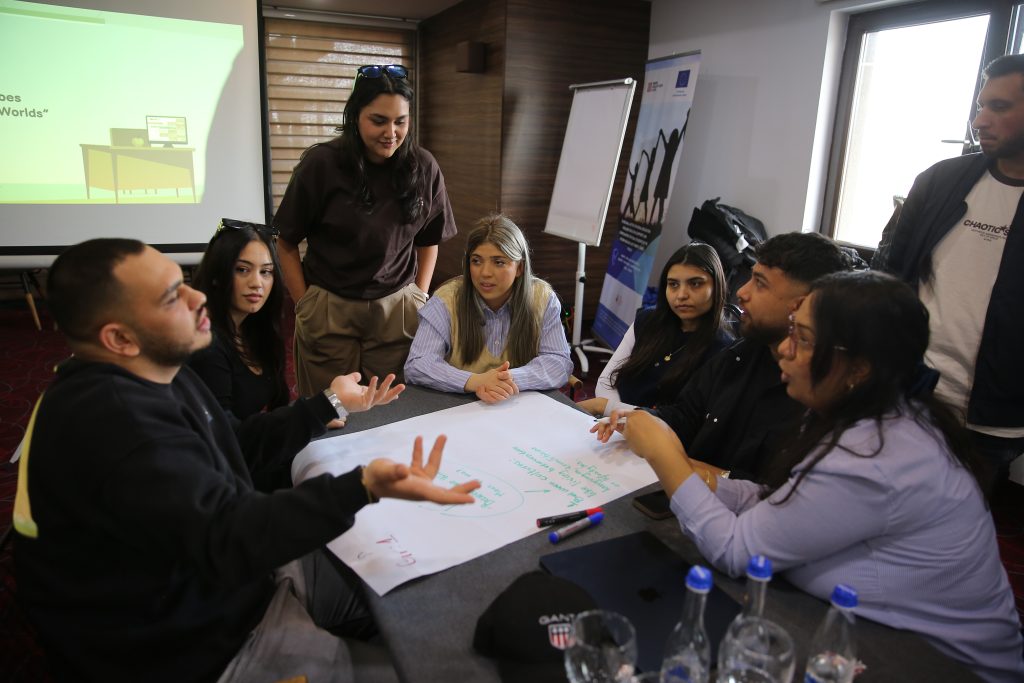
When I think of October now, I don’t see conference agendas or PowerPoint slides. I see a room where children shouted “1984!” like it wasn’t a year in the past but a password to the future. I see leaves painted in colors the world hasn’t named yet. I see the quiet determination of a teacher building bridges faster than policy cycles.
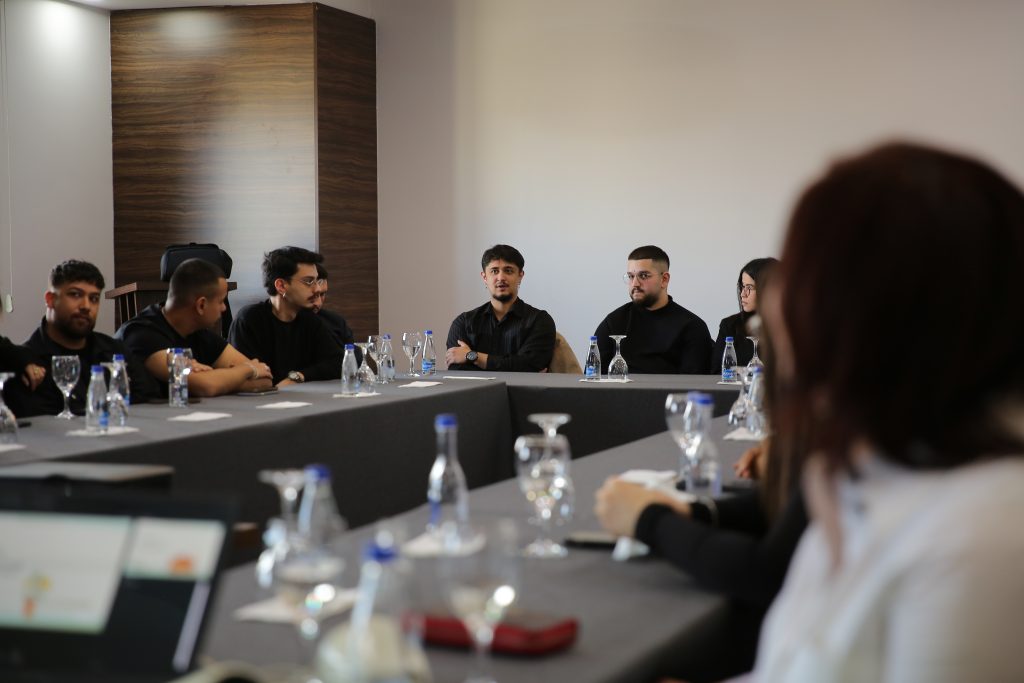
Europe keeps asking how to accelerate change, how to turn strategies into results, how to prepare for the future of work, how to defend growth in a shrinking demographic horizon. The answer is not abstract. It is sitting in that room, pencil tapping, eyes focused, waiting for the world to notice.

If we choose to believe in those children, to invest in their education, trust their talent, honor their identity, then inclusion stops being a promise. It becomes Europe’s smartest bet on its own future.

Roma are the Growth Engine the Western Balkans Can’t Afford to Ignore

Posted on October 13, 2025 by admin1

By Marina Savković, Team Leader for Skills & Employment, Roma Education Fund

The World Bank has sounded the alarm and the Western Balkans should be paying attention. Growth is running on borrowed time. With half the region’s talent sitting on the sidelines, prosperity is hitting a demographic wall. The numbers are blunt: a looming shortfall of 190,000 workers, and entire groups (women, young people, older adults) still missing from the labour market. The takeaway couldn’t be clearer: getting Roma into work isn’t just social policy, it’s smart economics.

At the Roma Education Fund, we’re ready to scale up that activation, not as an add-on, but as a core driver of regional growth. Education is the foundation, employment the bridge. Bring them together, and Roma inclusion can shift from the margins to the mainstream. The only question now is whether policymakers will seize the moment or keep hitting snooze on the region’s wake-up call.

Roma Inclusion as a Growth Accelerator – Why labour markets must no longer ignore us

The World Bank’s new report Jobs Critical to Sustaining Growth in the Western Balkans delivers a serious message: the region is heading into a labour crunch. Over the next five years, the Western Balkans could face a shortfall of more than 190,000 workers if current demographic and labour market trends persist. Meanwhile, unemployment across the region stays above 10 percent, and labour force participation hovers below 55 percent — with women, youth, and older adults as the most under-represented groups.

These figures are not abstract. They validate what REF and many practitioners have observed on the ground for years: excluding any large group from education and employment is a growth risk. If the Western Balkans wants to compete, it must start seeing Roma as an essential strategy for workforce expansion and resilience.

Sanida Samardžić is 37 years old, a mother of two boys, and lives in Novi Sad, where she successfully runs a hair and beauty studio, as well as an educational center. As an experienced educator in the fields of hairdressing and cosmetology, she has shared her knowledge with dozens of Roma women, helping them gain skills, build confidence, and achieve economic stability. Novi Sad, Serbia on 2025.04.07. Photo: Akos Stiller

How the World Bank’s Findings Echo REF’s New Mission?

The Bank’s Jobs Critical to Sustaining Growth in the Western Balkans report identifies the same structural challenges that REF has been addressing for years and points to solutions that lie at the heart of our programs.

First, the World Bank underlines a paradox: even with high unemployment, employers can’t find the workers they need. The problem isn’t a lack of people, it’s barriers in skills, access, and inclusion. These are exactly the barriers REF’s education and employability work seeks to dismantle.

Second, it emphasizes the need to activate underrepresented groups, particularly women, youth, and older adults. These groups often face multiple barriers to entering the labor market. Roma youth, positioned at the intersection of these vulnerabilities — young, marginalized, and often excluded on ethnic grounds — are among those most affected, and most in need of targeted activation.

Third, the report warns of a sharp demographic decline, projecting that the working-age population in the Western Balkans could shrink by nearly 20 percent by 2050. This trend makes the activation of all available human capital — including Roma communities — not only desirable, but indispensable.

Finally, the Bank calls for structural reforms to boost participation and productivity: greater investment in foundational education and health, stronger labour-market inclusion, digital and green skills development, and business environments that attract private capital.

In essence, the World Bank is underscoring exactly what REF has long advocated: that bridging the gap between marginalized communities and the core economy is not charity, but smart economic policy and a precondition for sustainable growth.

How REF’s Approach Responds and What We Propose for Scaling?

Over the past two decades, REF has built robust educational and support systems for Roma children and youth: scholarships, inclusive pedagogy, mentoring, public advocacy, and capacity strengthening in partner schools. That foundation is essential but not sufficient. Education must lead to sustainable livelihoods.

That is why REF now pivots toward employability and activation. Our Skills & Employment strategic program is designed to offer relevant, market‐oriented training in sectors where growth and demand are emerging: digital, green economy, technical trades, service industries. We are building stronger linkages between trainees and employers, embedding mentorship, internships, and job placement support.

In doing so, we anchor our strategy in local realities: capturing sectoral data, consulting with employers, adjusting training curricula to evolving needs, and monitoring which interventions result in sustainable employment. We aim for measurable outcomes not only “number of workshops held,” but number of Roma youth placed in real, dignified jobs.

By aligning public policies, employer initiatives, and community action, Roma employability can move from the margins into the mainstream. Together — governments, businesses, and organizations like REF — we can turn inclusion into one of the Western Balkans’ strongest competitive advantages.

Stay connected

Initial Founders

The World Bank

An international financial institution that provides loans and grants to the governments of low- and middle-income countries for the purpose of pursuing capital projects.
The World Bank

Open Society Foundations

Financially supports civil society groups around the world, with the stated aim of advancing justice, education, public health and independent media.
Open Society Foundations