REF Strengthens Partnership with the Commissioner for the Protection of Equality in Serbia
Posted on June 24, 2026 by admin3
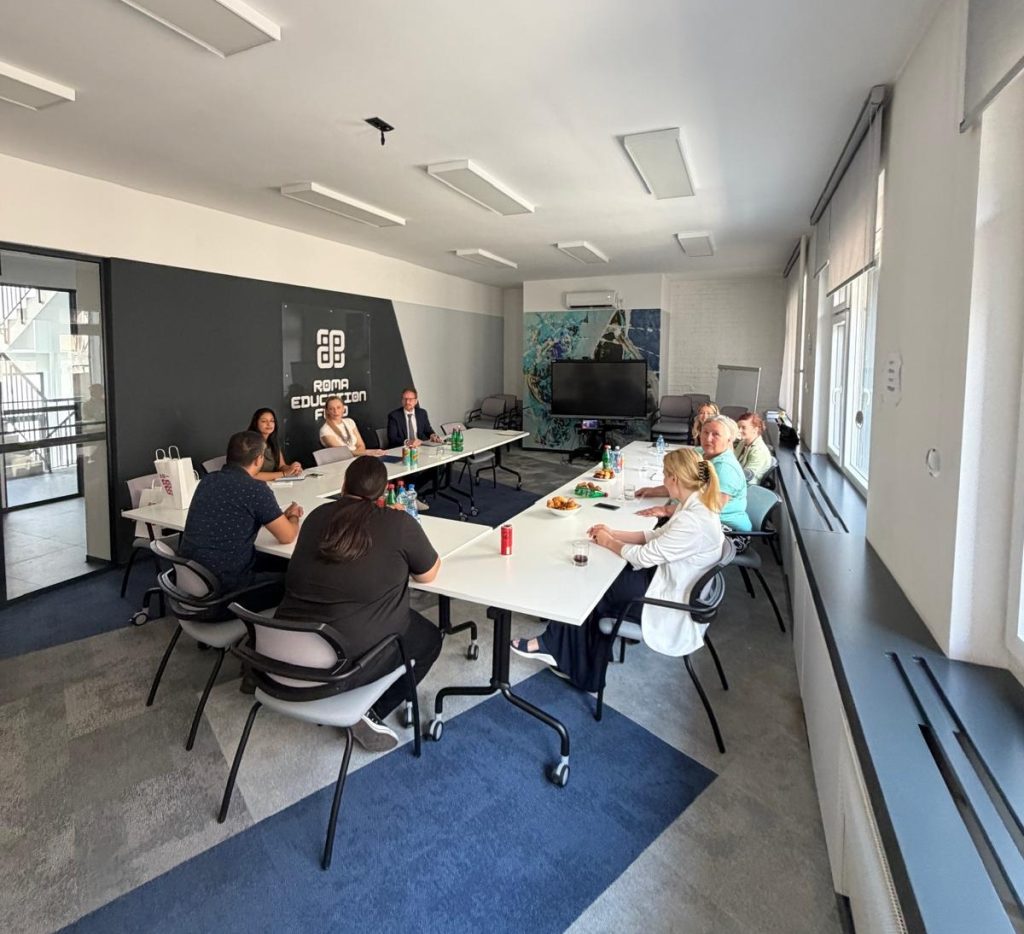
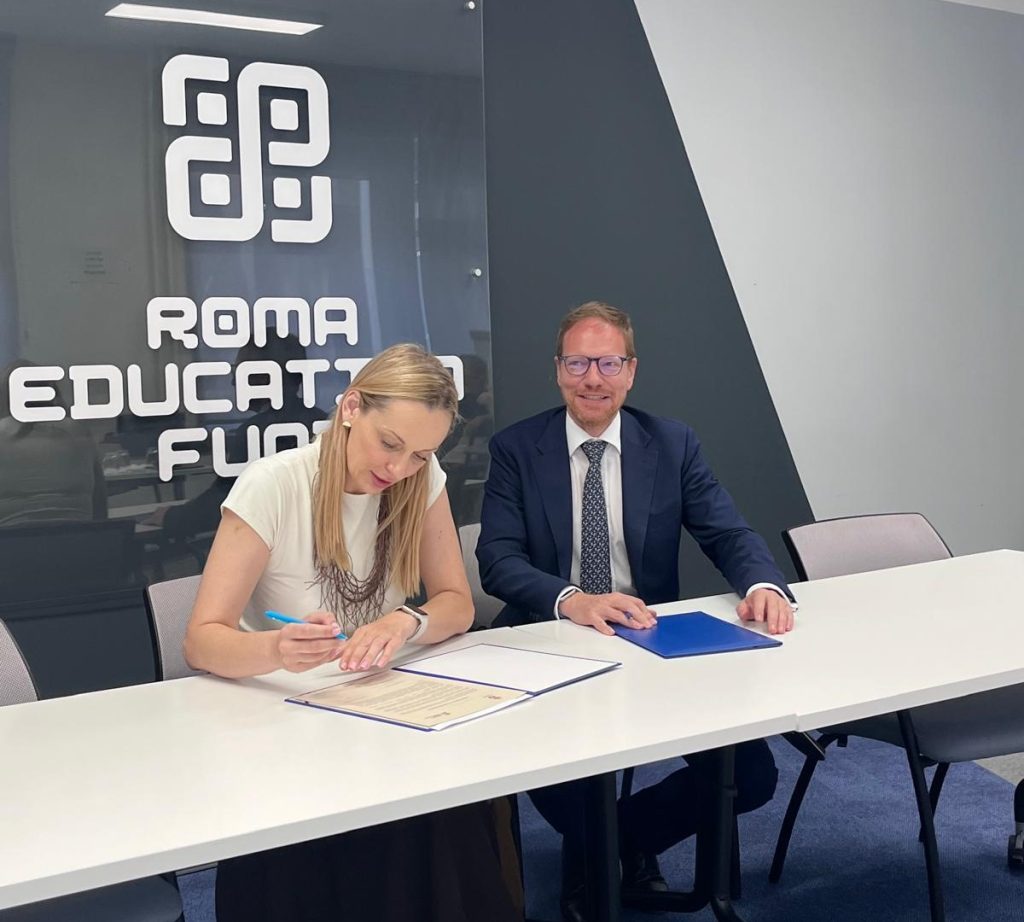
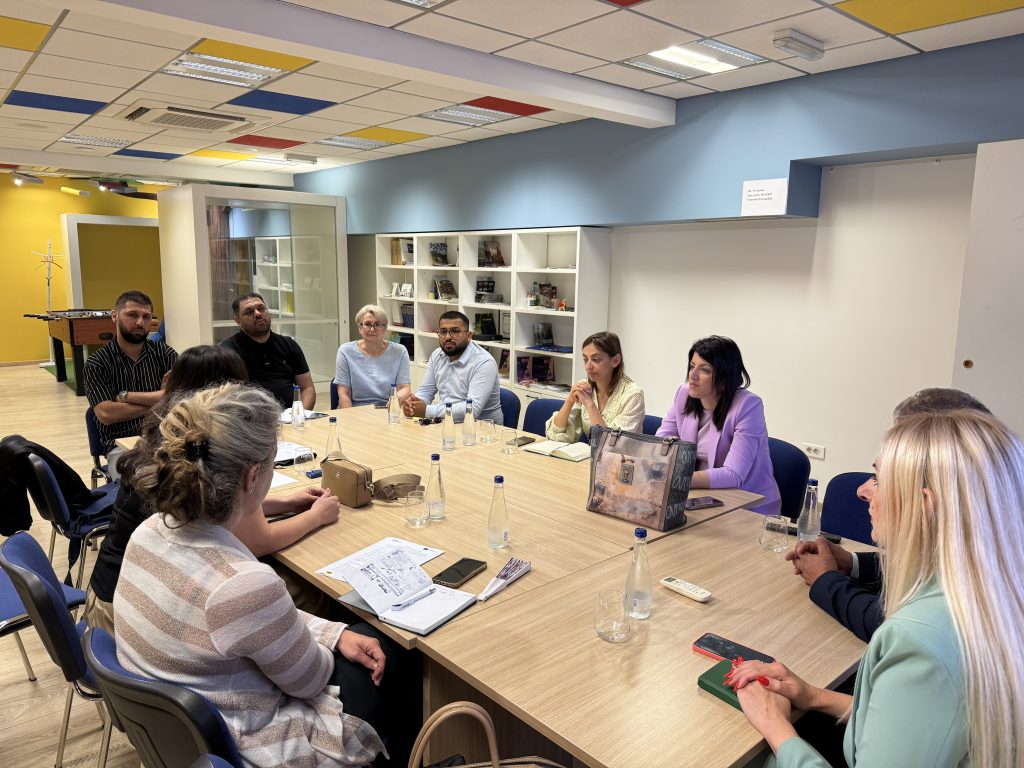
The Roma Education Fund Serbia has formalized its cooperation with the Commissioner for the Protection of Equality through the signing of a Cooperation Agreement and its accession to the Partnership for Equality initiative.
The agreement builds on years of collaboration aimed at expanding opportunities for Roma youth through education, skills development, career guidance, internships, and employment pathways. Both institutions share a commitment to fostering a society in which all individuals can exercise their rights and participate fully in education, employment, and public life without discrimination
Over the past years, cooperation between REF and the Commissioner has developed through internship programs, support for education, professional development, and the empowerment of young Roma women and men. Through joint activities, special attention has been dedicated to raising awareness about human rights, protection against discrimination, and available institutional support mechanisms.
“Roma Education Fund believes that education, employment, and equality are inextricably linked. It is not enough to provide access to education or the labor market if Roma continue to face barriers due to discrimination, prejudice, or unequal opportunities. This is precisely why cooperation with the institution responsible for protecting equality in Serbia is of great importance to our work,” said Dragana Rajić, Program Director of REF Serbia.
The renewed partnership recognizes that successful labour market inclusion requires more than qualifications alone. While education and skills are essential, equal access to opportunities, fair treatment in recruitment and employment, and trust in public institutions remain critical for ensuring that young Roma men and women can fully participate in economic and social life. Removing barriers to employment is not only a matter of rights, but also a prerequisite for building more inclusive and prosperous communities.
This agreement represents another step in REF Serbia’s commitment to building strategicpartnerships that expand opportunities for Roma communities. Alongside collaborations with employers, educational institutions, and public authorities, cooperation with the Commissioner for the Protection of Equality reinforces REF Serbia’s efforts to create pathways where education leads to skills, skills lead to employment, and opportunities are accessible to all, without discrimination or unequal treatment.
More than 250 Roma Students Supported Through RARE II Project in Montenegro
Posted on June 5, 2026 by admin3
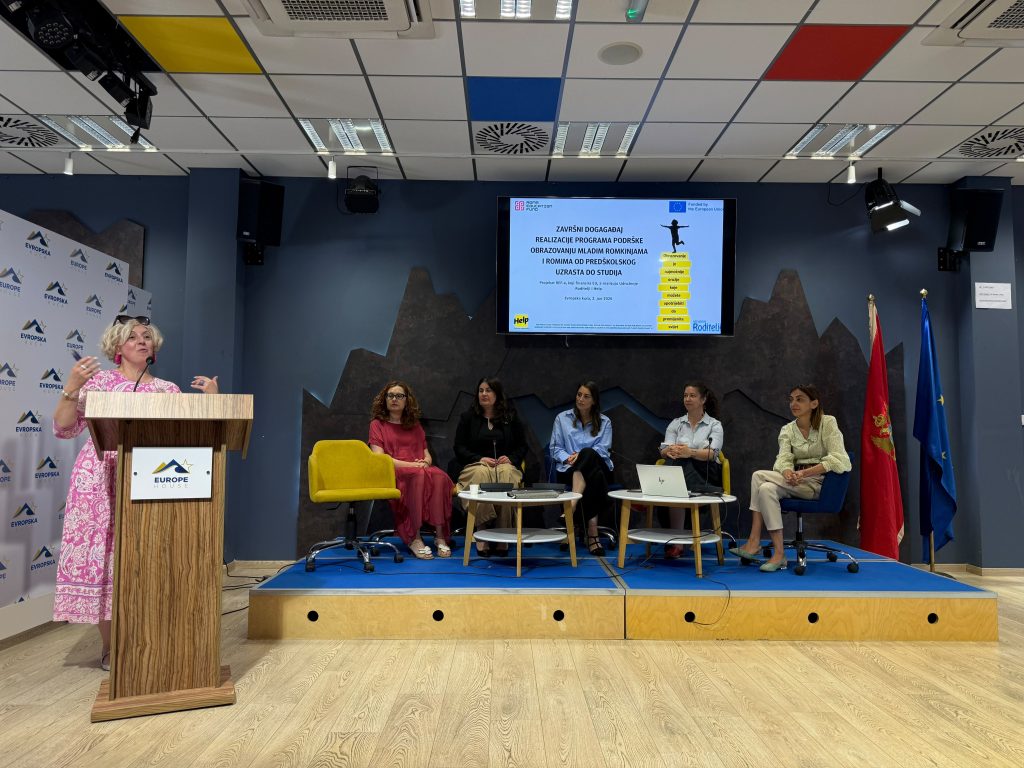
Podgorica, Montenegro – June 2, 2026 | The Roma Education Fund (REF) participated in the closing event of activities implemented in Montenegro by HELP Montenegro and the Parents Association under the project EU Regional Action for Roma Education: Increased Education Support and Opportunities for Roma Students in the Western Balkans and Türkiye (RARE) Phase II (RARE II). Funded by the European Union through Directorate-General for Enlargement and Eastern Neighbourhood (DG ENEST) and implemented by the Roma Education Fund Serbia and Romania, the project supports increased educational opportunities and inclusion for Roma students across the Western Balkans and Türkiye.
Over the past two academic years, the project has provided comprehensive educational support to more than 250 Roma children and young people across Montenegro. Through scholarships, learning materials, paid internship opportunities, and the support of local volunteers, facilitators, and educators, the initiative helped strengthen learning outcomes, improve literacy, and support the development of essential skills for educational and professional success.
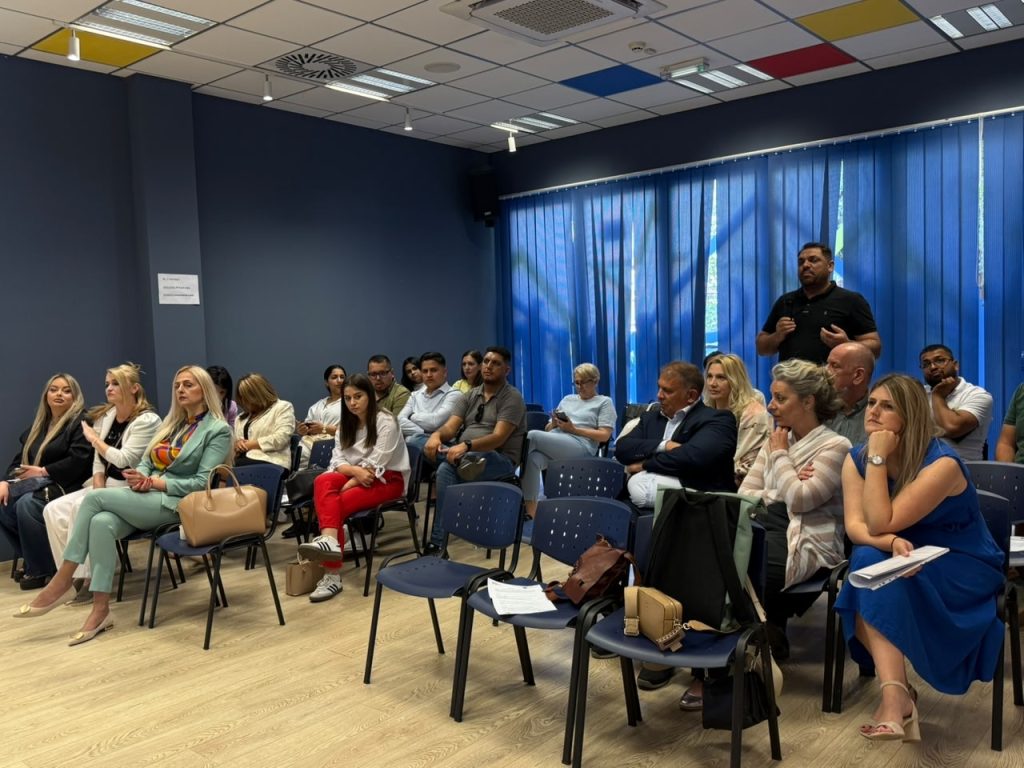
The closing event, held at the European House in Podgorica, brought together representatives of public institutions, civil society organizations, educators, and development partners committed to advancing the educational inclusion of Roma children and youth in Montenegro. The gathering provided an opportunity to reflect on the project’s achievements, share lessons learned, and discuss ways to sustain and further strengthen support mechanisms for Roma students within the education system.
Addressing participants at the event, Ms. Mladenka Tešić, representative of the European Union Delegation to Montenegro, emphasized the importance of ensuring the sustainability of successful interventions through their integration into public systems and policies. She noted that lasting progress depends on creating institutional mechanisms capable of supporting Roma and Egyptian children and youth throughout their educational journey.
Speaking on behalf of the Roma Education Fund, Ana Duraki highlighted the commitment of local partners and frontline practitioners whose work made these results possible.
“Anyone who has had the opportunity to follow the development of this project in Montenegro over the past years can clearly see that the results we discussed today were achieved through the extraordinary dedication of the people working on the ground. Their continuous efforts supported the education of more than 250 Roma children and helped address their needs throughout the school year. Both the Roma Education Fund and the European Commission remain committed to supporting the education and employability of Roma communities in Montenegro, and we look forward to continuing this successful partnership and building on these achievements in the years ahead.”
Ahead of the closing event, members of the project’s Working Group met to review progress, discuss challenges, and identify opportunities for strengthening the educational inclusion of Roma children in Montenegro. Bringing together representatives of public institutions and other relevant stakeholders, the discussion focused on the institutionalization of services and support mechanisms that have proven effective in supporting Roma students, with the goal of ensuring their long-term sustainability within the public education system.
The experience in Montenegro demonstrates that meaningful educational inclusion requires coordinated action between institutions, civil society, local communities, and development partners. However, educational inclusion cannot be viewed as an end in itself. As highlighted in REF’s recent regional policy analysis, Bridging Education and Employment: A Comprehensive Policy Analysis of VET Pathways for Roma Youth in the Western Balkans and Türkiye, Roma youth continue to face significant barriers when transitioning from education to employment, despite progress in access to education. The study, which examined seven countries across the region, underscores the need for integrated approaches that connect educational support, skills development, and labour market opportunities, while strengthening the systems that enable Roma young people to successfully navigate this pathway. The Roma Education Fund remains committed to advancing both educational achievement and employability, supporting Roma children and youth build the knowledge, skills, and opportunities needed to thrive in the future
Unlocking Roma Economic Potential | REF Intensifies Employment Partnerships across Serbia
Posted on June 4, 2026 by admin3
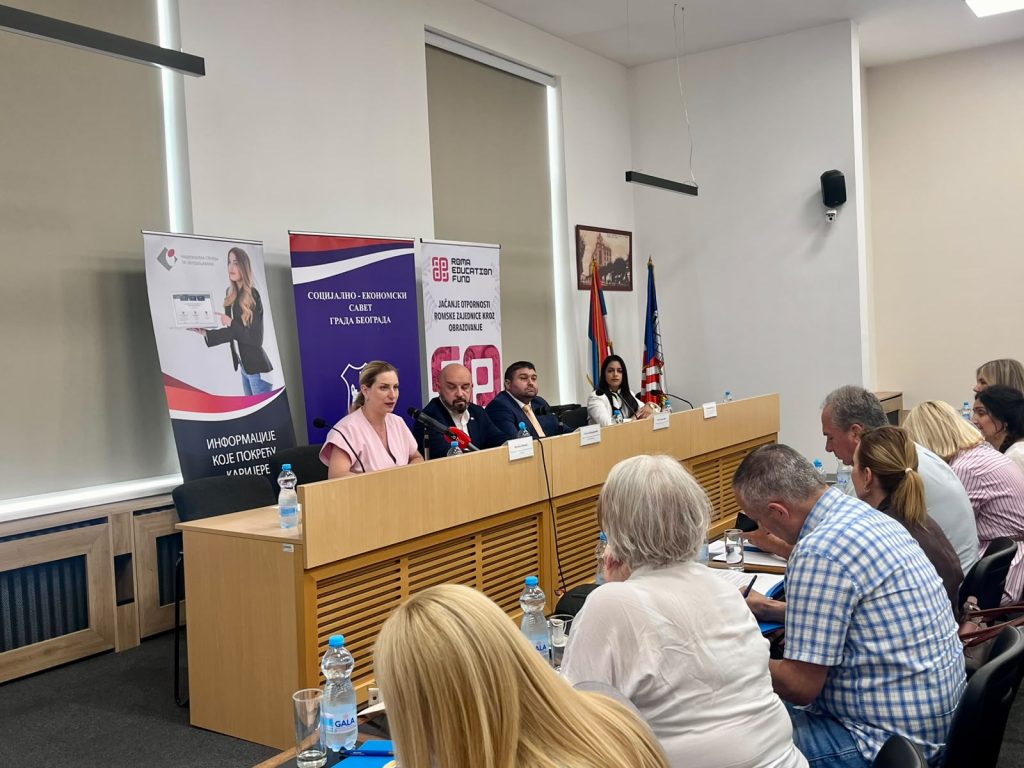
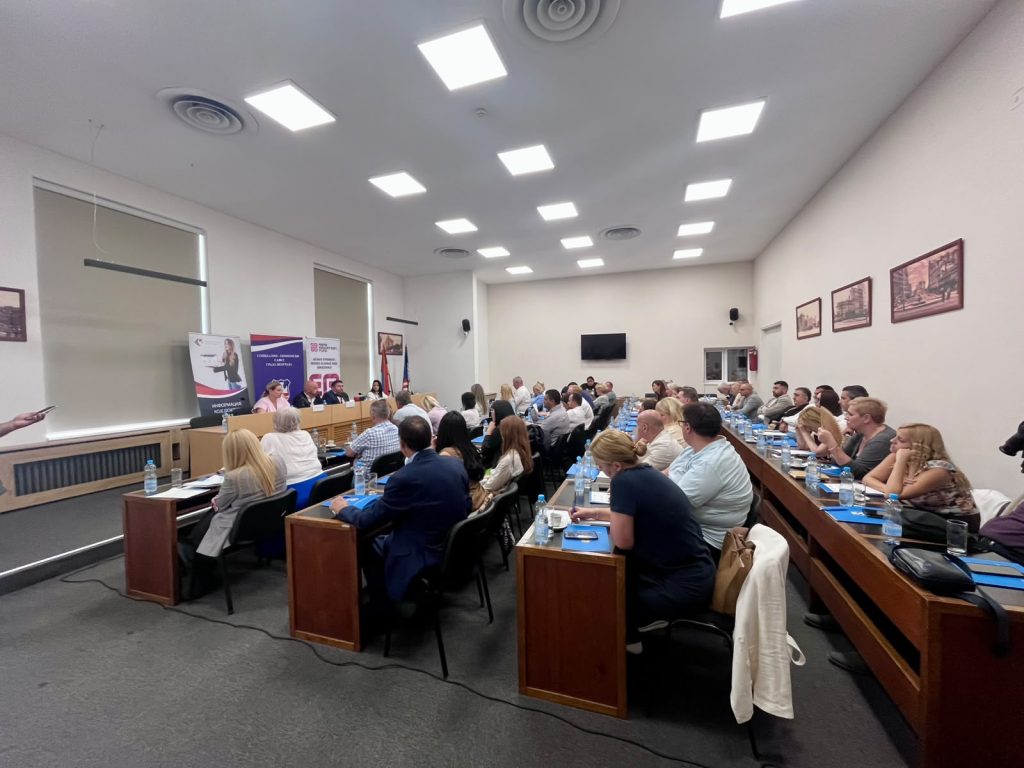
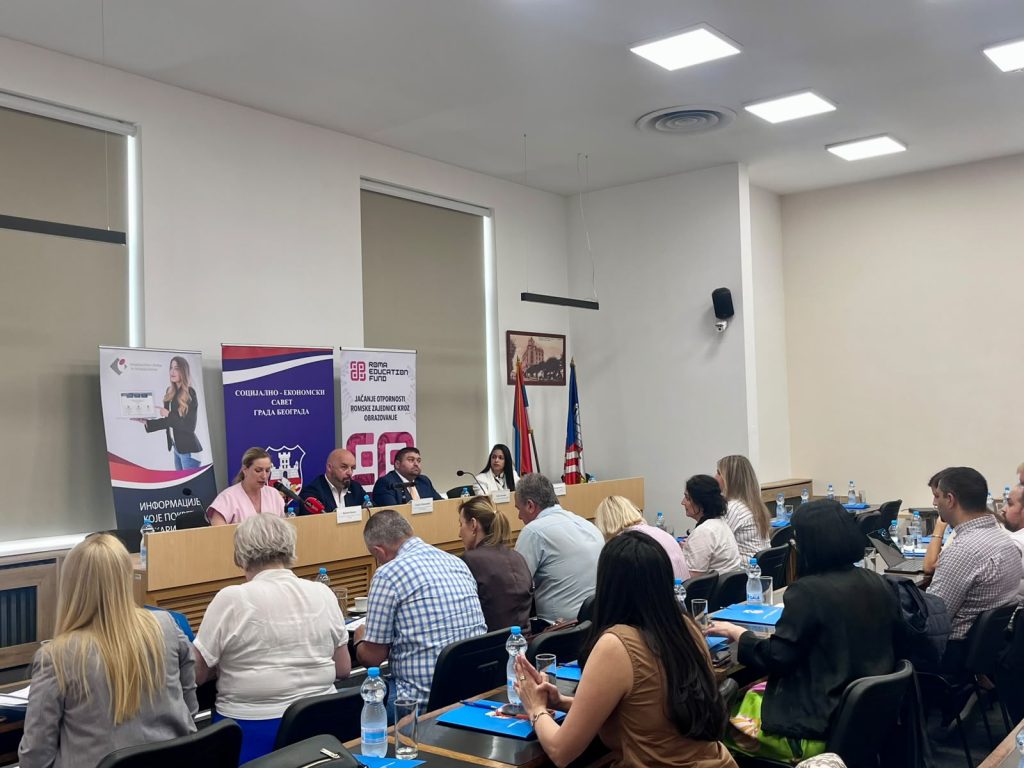
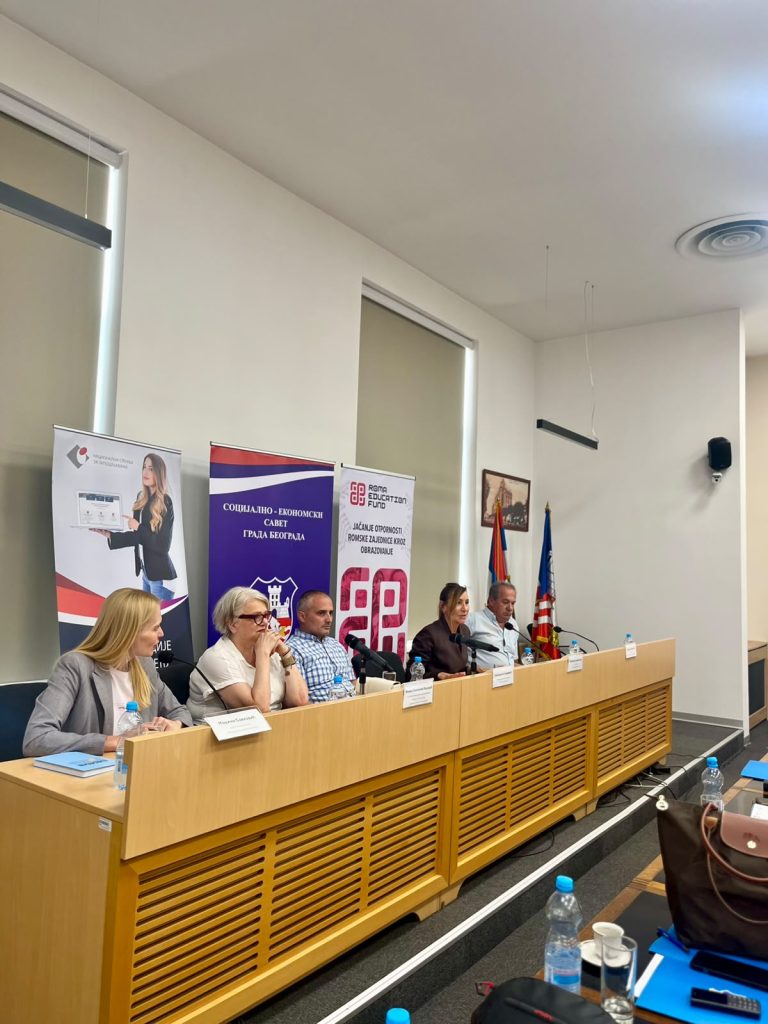
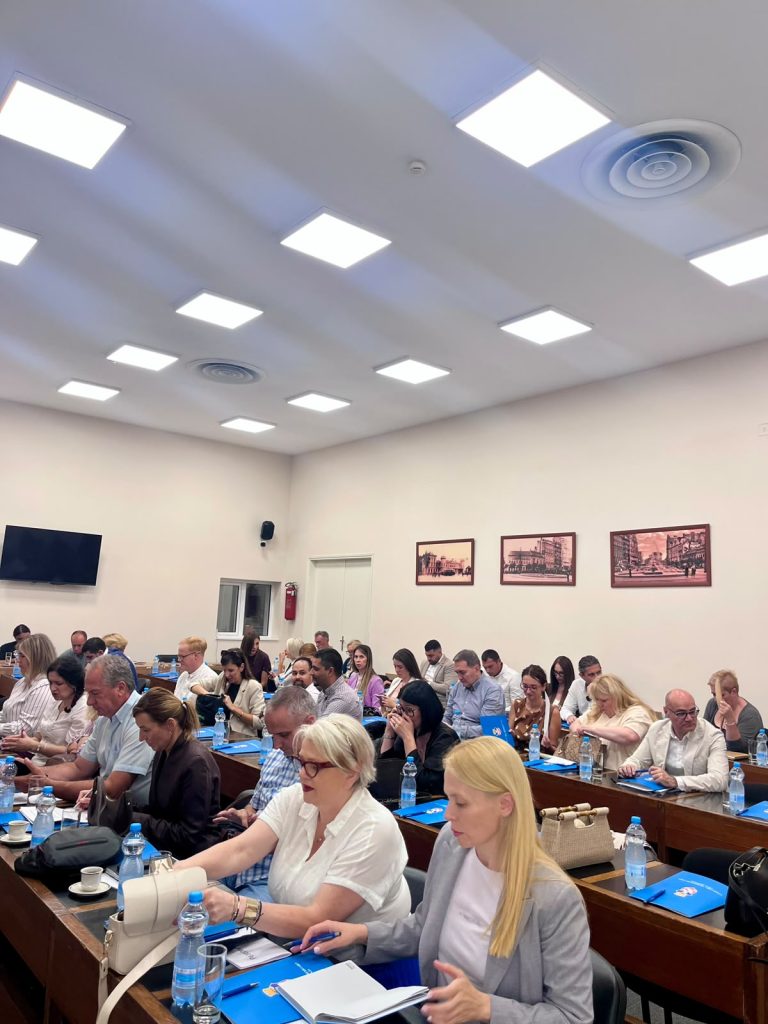
Representatives of public institutions, employers, trade unions, and civil society gathered on June 3rd at the Belgrade City Assembly for a roundtable dedicated to one of the most important challenges facing the labour market: improving employment opportunities for jobseekers facing multiple barriers to labour market participation, including Roma women and men.
The event was organized by Roma Education Fund Serbia in cooperation with the Socio-Economic Council of the City of Belgrade, the National Employment Service, Belgrade Branch, and the Centre for Social Work, bringing together key stakeholders committed to creating a more inclusive and responsive labour market.
The roundtable was opened by Srđan Srbljanović, Assistant Minister for Human and Minority Rights and Social Dialogue, Igor Jovanović, Deputy President of the Belgrade City Assembly, Violeta Filip, Member of the Belgrade City Council, and Marijana Rakić, Public Relations Officer at Roma Education Fund.
Addressing participants, Srđan Srbljanović emphasized the importance of coordinated action among institutions, employers, and civil society in tackling barriers to employment.
“Access to the labour market remains challenging for certain vulnerable groups. The barriers they face may be economic, social, or educational in nature, but they can also stem from prejudice and discrimination. This is why it is essential for institutions, local governments, employment services, employers, trade unions, and civil society organizations to work together.”
Speaking about the role of the city in creating opportunities for all citizens, Igor Jovanović highlighted that sustainable development must go hand in hand with inclusion.
“Belgrade is a city that continues to grow and attract investment, but our success will not be measured solely by the number of investments or new developments. It will also be measured by how well we provide opportunities to those who need them the most.”
For REF, this discussion forms part of a broader effort to strengthen pathways between education, skills development, and employment. Through its strategic pillar Skills & Employment, the organization works to connect Roma communities, institutions, employers, and education providers around a shared objective: creating sustainable opportunities for economic participation and long-term prosperity for Roma communties.
“For years, the Roma Education Fund has been actively building bridges between Roma communities, the education system, the labour market, and institutions. Today’s meeting is an opportunity to better understand the needs of employers and the labour market, while jointly contributing to the development of qualified professionals who are prepared to meet those needs,” said Marijana Rakić.
The discussion continued with a panel moderated by Marina Savković, Director of REF’s Skills and Employment Programs, featuring representatives of institutions and organizations that play a key role in shaping labour market opportunities and employment policies.
Panelists included Željka Zelenović Vuković, Head of the Employer Relations Department at the National Employment Service – Belgrade Branch, Svetlana Budimčević, Acting Director of the Serbian Employers’ Union, Dragan Todorović, President of the Confederation of Autonomous Trade Unions of Belgrade, and Nemanja Antonijević, Head of the Surčin Department of the Centre for Social Work.
The Belgrade roundtable also builds on a series of recent initiatives through which REF has intensified its activities across Serbia under the Skills & Employment pillar.
In May, REF and the Serbian Employers Association launched a strategic partnership aimed at strengthening Roma workforce participation through vocational training, workforce preparation, employment mediation, mentorship, and long-term job retention support. The partnership reflects a shared commitment to creating practical employer-driven pathways into the labour market while responding to growing workforce needs across the country. REF has also expanded cooperation with municipalities, employers, and employment services. In Kragujevac, recent employment initiatives demonstrated the value of coordinated action, connecting jobseekers, institutions, and employers while creating new opportunities for skills development and workforce integration.
Together, these efforts contribute to a larger vision. Across Serbia and the Western Balkans, employers face labour shortages, demographic decline, and increasing demand for skilled workers. At the same time, Roma communities represent one of the youngest and most underutilized sources of talent in the region.
REF believes that Roma inclusion is a strategic investment in economic growth, competitiveness, and resilience. Unlocking Roma economic potential requires more than individual projects. It requires systems that connect education, skills, employers, institutions, and communities in ways that create lasting opportunities.
The discussion in Belgrade represents another important step in REF’s efforts to strengthen Roma participation in the labour market. By bringing together decision-makers, employers, employment services, trade unions, and civil society organizations, the event reinforced a shared commitment to creating practical pathways that connect Roma talent with employment opportunities.
We extend our sincere thanks to all participants for their openness, expertise, and commitment to working together.
Stay connected
Subscribe to our newsletter
Get the latest Roma Education Fund news, stories and announcements in your inbox
An international financial institution that provides loans and grants to the governments of low- and middle-income countries for the purpose of pursuing capital projects.