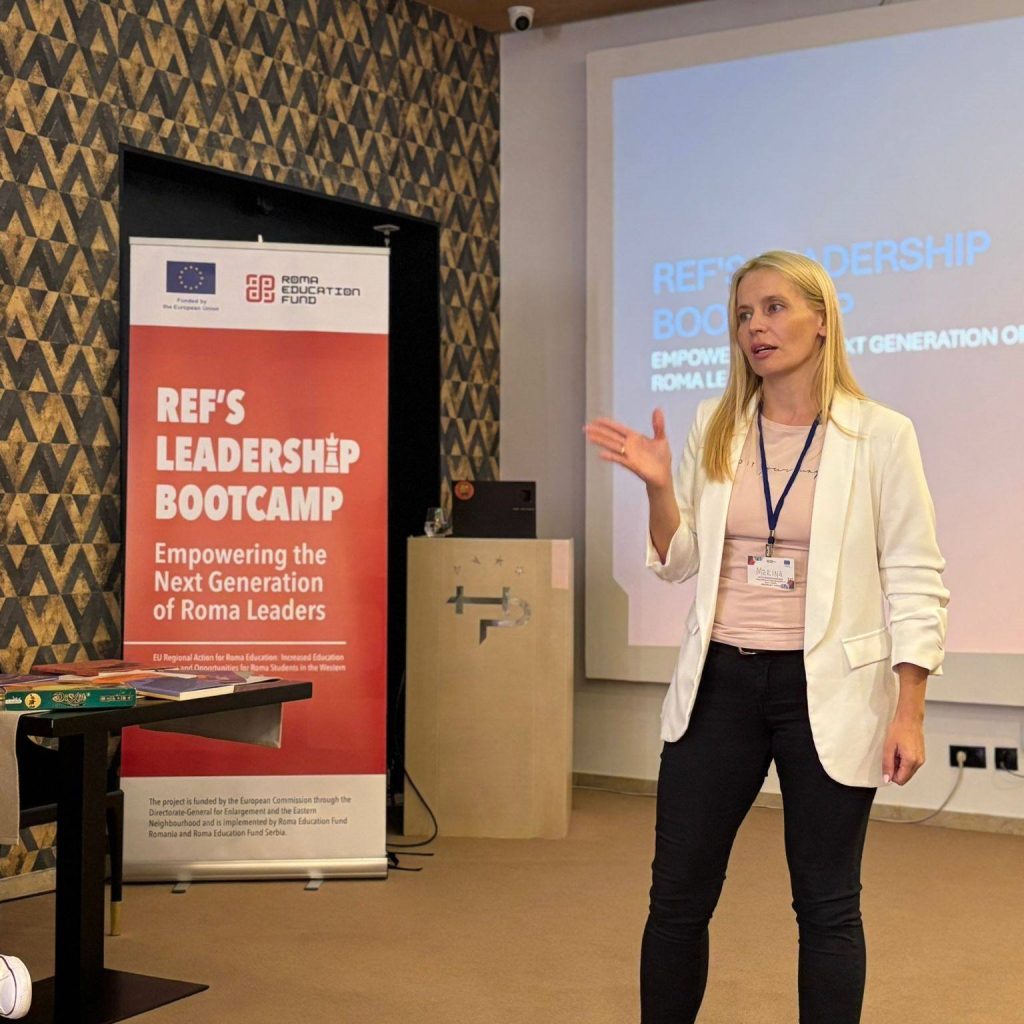
More than 250 Roma Students Supported Through RARE II Project in Montenegro
Posted on June 5, 2026 by admin3
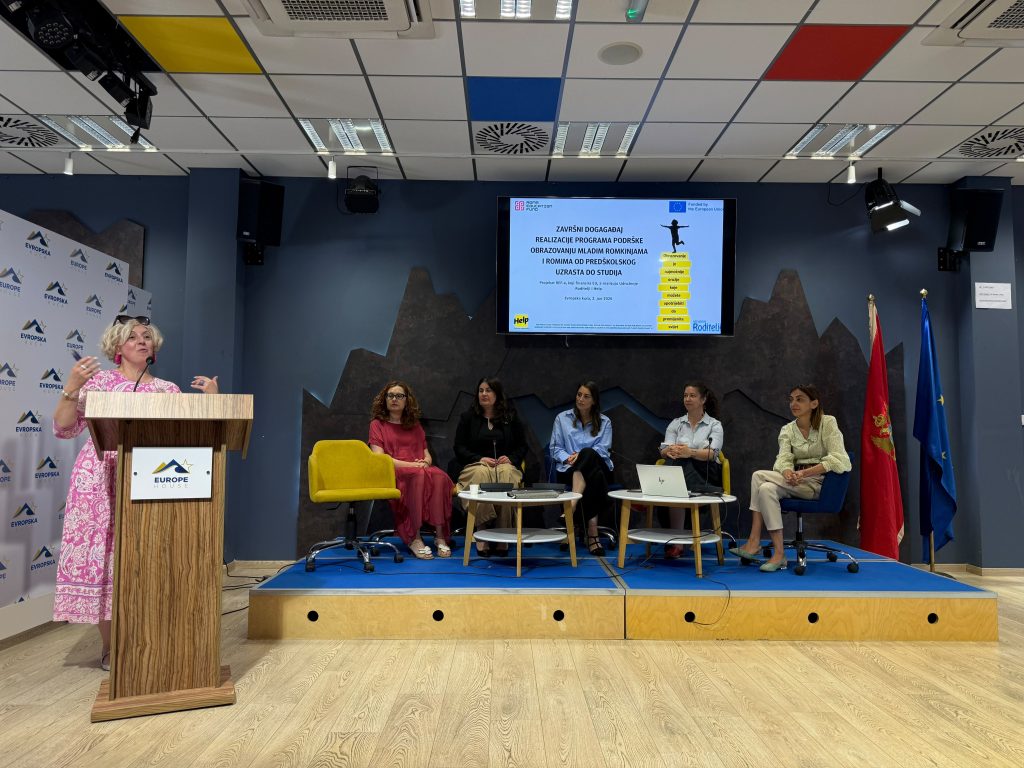
Podgorica, Montenegro – June 2, 2026 | The Roma Education Fund (REF) participated in the closing event of activities implemented in Montenegro by HELP Montenegro and the Parents Association under the project EU Regional Action for Roma Education: Increased Education Support and Opportunities for Roma Students in the Western Balkans and Türkiye (RARE) Phase II (RARE II). Funded by the European Union through Directorate-General for Enlargement and Eastern Neighbourhood (DG ENEST) and implemented by the Roma Education Fund Serbia and Romania, the project supports increased educational opportunities and inclusion for Roma students across the Western Balkans and Türkiye.
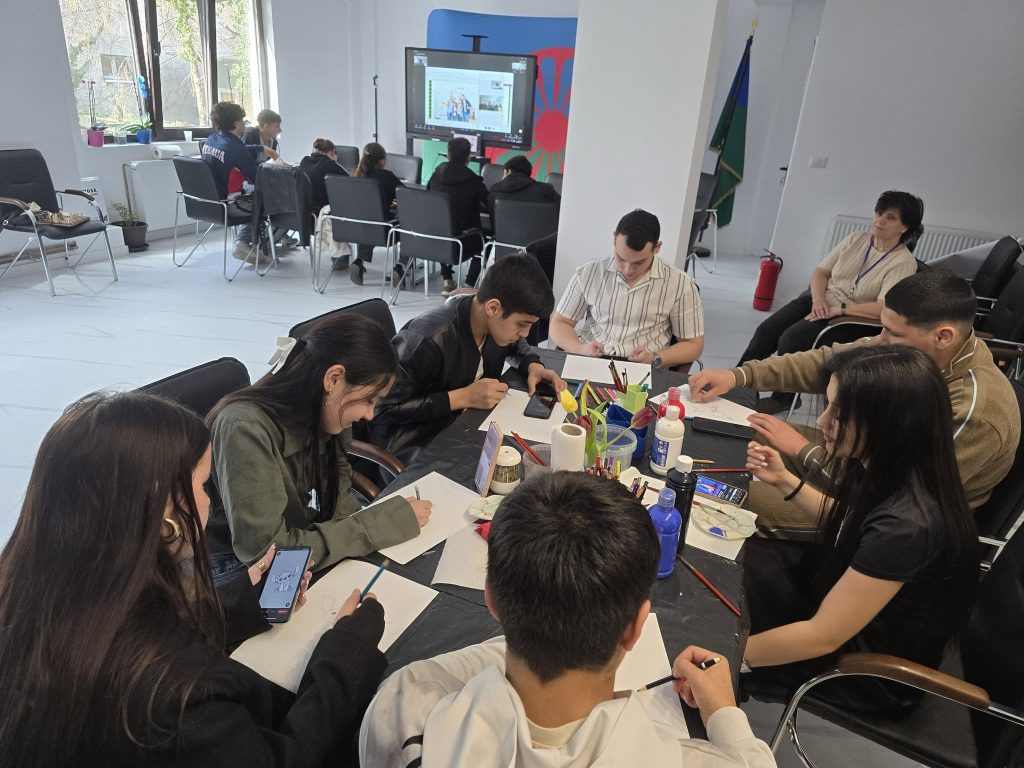
Over the past two academic years, the project has provided comprehensive educational support to more than 250 Roma children and young people across Montenegro. Through scholarships, learning materials, paid internship opportunities, and the support of local volunteers, facilitators, and educators, the initiative helped strengthen learning outcomes, improve literacy, and support the development of essential skills for educational and professional success.
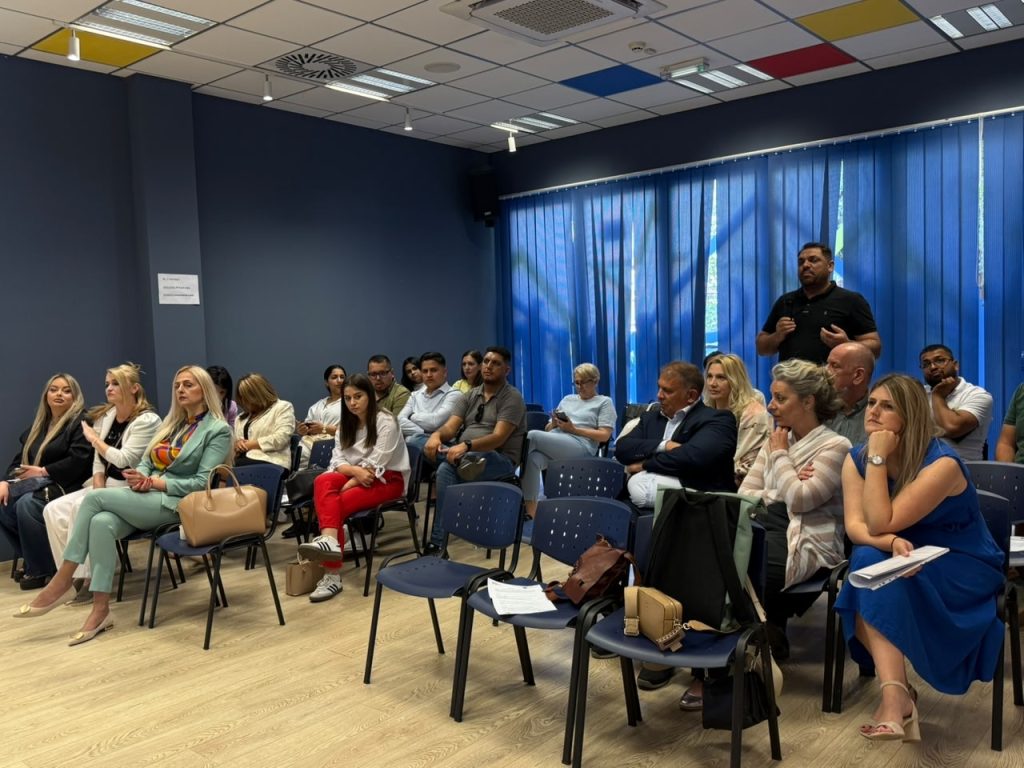
The closing event, held at the European House in Podgorica, brought together representatives of public institutions, civil society organizations, educators, and development partners committed to advancing the educational inclusion of Roma children and youth in Montenegro. The gathering provided an opportunity to reflect on the project’s achievements, share lessons learned, and discuss ways to sustain and further strengthen support mechanisms for Roma students within the education system.
Addressing participants at the event, Ms. Mladenka Tešić, representative of the European Union Delegation to Montenegro, emphasized the importance of ensuring the sustainability of successful interventions through their integration into public systems and policies. She noted that lasting progress depends on creating institutional mechanisms capable of supporting Roma and Egyptian children and youth throughout their educational journey.
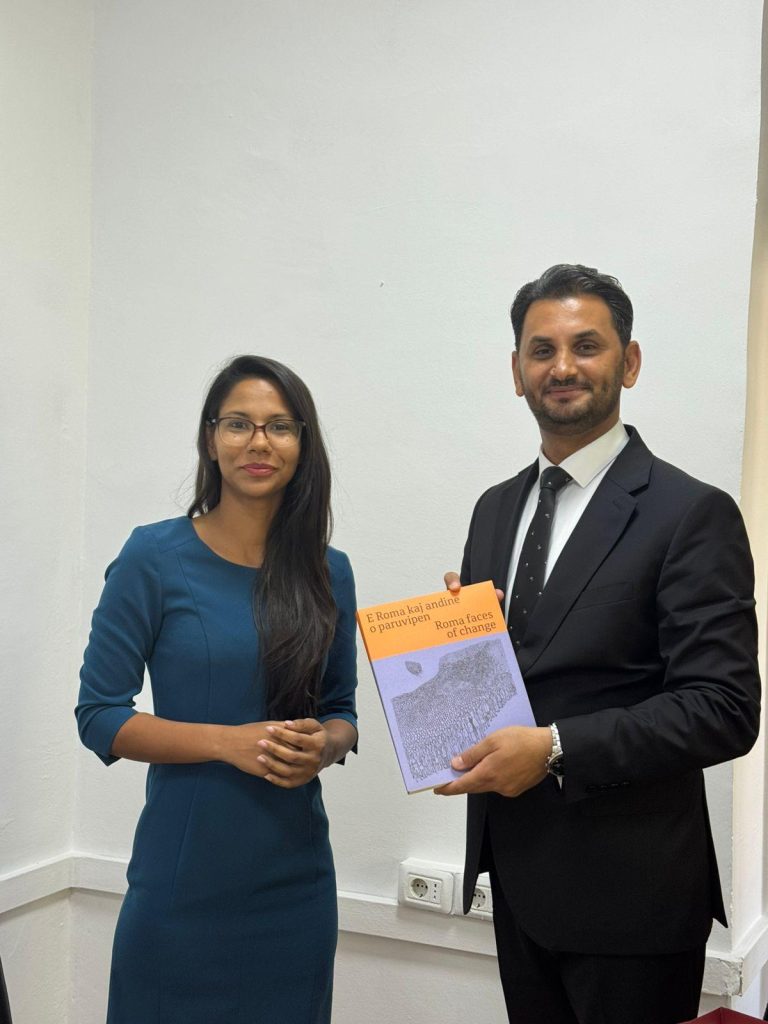
Speaking on behalf of the Roma Education Fund, Ana Duraki highlighted the commitment of local partners and frontline practitioners whose work made these results possible.
“Anyone who has had the opportunity to follow the development of this project in Montenegro over the past years can clearly see that the results we discussed today were achieved through the extraordinary dedication of the people working on the ground. Their continuous efforts supported the education of more than 250 Roma children and helped address their needs throughout the school year. Both the Roma Education Fund and the European Commission remain committed to supporting the education and employability of Roma communities in Montenegro, and we look forward to continuing this successful partnership and building on these achievements in the years ahead.”
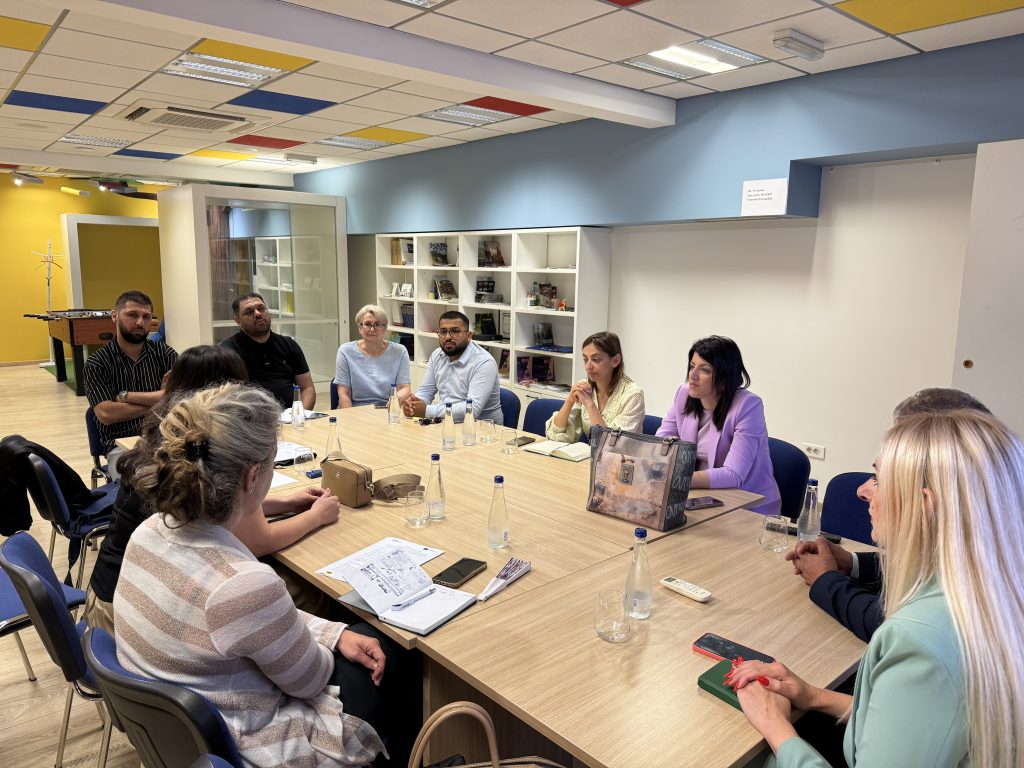
Ahead of the closing event, members of the project’s Working Group met to review progress, discuss challenges, and identify opportunities for strengthening the educational inclusion of Roma children in Montenegro. Bringing together representatives of public institutions and other relevant stakeholders, the discussion focused on the institutionalization of services and support mechanisms that have proven effective in supporting Roma students, with the goal of ensuring their long-term sustainability within the public education system.
The experience in Montenegro demonstrates that meaningful educational inclusion requires coordinated action between institutions, civil society, local communities, and development partners. However, educational inclusion cannot be viewed as an end in itself. As highlighted in REF’s recent regional policy analysis, Bridging Education and Employment: A Comprehensive Policy Analysis of VET Pathways for Roma Youth in the Western Balkans and Türkiye, Roma youth continue to face significant barriers when transitioning from education to employment, despite progress in access to education. The study, which examined seven countries across the region, underscores the need for integrated approaches that connect educational support, skills development, and labour market opportunities, while strengthening the systems that enable Roma young people to successfully navigate this pathway. The Roma Education Fund remains committed to advancing both educational achievement and employability, supporting Roma children and youth build the knowledge, skills, and opportunities needed to thrive in the future
Unlocking Roma Economic Potential | REF Intensifies Employment Partnerships across Serbia
Posted on June 4, 2026 by admin3
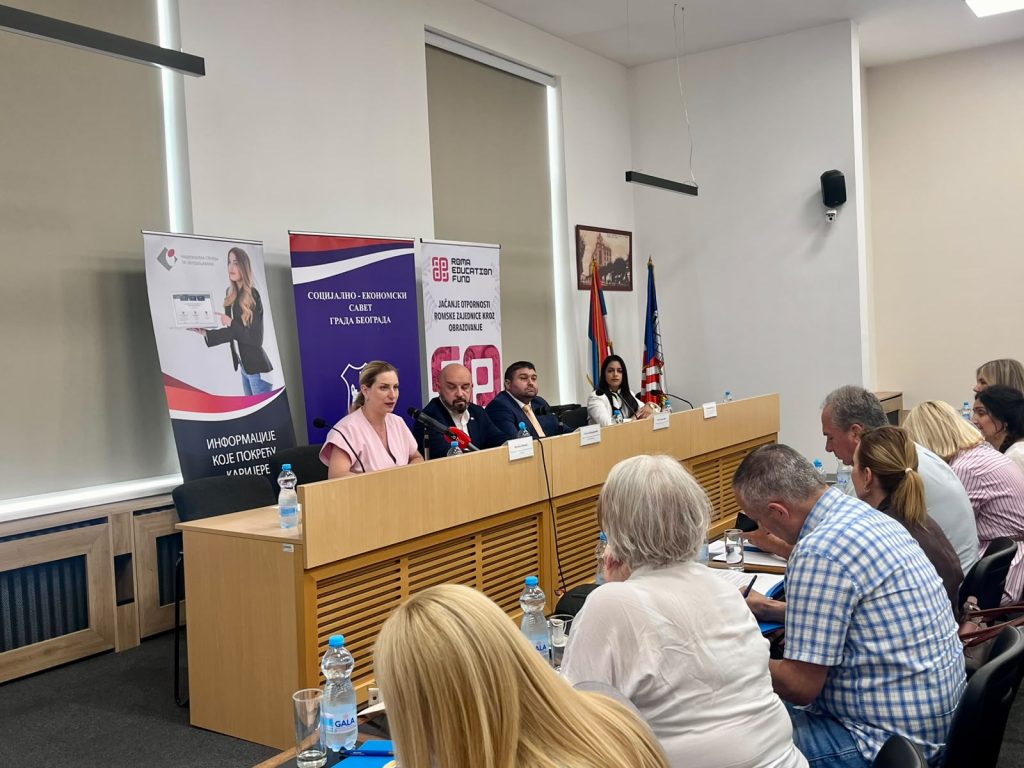
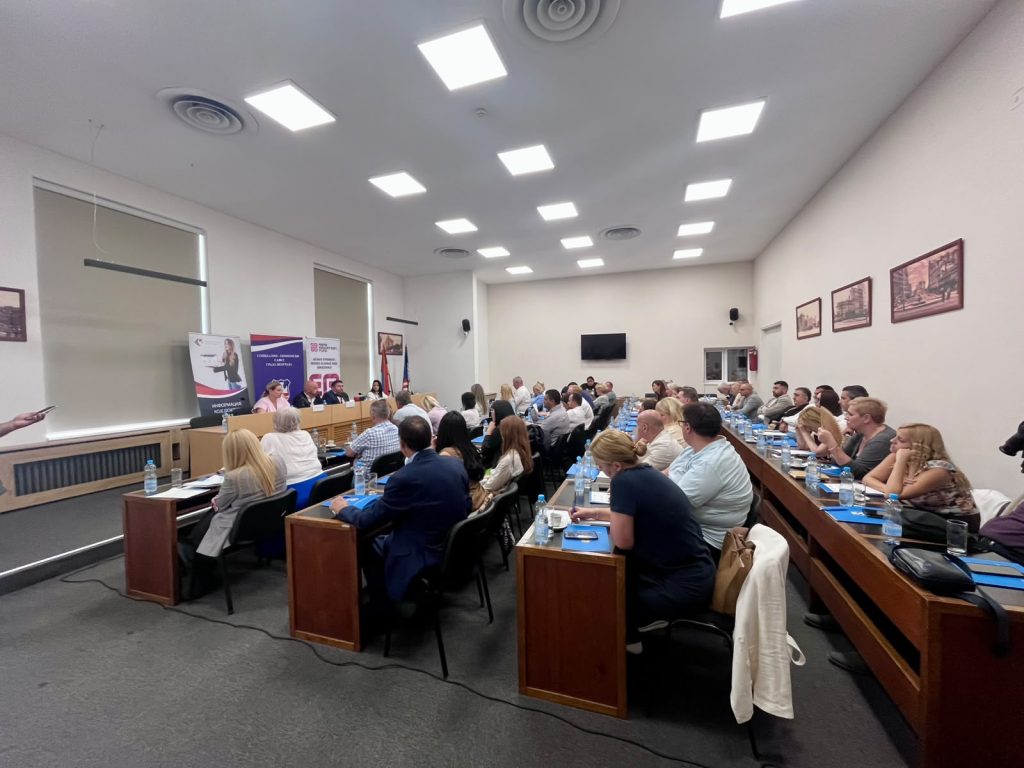
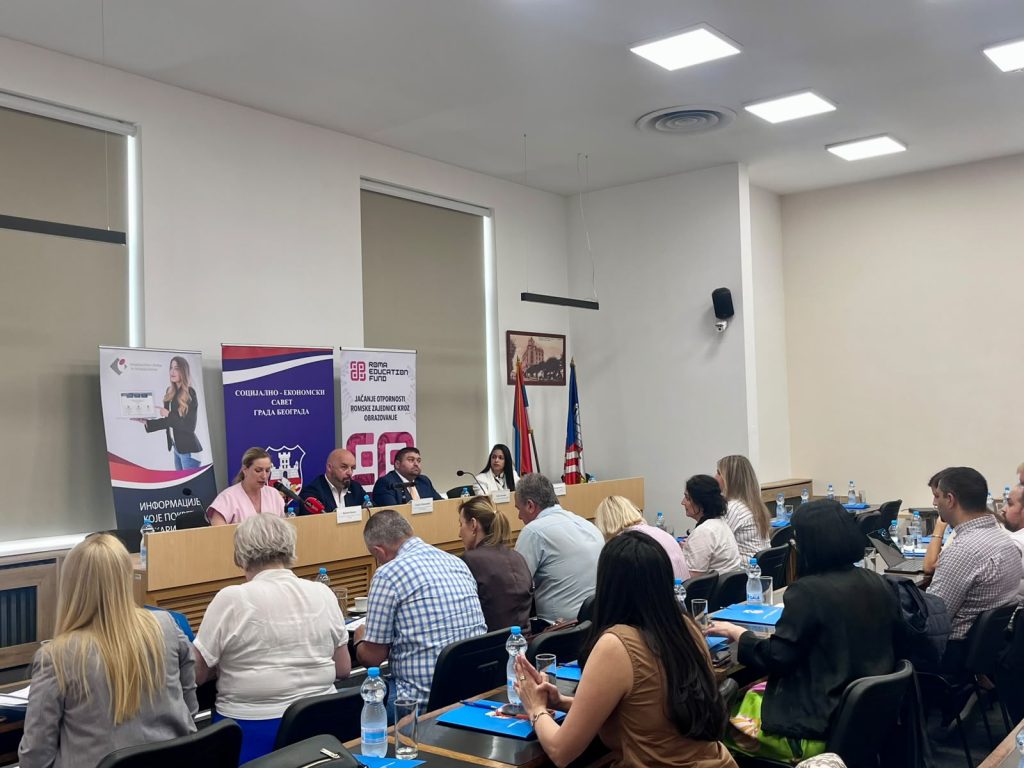
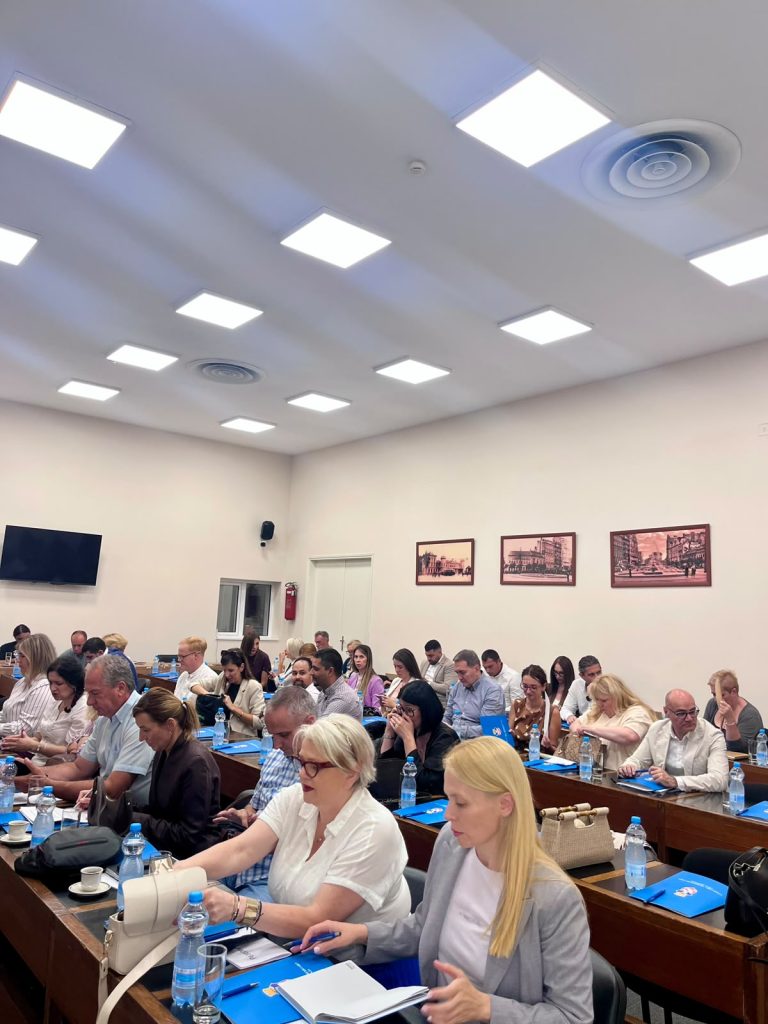
Representatives of public institutions, employers, trade unions, and civil society gathered on June 3rd at the Belgrade City Assembly for a roundtable dedicated to one of the most important challenges facing the labour market: improving employment opportunities for jobseekers facing multiple barriers to labour market participation, including Roma women and men.
The event was organized by Roma Education Fund Serbia in cooperation with the Socio-Economic Council of the City of Belgrade, the National Employment Service, Belgrade Branch, and the Centre for Social Work, bringing together key stakeholders committed to creating a more inclusive and responsive labour market.
The roundtable was opened by Srđan Srbljanović, Assistant Minister for Human and Minority Rights and Social Dialogue, Igor Jovanović, Deputy President of the Belgrade City Assembly, Violeta Filip, Member of the Belgrade City Council, and Marijana Rakić, Public Relations Officer at Roma Education Fund.
Addressing participants, Srđan Srbljanović emphasized the importance of coordinated action among institutions, employers, and civil society in tackling barriers to employment.
“Access to the labour market remains challenging for certain vulnerable groups. The barriers they face may be economic, social, or educational in nature, but they can also stem from prejudice and discrimination. This is why it is essential for institutions, local governments, employment services, employers, trade unions, and civil society organizations to work together.”
Speaking about the role of the city in creating opportunities for all citizens, Igor Jovanović highlighted that sustainable development must go hand in hand with inclusion.
“Belgrade is a city that continues to grow and attract investment, but our success will not be measured solely by the number of investments or new developments. It will also be measured by how well we provide opportunities to those who need them the most.”
For REF, this discussion forms part of a broader effort to strengthen pathways between education, skills development, and employment. Through its strategic pillar Skills & Employment, the organization works to connect Roma communities, institutions, employers, and education providers around a shared objective: creating sustainable opportunities for economic participation and long-term prosperity for Roma communties.
“For years, the Roma Education Fund has been actively building bridges between Roma communities, the education system, the labour market, and institutions. Today’s meeting is an opportunity to better understand the needs of employers and the labour market, while jointly contributing to the development of qualified professionals who are prepared to meet those needs,” said Marijana Rakić.
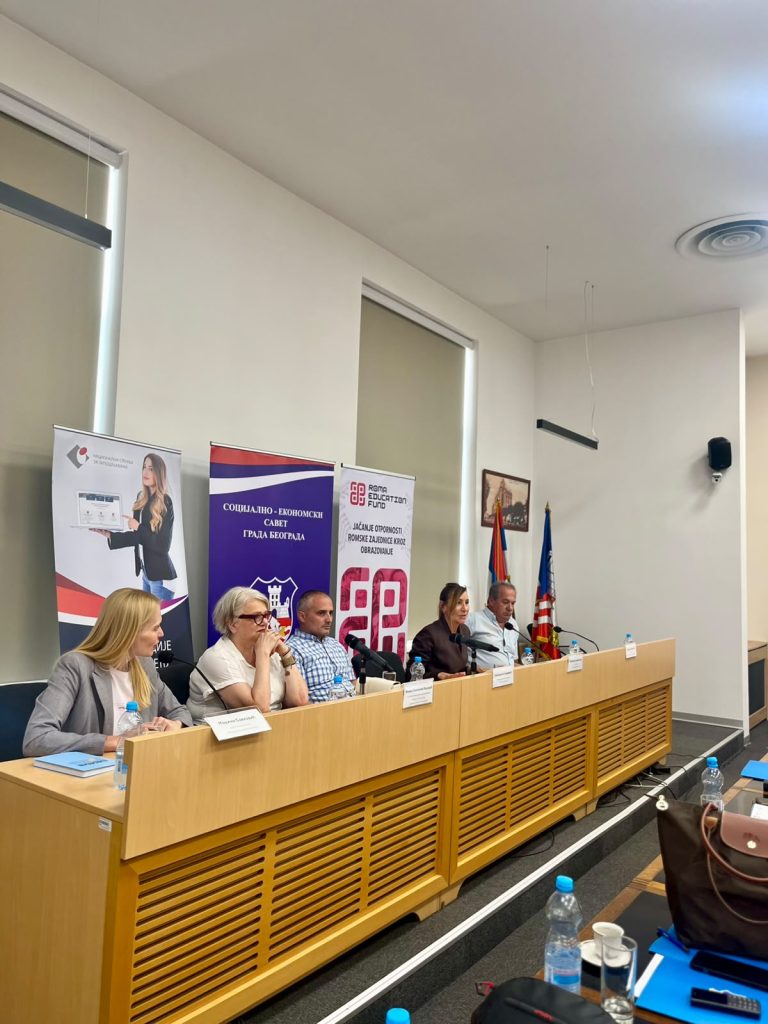
The discussion continued with a panel moderated by Marina Savković, Director of REF’s Skills and Employment Programs, featuring representatives of institutions and organizations that play a key role in shaping labour market opportunities and employment policies.
Panelists included Željka Zelenović Vuković, Head of the Employer Relations Department at the National Employment Service – Belgrade Branch, Svetlana Budimčević, Acting Director of the Serbian Employers’ Union, Dragan Todorović, President of the Confederation of Autonomous Trade Unions of Belgrade, and Nemanja Antonijević, Head of the Surčin Department of the Centre for Social Work.
The Belgrade roundtable also builds on a series of recent initiatives through which REF has intensified its activities across Serbia under the Skills & Employment pillar.
In May, REF and the Serbian Employers Association launched a strategic partnership aimed at strengthening Roma workforce participation through vocational training, workforce preparation, employment mediation, mentorship, and long-term job retention support. The partnership reflects a shared commitment to creating practical employer-driven pathways into the labour market while responding to growing workforce needs across the country. REF has also expanded cooperation with municipalities, employers, and employment services. In Kragujevac, recent employment initiatives demonstrated the value of coordinated action, connecting jobseekers, institutions, and employers while creating new opportunities for skills development and workforce integration.
Together, these efforts contribute to a larger vision. Across Serbia and the Western Balkans, employers face labour shortages, demographic decline, and increasing demand for skilled workers. At the same time, Roma communities represent one of the youngest and most underutilized sources of talent in the region.
REF believes that Roma inclusion is a strategic investment in economic growth, competitiveness, and resilience. Unlocking Roma economic potential requires more than individual projects. It requires systems that connect education, skills, employers, institutions, and communities in ways that create lasting opportunities.
The discussion in Belgrade represents another important step in REF’s efforts to strengthen Roma participation in the labour market. By bringing together decision-makers, employers, employment services, trade unions, and civil society organizations, the event reinforced a shared commitment to creating practical pathways that connect Roma talent with employment opportunities.
We extend our sincere thanks to all participants for their openness, expertise, and commitment to working together.
Angajăm expert achiziții publice | Intră în echipa REF Romania!
Posted on November 13, 2025 by admin3
Locație: București | Durata contractului: minim 24 luni începând cu ianuarie 2026 | Tip program: Full-time | Tip job: Office |
DESPRE NOI
Fundația Roma Education Fund (REF) este o organizație internațională fondată în 2005 de către Banca Mondială și Open Society Foundations. În cei 20 de ani de activitate, rețeaua REF a investit peste 120 de milioane de euro în proiecte educaționale de calitate, programe de care au beneficiat peste 100.000 de romi de toate vârstele, din 16 țări.
În concordanță cu noua sa misiune strategică, echipele Fundației din cele patru țări în care activează – România, Slovacia, Serbia și Macedonia de Nord – colaborează strâns cu comunitățile rome pentru a atinge trei obiective strategice principale: (1) Dezvoltarea de modele educaționale complementare, menite să crească și să consolideze reziliența comunităților rome; (2) Crearea de programe de angajare eficiente pentru romi, adaptate la evoluția piețelor muncii; (3) Investiții țintite în educație și leadership, cu scopul de a dezvolta capitalul uman în rândul populației rome.
Elaborează și actualizează planul de achiziții pentru proiectele alocate.
Pregătește documentația de achiziție în conformitate cu legislația aplicabilă și cu cerințele finanțatorului.
Gestionează procesul complet de achiziție: publicitate, colectare oferte, evaluarea acestora, desemnarea ofertantului câștigător.
Asigură respectarea principiilor de transparență, tratament egal și proporționalitate în toate etapele achiziției.
Monitorizează derularea procedurilor astfel încât să respecte termenele legale și calendarul activităților din proiect.
Păstrează evidența documentelor de achiziție și asigură arhivarea corespunzătoare.
Acordă suport echipei de proiect privind interpretarea regulilor de achiziții din ghidurile finanțatorilor.
CERINȚE
Diplomă de licență (studii superioare finalizate);
Experiența in administrarea și coordonarea, din punct de vedere al achizițiilor, de proiecte cu finantare POSDRU/POCU/PEO sau alte tipuri de finanțare nerambursabilă de cel putin 5 ani;
O bună cunoaștere a limbii engleze (nivel B2)
Abilități excelente de planificare și organizare;
Comunicare eficientă scrisă și verbală;
Abilitatea de a gestiona mai multe priorități simultan;
Atenție la detalii și respectarea termenelor.
Constituie un avantaj experiența anterioară în implementarea și monitorizarea cerințelor GDPR, precum și cunoștințele privind legislația națională și europeană în domeniul protecției date
CE OFERIM
Salariu competitiv;
Oportunități de dezvoltare profesională;
Mediu de lucru plăcut și colaborativ;
Implicare în proiecte cu impact social real
APLICĂ ACUM!
Trimite CV-ul și o scrisoare de intenție de maximum 10 -20 rânduri la adresa recrutare@roma.education, până la data de 23 noiembrie 2025, menționând în subiectul e-mailului: „Aplicație Expert achiziții publice – Numele dvs.”
În scrisoarea de intenție, vă rugăm să răspundeți la urmatoarele intrebari:
Cum se aliniază experiența dumneavoastră profesională cu cerințele acestui post?
Cum crezi că experiența și valorile tale pot contribui la misiunea Roma Education Fund?
Care consideri că este cea mai importantă contribuție pe care ai putea-o aduce în echipa REF?
NOTĂ: Fundația Roma Education Fund promovează principiile egalității de șanse și diversității în procesul de recrutare. Sunt încurajate să aplice toate persoanele care împărtășesc valorile noastre și care îndeplinesc cerințele postului, indiferent de etnie, gen sau statut social. În mod particular, sunt încurajate aplicațiile din partea persoanelor care se identifică drept romi, inclusiv ale femeilor rome și ale foștilor beneficiari ai programelor REF.
Important: Din cauza numărului mare de înscrieri, din păcate, REF nu are posibilitatea de a răspunde individual fiecărui candidat. Vă rugăm să rețineți că doar persoanele selectate pe lista scurtă vor fi contactate pentru un prim interviu și un test de evaluare. Apreciem interesul tuturor celor care aleg să aplice și vă asigurăm că fiecare candidatură va fi analizată cu atenție.
From Alarm to Action: REF’s Blueprint for Roma Inclusion through Education, Skills, and Digital Transformation
Posted on October 31, 2025 by admin1
As the 2025 ECRI report on Roma in Romania warns of widening gaps in education, work, housing, REF calls for a shift from rhetoric to measurable action, investing in Roma potential as Europe’s untapped engine for growth and equality.
The latest report by the European Commission against Racism and Intolerance (ECRI) paints an alarming picture of the situation of Roma in Romania. Despite strategies and public commitments, systemic discrimination, extreme poverty, and institutionalized segregation continue to define the reality of the Roma.
Roma face precarious housing, educational exclusion, and severe barriers on the labour market simultaneously, while public policies remain, according to ECRI, underfunded, fragmented, and poorly enforced.
Published on 30 October, 2025, the document warns that in the absence of concrete performance indicators, transparent budgets, and genuine administrative coordination, inclusion strategies risk being reduced to mere rhetorical exercises. Substandard housing, school segregation, and labour-market discrimination continue to reproduce an intergenerational cycle of exclusion, in which Roma remain the social group most vulnerable to poverty, illness, and civic marginalization.
ECRI identifies anti-Gypsyism, deeply rooted in mindsets and institutions, as one of the main factors perpetuating discrimination and social mistrust. Although the 2021 census recorded 569,477 self-identified Roma (2.98%), independent estimates put the real figure at 1.5–2 million, proportionally magnifying the severity of exclusion and institutional under-representation.
A Broken Promise, How Segregation and Poor Education Trap Roma Children in Inequality
In education, the ECRI report highlights a profound rift between inclusion pledges and on-the-ground reality. Roma children continue to be denied equal access to quality education despite multiple strategies drafted over the past decade. Disparities in participation, performance, and learning conditions confirm the structural nature of these inequalities.
The 2021 figures are telling: only 27% of Roma children attend kindergarten, compared with 79% of the general population, and only 22% of Roma youth aged 20–24 have completed upper-secondary education, versus 83% among the majority. These numbers are not mere statistical differences. They are symptoms of a system that fails to function as a vehicle for social mobility and instead reproduces and deepens marginalization.
ECRI also flags the persistence of school segregation, a phenomenon that undermines the right to equitable education and entrenches the stigmatization of Roma communities. A study conducted in 11 counties shows that 66.4% of schools with at least 3% Roma students are segregated by classes, and 27.5% by buildings, figures that attest to de facto segregation tolerated by the system. Despite sanctions imposed by the National Council for Combating Discrimination (CNCD), the phenomenon remains chronic and insufficiently monitored. ECRI also acknowledges recent steps such as the adoption of the 2022–2027 Roma Inclusion Strategy and measures to prohibit school segregation, but warns that their implementation remains uneven and under-resourced.
The COVID-19 pandemic exacerbated these inequalities. Lack of internet access and devices pushed thousands of Roma children out of the learning process, causing irreversible learning losses and heightening the risk of early school leaving. ECRI’s conclusion is clear: education in Romania often isolates rather than integrates.
Belgrade, Serbia on 2025.04.07. Photo: Akos Stiller
Locked Out of Work, Structural Unemployment and the Gender Divide in Roma Communities
In employment, the report reveals an equally alarming reality: only 41% of working-age Roma (20–64) have a job, compared with 71% of the general population. The situation for youth is even more critical, 59% of Roma aged 16–24 are neither in employment nor in education or training, compared with 15% among the majority. ECRI describes this as “an indicator of alarming inactivity and a lack of socio-professional prospects.”
Alongside economic exclusion, the report highlights a severe gender gap: only 23% of Roma women are employed, compared with 59% of Roma men. This double marginalization, ethnic and gender-base, reveals the intersectionality of discrimination, where cultural stereotypes and economic barriers overlap to limit women’s access to decent, stable employment, financial autonomy, and civic participation.
Although some public programmes seek to improve employability, ECRI finds their impact minimal in the absence of a coherent, integrated, and adequately funded approach. Discrimination in recruitment, exclusion from the formal labour market, and a lack of tailored vocational training continue to keep Roma communities in an informal subsistence economy, without protection or stability.
Turning Warnings into Action, REF’s Pathways to Education, Skills, and Equal Opportunity
The ECRI report does more than describe inequality, it issues a warning. Without firm and sustained interventions, the gap between Roma and the rest of the population will continue to widen. What is needed now is genuine institutional accountability, transparent budget allocations, and the meaningful involvement of Roma communities in designing and monitoring public policies. Roma cannot be integrated into a system that continues to isolate them. Beyond statistics and strategies, ECRI calls for a true paradigm shift, from passive assistance to active equity, from rhetoric to measurable, concrete action.
At the Roma Education Fund, we see these challenges every day. For two decades, our work has focused on education as the foundation of inclusion, and we know that progress is possible but only with genuine political will and coordinated investment. As a non-profit, we can innovate, pilot solutions, and support communities, but we cannot replace the State. It is time for public authorities to use our expertise and partner with us in building strong and resilient Roma communities.
Empowering Roma is not only a question of justice. It is a strategic necessity for Europe’s future. Across the continent, labour markets are tightening and populations are aging, while the Roma, Europe’s youngest and fastest-growing minority, remain largely excluded from opportunity. The ECRI report exposes the social cost of this exclusion. REF’s approach highlights the economic one. Inclusion is not a moral gesture but smart economics, and investing in Roma potential is investing in Europe’s workforce, innovation, and competitiveness.
Digital Transformation and Education for the Future
In an era where technology is rapidly reshaping our world, REF is placing digital transformation at the heart of its education strategy. Recognizing the need to build resilience and future-ready skills, we are launching advanced education programs that empower both children and adults to thrive in a technology-driven society. A key component of this effort is the integration of digital learning tools, enabling Roma learners to access, adapt, and lead within the digital landscape. By investing in quality education and digital access for marginalized communities, REF turns technology into a bridge, not a barrier, to inclusion.
Every euro invested in quality education and digital access is an investment in justice and shared prosperity. Empowering Roma through learning and technology means giving them the tools not just to survive, but to shape the future of work, driving a more inclusive and competitive Romania and Europe.
From Education to Employment: Building Roma Human Capital
Through its Skills and Employment strategic pillar, REF connects education to opportunity. Education is the foundation, but employment is the bridge to lasting inclusion. Our programs focus on vocational education and training aligned with labour market demand, upskilling and reskilling in emerging sectors such as digital and green industries, and partnerships with employers and public institutions that open pathways to sustainable, dignified jobs. With the goal of supporting the employment of 10,000 Roma individuals by 2033, REF is demonstrating how inclusive policies can translate into measurable impact.
Strengthening Roma human capital must be at the heart of any sustainable inclusion strategy. For the Roma Education Fund, building Roma human capital means linking education to employability and ensuring that every learner has a pathway to self-reliance, dignity, and social participation. This is not only a question of justice. It is a catalyst for economic growth, innovation, and shared prosperity. The ECRI report’s findings highlight the need for long-term, coordinated policies that tackle structural inequalities in both education and employment, while fostering genuine equality of opportunity. Investing in Roma human capital is not a corrective gesture but a forward-looking strategy, one that strengthens resilience, competitiveness, and social cohesion across Europe. When Roma talent is recognized and nurtured, entire communities and economies thrive.
We envision a future where Roma communities are celebrated as rich sources of knowledge, creativity, and potential. Our learning models embraces real-world, technology-enhanced experiences that nurture innovation and leadership in unexpected places. For REF, learning is a dynamic and collaborative process, one that equips individuals and communities to navigate complexity, uncertainty, and change. By transforming Roma-led educational innovations into beacons of excellence, we can inspire systemic change across societies and shape a more inclusive Europe for generations to come.
Minimal early-childhood participation: only 27% of Roma children attend kindergarten (vs. 79% overall).
Upper-secondary completion: only 22% of Roma youth (20–24) have completed high school (vs. 83%).
Persistent segregation: in a study across 11 counties, 66.4% of schools with ≥3% Roma students are segregated by classes and 27.5% by buildings; CNCD continues to sanction cases.
Pandemic effects: online schooling hit Roma children disproportionately due to lack of internet or devices.
Employment
Employment rate: only 41% of working-age Roma (20–64) are employed (vs. 71% overall).
NEET rate: 59% of Roma youth (16–24) are neither in employment, education, nor training (vs. 15%).
Gender gap: 23% of Roma women employed vs. 59% of Roma men.
Persistent discrimination in hiring, working conditions, and career progression.
Housing — informal settlements, pollution, and evictions
Critical conditions: 70% of Roma live in inadequate housing; 87% in overcrowded households; 40% without running water at home.
Proximity to pollution: many communities are located near landfills, wastewater plants, or chemical factories, with severe health and inclusion impacts.
Pata Rât as a public-policy failure: ECRI directly observed deplorable conditions adjacent to the landfill.
Evictions deepen precarity: unpaid utility bills trigger evictions from social housing, pushing families back into informal settlements.
Mapping without follow-up: in 2022, 393 informal settlements were identified (71,965 people, 76% Roma), including in risk areas—with no concrete outcomes thereafter.
Health — restricted access and shocking cases
Reports of segregation in hospitals, especially in maternity wards.
Serious incident: a Roma woman gave birth on the pavement after being denied care; authorities condemned the incident and opened an investigation.
Roma health mediators proved essential during the pandemic, but access in informal and high-risk areas remains limited.
Public policy — strategies without foundation or funding
2015–2020 Strategy: only partially implemented; poor data, weak coordination; ~10% of municipalities had local plans.
2022–2027 Strategy: lacks clear performance indicators and budget estimates for most measures; local needs are not properly mapped.
Civic capacity overlooked: missing measures to strengthen Roma civil-society organizations.
Key data points
70% Roma in inadequate housing • 87% overcrowding • 40% without running water
27% Roma in preschool vs 79% overall • 22% high-school graduates vs 83%
41% Roma employment rate vs 71% • 59% Roma youth NEET vs 15%
393 informal settlements, 71,965 people (76% Roma) • multiple risk areas
Stay connected
Subscribe to our newsletter
Get the latest Roma Education Fund news, stories and announcements in your inbox
An international financial institution that provides loans and grants to the governments of low- and middle-income countries for the purpose of pursuing capital projects.