Donate

More than 250 Roma Students Supported Through RARE II Project in Montenegro

Posted on June 5, 2026 by admin3

Podgorica, Montenegro – June 2, 2026 | The Roma Education Fund (REF) participated in the closing event of activities implemented in Montenegro by HELP Montenegro and the Parents Association under the project EU Regional Action for Roma Education: Increased Education Support and Opportunities for Roma Students in the Western Balkans and Türkiye (RARE) Phase II (RARE II). Funded by the European Union through Directorate-General for Enlargement and Eastern Neighbourhood (DG ENEST) and implemented by the Roma Education Fund Serbia and Romania, the project supports increased educational opportunities and inclusion for Roma students across the Western Balkans and Türkiye.

Over the past two academic years, the project has provided comprehensive educational support to more than 250 Roma children and young people across Montenegro. Through scholarships, learning materials, paid internship opportunities, and the support of local volunteers, facilitators, and educators, the initiative helped strengthen learning outcomes, improve literacy, and support the development of essential skills for educational and professional success.
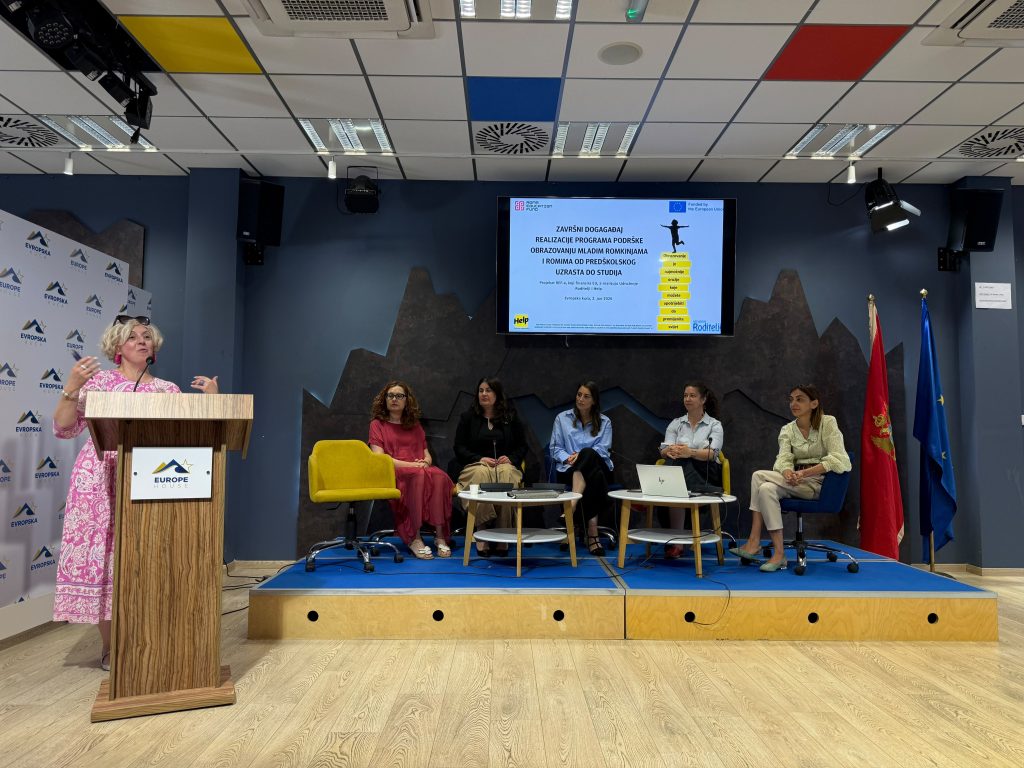
The closing event, held at the European House in Podgorica, brought together representatives of public institutions, civil society organizations, educators, and development partners committed to advancing the educational inclusion of Roma children and youth in Montenegro. The gathering provided an opportunity to reflect on the project’s achievements, share lessons learned, and discuss ways to sustain and further strengthen support mechanisms for Roma students within the education system.

Addressing participants at the event, Ms. Mladenka Tešić, representative of the European Union Delegation to Montenegro, emphasized the importance of ensuring the sustainability of successful interventions through their integration into public systems and policies. She noted that lasting progress depends on creating institutional mechanisms capable of supporting Roma and Egyptian children and youth throughout their educational journey.

Speaking on behalf of the Roma Education Fund, Ana Duraki highlighted the commitment of local partners and frontline practitioners whose work made these results possible.

“Anyone who has had the opportunity to follow the development of this project in Montenegro over the past years can clearly see that the results we discussed today were achieved through the extraordinary dedication of the people working on the ground. Their continuous efforts supported the education of more than 250 Roma children and helped address their needs throughout the school year. Both the Roma Education Fund and the European Commission remain committed to supporting the education and employability of Roma communities in Montenegro, and we look forward to continuing this successful partnership and building on these achievements in the years ahead.”
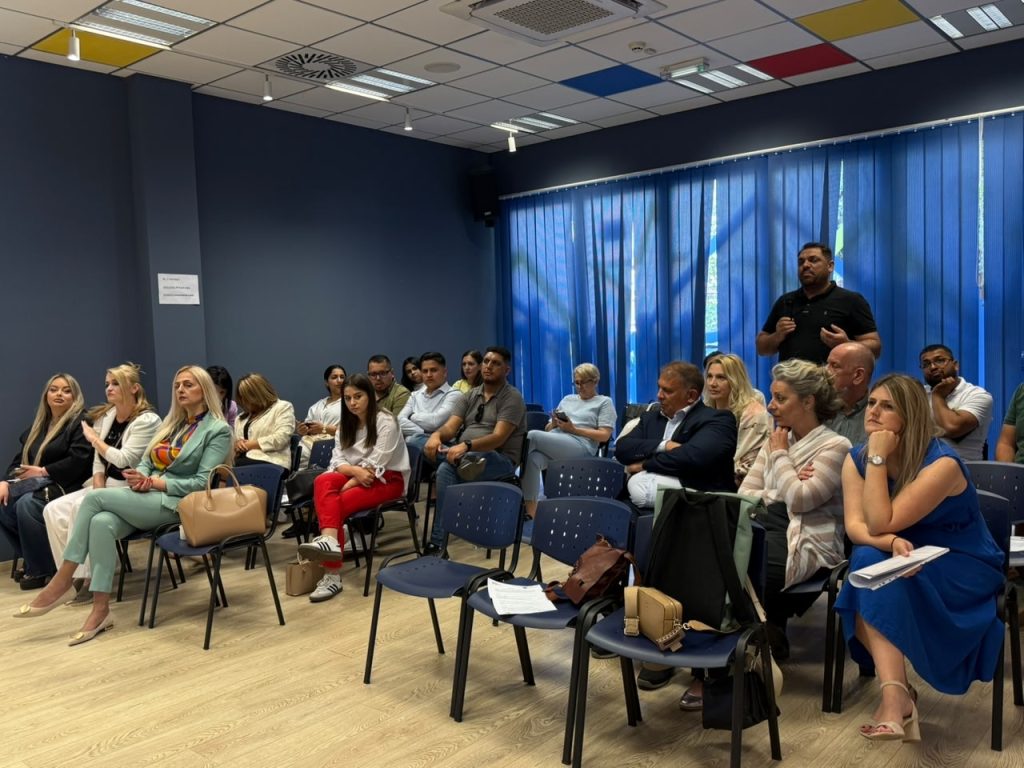
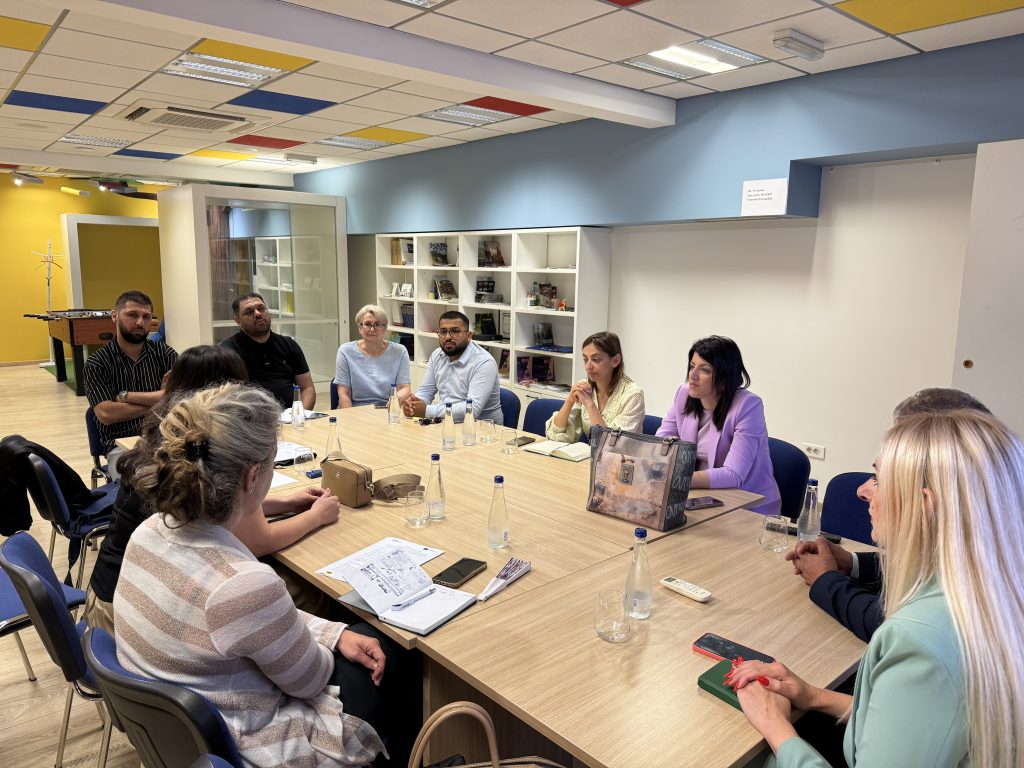
Ahead of the closing event, members of the project’s Working Group met to review progress, discuss challenges, and identify opportunities for strengthening the educational inclusion of Roma children in Montenegro. Bringing together representatives of public institutions and other relevant stakeholders, the discussion focused on the institutionalization of services and support mechanisms that have proven effective in supporting Roma students, with the goal of ensuring their long-term sustainability within the public education system.
The experience in Montenegro demonstrates that meaningful educational inclusion requires coordinated action between institutions, civil society, local communities, and development partners. However, educational inclusion cannot be viewed as an end in itself. As highlighted in REF’s recent regional policy analysis, Bridging Education and Employment: A Comprehensive Policy Analysis of VET Pathways for Roma Youth in the Western Balkans and Türkiye, Roma youth continue to face significant barriers when transitioning from education to employment, despite progress in access to education. The study, which examined seven countries across the region, underscores the need for integrated approaches that connect educational support, skills development, and labour market opportunities, while strengthening the systems that enable Roma young people to successfully navigate this pathway. The Roma Education Fund remains committed to advancing both educational achievement and employability, supporting Roma children and youth build the knowledge, skills, and opportunities needed to thrive in the future
Unlocking Roma Economic Potential | REF Intensifies Employment Partnerships across Serbia

Posted on June 4, 2026 by admin3

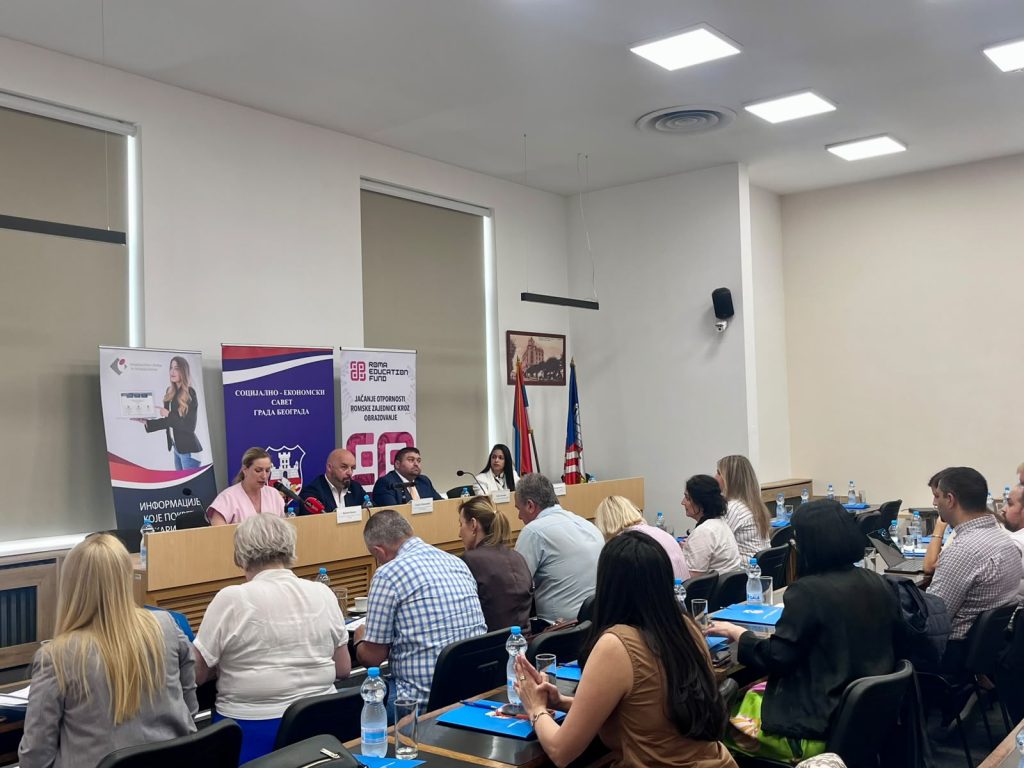
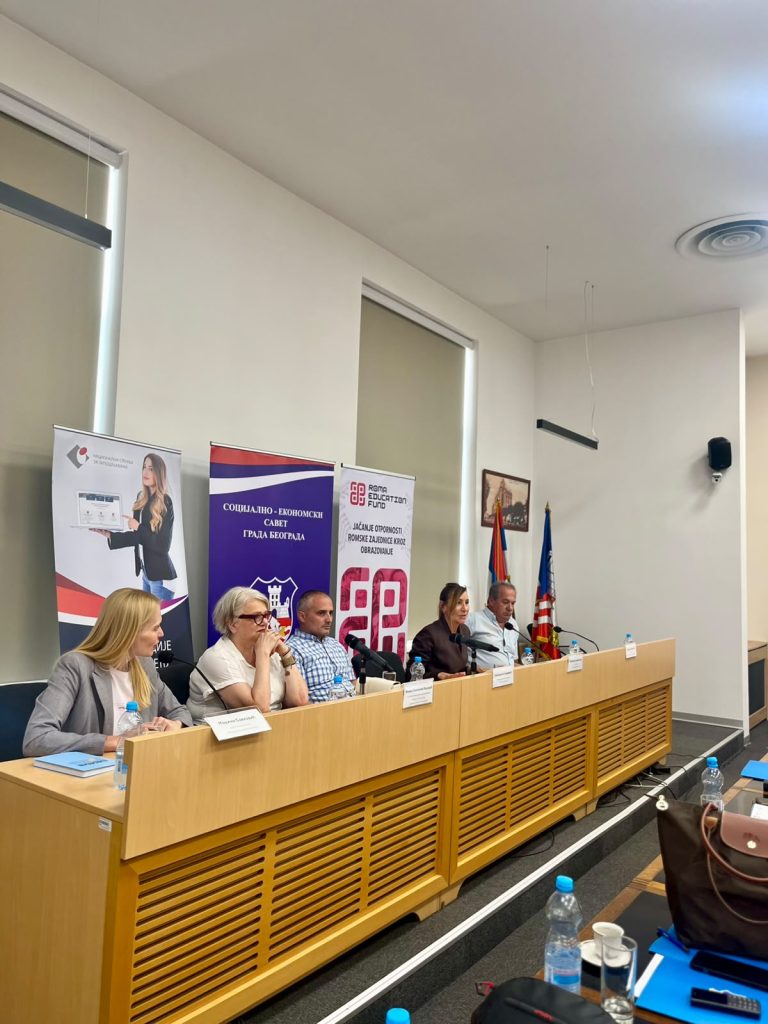
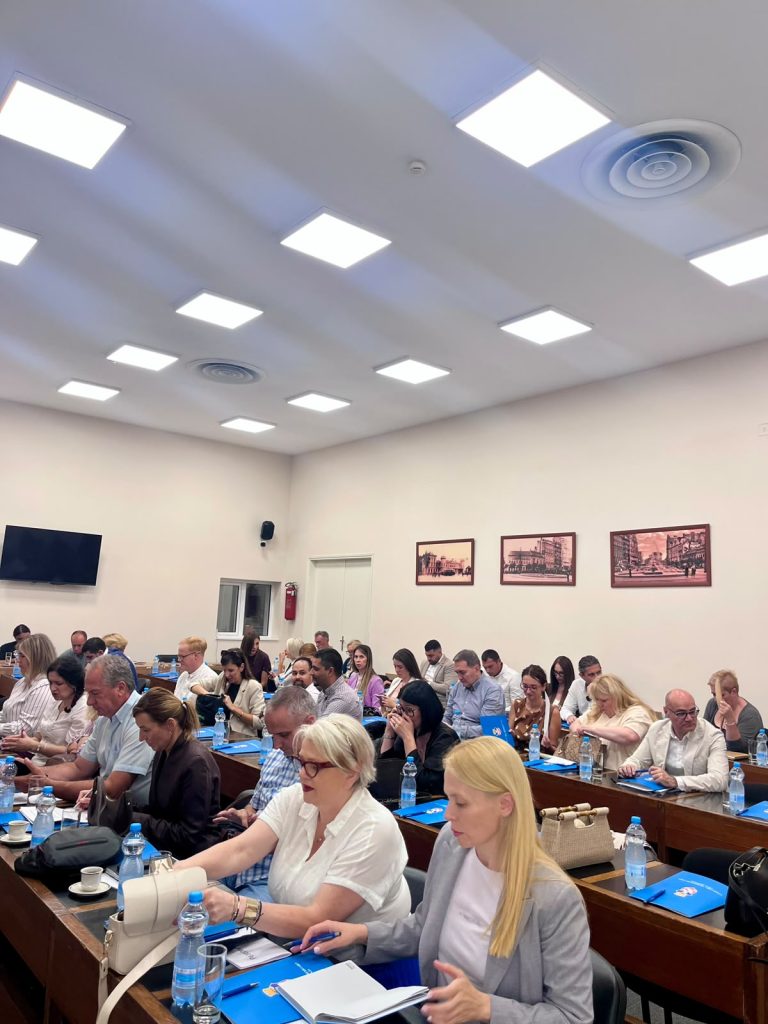
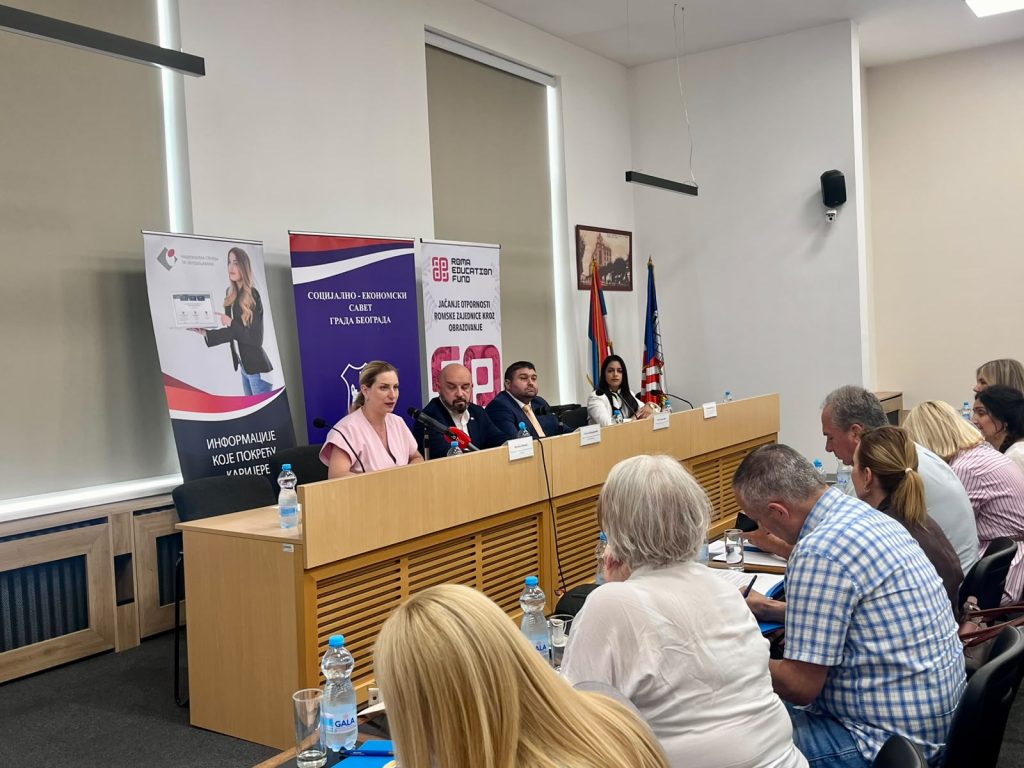
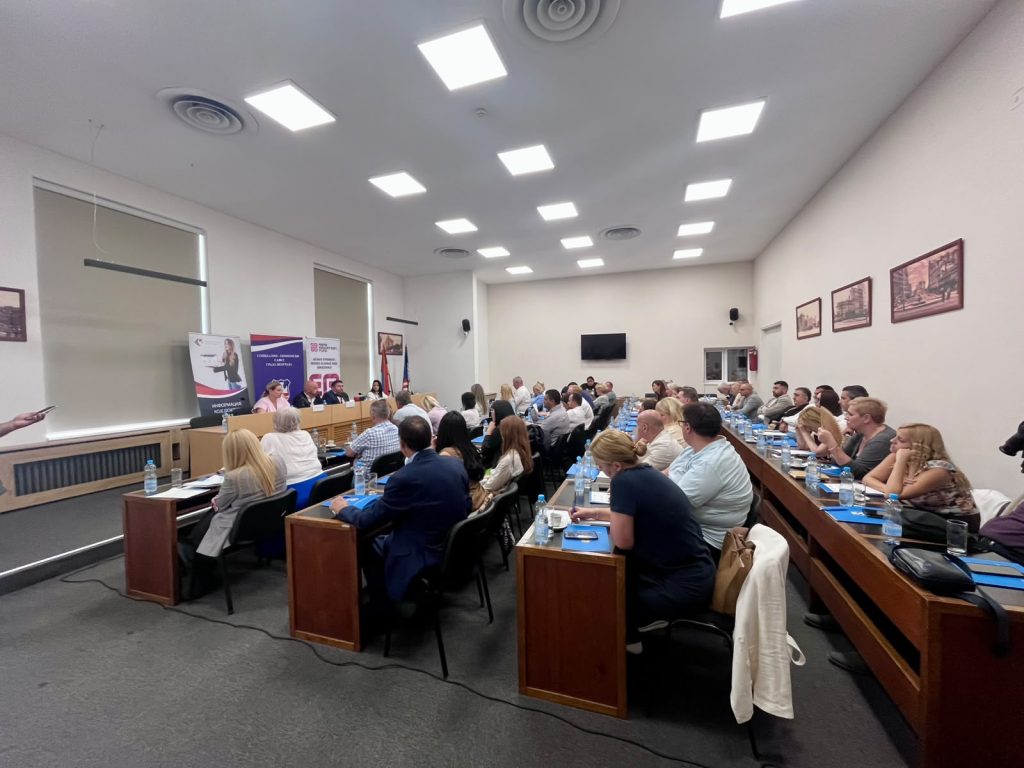
Representatives of public institutions, employers, trade unions, and civil society gathered on June 3rd at the Belgrade City Assembly for a roundtable dedicated to one of the most important challenges facing the labour market: improving employment opportunities for jobseekers facing multiple barriers to labour market participation, including Roma women and men.

The event was organized by Roma Education Fund Serbia in cooperation with the Socio-Economic Council of the City of Belgrade, the National Employment Service, Belgrade Branch, and the Centre for Social Work, bringing together key stakeholders committed to creating a more inclusive and responsive labour market.

The roundtable was opened by Srđan Srbljanović, Assistant Minister for Human and Minority Rights and Social Dialogue, Igor Jovanović, Deputy President of the Belgrade City Assembly, Violeta Filip, Member of the Belgrade City Council, and Marijana Rakić, Public Relations Officer at Roma Education Fund.

Addressing participants, Srđan Srbljanović emphasized the importance of coordinated action among institutions, employers, and civil society in tackling barriers to employment.

“Access to the labour market remains challenging for certain vulnerable groups. The barriers they face may be economic, social, or educational in nature, but they can also stem from prejudice and discrimination. This is why it is essential for institutions, local governments, employment services, employers, trade unions, and civil society organizations to work together.”

Speaking about the role of the city in creating opportunities for all citizens, Igor Jovanović highlighted that sustainable development must go hand in hand with inclusion.

“Belgrade is a city that continues to grow and attract investment, but our success will not be measured solely by the number of investments or new developments. It will also be measured by how well we provide opportunities to those who need them the most.”

For REF, this discussion forms part of a broader effort to strengthen pathways between education, skills development, and employment. Through its strategic pillar Skills & Employment, the organization works to connect Roma communities, institutions, employers, and education providers around a shared objective: creating sustainable opportunities for economic participation and long-term prosperity for Roma communties. 

“For years, the Roma Education Fund has been actively building bridges between Roma communities, the education system, the labour market, and institutions. Today’s meeting is an opportunity to better understand the needs of employers and the labour market, while jointly contributing to the development of qualified professionals who are prepared to meet those needs,” said Marijana Rakić.

The discussion continued with a panel moderated by Marina Savković, Director of REF’s Skills and Employment Programs, featuring representatives of institutions and organizations that play a key role in shaping labour market opportunities and employment policies.

Panelists included Željka Zelenović Vuković, Head of the Employer Relations Department at the National Employment Service – Belgrade Branch, Svetlana Budimčević, Acting Director of the Serbian Employers’ Union, Dragan Todorović, President of the Confederation of Autonomous Trade Unions of Belgrade, and Nemanja Antonijević, Head of the Surčin Department of the Centre for Social Work.

The Belgrade roundtable also builds on a series of recent initiatives through which REF has intensified its activities across Serbia under the Skills & Employment pillar.

In May, REF and the Serbian Employers Association launched a strategic partnership aimed at strengthening Roma workforce participation through vocational training, workforce preparation, employment mediation, mentorship, and long-term job retention support. The partnership reflects a shared commitment to creating practical employer-driven pathways into the labour market while responding to growing workforce needs across the country. REF has also expanded cooperation with municipalities, employers, and employment services. In Kragujevac, recent employment initiatives demonstrated the value of coordinated action, connecting jobseekers, institutions, and employers while creating new opportunities for skills development and workforce integration.

Together, these efforts contribute to a larger vision. Across Serbia and the Western Balkans, employers face labour shortages, demographic decline, and increasing demand for skilled workers. At the same time, Roma communities represent one of the youngest and most underutilized sources of talent in the region.

REF believes that Roma inclusion is a strategic investment in economic growth, competitiveness, and resilience. Unlocking Roma economic potential requires more than individual projects. It requires systems that connect education, skills, employers, institutions, and communities in ways that create lasting opportunities.

The discussion in Belgrade represents another important step in REF’s efforts to strengthen Roma participation in the labour market. By bringing together decision-makers, employers, employment services, trade unions, and civil society organizations, the event reinforced a shared commitment to creating practical pathways that connect Roma talent with employment opportunities.

We extend our sincere thanks to all participants for their openness, expertise, and commitment to working together.

REF launches “GreenTech Teaching Champions” to connect Education, Employment and Leadership in Slovakia’s Green Transition

Posted on March 31, 2026 by admin3

PRESS RELEASE | Bratislava, Slovakia, March 31st, 2026

Roma Education Fund (REF) announces the launch of the “GreenTech Teaching Champions” project, a four-year initiative focused on aligning education with labour market opportunities and strengthening long-term community resilience in Slovakia. Supported by the Villum Foundation, the project has a total budget of approximately €1.13 million. The project is implemented with the advisory support of Roma Entrepreneurship Development Initiative (REDI Slovakia) team, leveraging their expertise in green economy business development and entrepreneurship.

Implemented gradually in the regions of Prešov, and later in Košice, and Banská Bystrica, the project responds to a structural challenge across Europe: education systems continue to produce learning outcomes that are insufficiently connected to real economic opportunities, particularly for young people from marginalized Roma communities. “GreenTech Teaching Champions” addresses this gap through a systemic approach that connects learning, employment, and long-term leadership.

“The green transition requires every talent available, including those often overlooked. Ultimately, we want to put Roma students at the forefront of technological innovation, far from the image of cheap labourers. This project also marks a strategic evolution for REF. We are moving beyond individual support or local interventions to work directly with the system, ensuring that inclusive pedagogy and green tech expertise become permanent features of vocational education,” says Stanislav Daniel, director of REF Slovakia.

The project places teachers at the centre of transformation. Through a newly established GreenTech Hub in Prešov, complemented by satellite labs in Košice and Banská Bystrica in later phase of the project, vocational teachers will co-develop and complete accredited training modules in green technologies (renewable energy and IoT), inclusive pedagogy, and business and entrepreneurial skills. This is not only about upgrading technical knowledge. It is about redefining how education functions, embedding inclusion, critical thinking, and real-world applicability into everyday teaching practice.

The initiative also establishes a direct link between education and the labour market. Employers are integrated into a continuous quality assurance loop, ensuring that the skills developed in classrooms reflect real economic demand. This creates a clear pathway from training to employment, positioning students, particularly those from Roma communities, as active participants in the green economy transition.

At the same time, the project is designed to generate long-term system impact. A core group of “Teaching Champions” will be trained to transfer knowledge across institutions, while the accreditation of the developed modules, particularly in inclusive pedagogy, anchors these approaches within Slovakia’s national teacher training system. This ensures that impact extends beyond the project itself and becomes embedded in public structures.

REF Slovakia leads the implementation of the project, coordinating partners and stakeholders across institutional levels, including self-governing regions, national authorities, universities, and private sector actors.

Through this initiative, REF advances its strategic vision of building resilient Roma communities through education by moving beyond access towards competence, economic participation, and leadership. “GreenTech Teaching Champions” is not only a project. It is a model for how education systems can evolve: from delivering knowledge to enabling agency, economic validation, and long-term societal impact.

Apel pentru selecția unui consultant tehnic senior Platformă de e-learning

Posted on February 20, 2026 by admin3

Fundația Roma Education Fund România pregătește lansarea, în a doua jumătate a anului 2026, a unei platforme de e-learning cu funcționalități extinse de hub educațional și colaborativ, orientată spre promovarea educației sociale, dialogului intercultural și combaterii discriminării.

Platforma va integra resurse educaționale digitale, instrumente interactive, funcționalități colaborative și componente asistate de inteligență artificială. Ne propunem dezvoltarea unei arhitecturi tehnologice robuste și scalabile, care să asigure performanță, securitate și posibilitatea de extindere modulară, răspunzând nevoilor unor categorii diverse de utilizatori.

Platforma este concepută ca infrastructură educațională digitală cu relevanță strategică. Ea va susține procese de învățare și colaborare la nivel național și regional și va permite extinderea și adaptarea ulterioară. Din acest motiv, definirea arhitecturii și a cadrului tehnic reprezintă o etapă critică în dezvoltarea proiectului.

Pentru această etapă, căutăm un consultant tehnic senior care să colaboreze cu echipa REF România și să contribuie la definirea arhitecturii, standardelor tehnice și direcției tehnologice a platformei.

Rolul consultantului

Consultantul va avea un rol strategic și operațional în definirea arhitecturii și a cadrului tehnic al platformei și va contribui la:

Consultantul va acționa ca arhitect tehnic al proiectului în faza de design și fundamentare, contribuind direct la definirea direcției tehnologice și la asigurarea coerenței arhitecturale a inițiativei.

Profilul căutat

Ne interesează experiența demonstrabilă și portofoliul relevant.

Căutăm un profesionist cu:

– experiență solidă în dezvoltarea și arhitectura platformelor de e-learning
– experiență în redactarea specificațiilor tehnice pentru soluții digitale complexe
– experiență în integrarea funcționalităților interactive și/sau a soluțiilor asistate de AI (avantaj)
– capacitatea de a lucra colaborativ cu o echipă multidisciplinară și de a traduce obiective strategice în cerințe tehnice clare

Diplomele nu reprezintă criteriu de selecție. Relevanța proiectelor livrate și capacitatea de a gândi arhitectural sunt esențiale.

Durata contractului de consultanță – 140 de ore, în perioada martie–aprilie 2026, cu posibilitatea extinderii colaborării în funcție de evoluția proiectului.

Candidații sunt invitați să transmită la recrutare@roma.education, următoarele documente:

  1. CV
  2. portofoliu relevant
  3. 3 referințe profesionale


Subiect: Consultant tehnic senior – Platformă e-learning

Termen limită pentru înscriere: 10 martie 2026, ora 23:59.

Doar candidații selectați vor fi invitați la interviu.

DESPRE NOI

Fundația Roma Education Fund (REF) este o organizație internațională fondată în 2005 de către Banca Mondială și Open Society Foundations. În cei 20 de ani de activitate, rețeaua REF a investit peste 120 de milioane de euro în proiecte educaționale de calitate, programe de care au beneficiat peste 100.000 de romi de toate vârstele, din 16 țări.

În concordanță cu noua sa misiune strategică, echipele Fundației din cele patru țări în care activează – România, Slovacia, Serbia și Macedonia de Nord – colaborează strâns cu comunitățile rome pentru a atinge trei obiective strategice principale: (1) Dezvoltarea de modele educaționale complementare, menite să crească și să consolideze reziliența comunităților rome; (2) Crearea de programe de angajare eficiente pentru romi, adaptate la evoluția piețelor muncii; (3) Investiții țintite în educație și leadership, cu scopul de a dezvolta capitalul uman în rândul populației rome.

NOTĂ – Fundația Roma Education Fund promovează principiile egalității de șanse și diversității în procesul de recrutare. Sunt încurajate să aplice toate persoanele care împărtășesc valorile noastre și care îndeplinesc cerințele postului, indiferent de etnie, gen sau statut social. În mod particular, sunt încurajate aplicațiile din partea persoanelor care se identifică drept romi, inclusiv ale femeilor rome și ale foștilor beneficiari ai programelor REF.

Important – Din cauza numărului mare de înscrieri, din păcate, REF nu are posibilitatea de a răspunde individual fiecărui candidat. Vă rugăm să rețineți că doar persoanele selectate pe lista scurtă vor fi contactate pentru un prim interviu și un test de evaluare.  Apreciem interesul tuturor celor care aleg să aplice și vă asigurăm că fiecare candidatură va fi analizată cu atenție.

REF România recrutează Manager de Proiect | Termen limită – 18 ianuarie

Posted on January 5, 2026 by admin3

Locație: București || Durata contractului: minimum 24 luni începând cu februarie 2026

Tip program: Full-time || Tip job: Birou, cu deplasări ocazionale (aprox. 20%)

• Coordonează integral implementarea proiectului (sau a portofoliului de proiecte alocate), asigurând atingerea obiectivelor, indicatorilor de performanță și rezultatelor asumate la nivel tehnic, financiar și administrativ;

• Planifică, organizează și monitorizează activitățile proiectului, stabilește responsabilitățile în cadrul echipei și se asigură de respectarea termenelor și standardelor de calitate;

• Coordonează și sprijină echipa de implementare, experți, colaboratori și parteneri,  oferind ghidaj operațional și suport în rezolvarea problemelor apărute pe parcursul derulării proiectului;

• Gestionează relația cu partenerii de proiect, autoritatea contractantă și alte instituții relevante, reprezentând Fundația în toate aspectele de management și comunicare aferente proiectului;

• Monitorizează execuția bugetară și respectarea regulilor de eligibilitate a cheltuielilor, în strânsă colaborare cu departamentul financiar al organizației;

• Elaborează rapoartele tehnice și financiare periodice, contribuind la documentarea corectă și completă a progresului proiectului, conform cerințelor finanțatorului;

• Asigură alinierea activităților și rezultatelor proiectului cu strategia organizațională și obiectivele programatice ale Fundației, în colaborare cu directorii de programe și coordonatorii internaționali ai pilonilor strategici;

• Monitorizează riscurile de implementare și propune măsuri corective sau ajustări necesare pentru a menține performanța proiectului;

• Contribuie la vizibilitatea și promovarea proiectului, prin activități de comunicare publică, participarea la evenimente și reprezentarea organizației în contexte externe relevante;

• Respectă principiile de etică, transparență și diversitate promovate de Fundația Roma Education Fund, contribuind la menținerea unui climat de lucru pozitiv, incluziv și colaborativ.

Trimite CV-ul și o scrisoare de intenție la adresa recrutare@roma.education, până la data de 18 ianuarie 2026, menționând în subiectul e-mailului: „Aplicație Manager proiect – Numele dvs.”

În scrisoarea de intenție, vă rugăm să răspundeți la urmatoarele intrebari:

DESPRE NOI

Fundația Roma Education Fund (REF) este o organizație internațională fondată în 2005 de către Banca Mondială și Open Society Foundations. În cei 20 de ani de activitate, rețeaua REF a investit peste 120 de milioane de euro în proiecte educaționale de calitate, programe de care au beneficiat peste 100.000 de romi de toate vârstele, din 16 țări.

În concordanță cu noua sa misiune strategică, echipele Fundației din cele patru țări în care activează – România, Slovacia, Serbia și Macedonia de Nord – colaborează strâns cu comunitățile rome pentru a atinge trei obiective strategice principale: (1) Dezvoltarea de modele educaționale complementare, menite să crească și să consolideze reziliența comunităților rome; (2) Crearea de programe de angajare eficiente pentru romi, adaptate la evoluția piețelor muncii; (3) Investiții țintite în educație și leadership, cu scopul de a dezvolta capitalul uman în rândul populației rome.

NOTĂ – Fundația Roma Education Fund promovează principiile egalității de șanse și diversității în procesul de recrutare. Sunt încurajate să aplice toate persoanele care împărtășesc valorile noastre și care îndeplinesc cerințele postului, indiferent de etnie, gen sau statut social. În mod particular, sunt încurajate aplicațiile din partea persoanelor care se identifică drept romi, inclusiv ale femeilor rome și ale foștilor beneficiari ai programelor REF.

Important – Din cauza numărului mare de înscrieri, din păcate, REF nu are posibilitatea de a răspunde individual fiecărui candidat. Vă rugăm să rețineți că doar persoanele selectate pe lista scurtă vor fi contactate pentru un prim interviu și un test de evaluare.  Apreciem interesul tuturor celor care aleg să aplice și vă asigurăm că fiecare candidatură va fi analizată cu atenție.

Reframing the Future of Work

Posted on October 29, 2025 by admin1

By Marina Savković, team leader Skills and Employment Roma Education Fund

On 21 October 2025 in Sofia, the Future of Work Summit, organized by Capital / Economedia, brought together business leaders, HR experts, entrepreneurs and civil society representatives to discuss how artificial intelligence, automation and digital transformation are reshaping industries and jobs. Although technological change is accelerating, one message resonated throughout the event: the future of work must remain human-centred. Even under conditions of rapid technological disruption, it is people, their skills, resilience and capacity to learn, who determine whether economies grow or stagnate.

In this sense, the conversation on labour market participation was not separate from the discussions on AI. It was foundational. Bulgaria is already operating with a shrinking workforce, and technology alone cannot fill the emerging labour gaps. The key question is not only how to prepare the workforce for the jobs of tomorrow, but also who will be included in that workforce at all.

A Reality We Must Acknowledge

Bulgaria is among the countries most affected by demographic decline, with a persistent shortage of workers across sectors, reaching up to 30% less workers than needed. The only remaining labour reserves within the country are located among groups that have historically been excluded, Roma in particular, who are estimated to represent more than 10% of the Bulgarian population (Council of Europe, 2023).

According to the FRA Roma Survey 2024, paid employment among Roma in Bulgaria reaches approximately 62%, while employment in the general population is significantly higher. However, this employment is still not formal and stable in most of the cases. A national study from 2024 further shows that the NEET rate among Roma youth aged 15–29 is 53.6%, compared to around 19.3% among the general youth population. These figures reflect real people, real potential and structural barriers that continue to constrain Bulgaria’s economic growth.

During his keynote, Željko Jovanović, President of the Roma Foundation for Europe, underlined that the cost of labour exclusion of Roma in Bulgaria reaches nearly €2 billion annually. The question, he stressed, is not whether Roma can contribute to the economy — they already do — but how much more Bulgaria stands to gain once systemic barriers are removed. This is not a discussion about social spending. It is a discussion about strategic economic development.

Ciprian Necula, Executive President of the Roma Education Fund, reinforced this message by sharing concrete examples of Roma entering stable employment through training and mentoring models developed in cooperation with employers, state authorities and vocational institutions. He spoke about young people who, once offered structured guidance and targeted learning opportunities, successfully entered long-term employment; about households whose economic prospects changed when one member secured a contract; and about companies that benefitted from a steady and motivated workforce through ongoing collaboration with REF teams. These stories are proof that when training aligns with real job requirements and support continues beyond hiring, employment stabilises and careers begin to grow. They also demonstrate that REF is a credible partner for Bulgarian employers, capable of helping them build and retain their workforce.

A Direction We Can Choose

What stayed with me most from the Summit did not happen on stage, but in the conversations between sessions. Several employers expressed genuine interest in co-designing employment pathways together with the Roma Education Fund and the Roma Foundation for Europe. Their questions were practical and forward-looking: how to structure training, how mentoring can support retention, what timeframes match production cycles. The openness was sincere. Follow-up discussions are already underway.

This readiness matters. It marks a shift from seeing Roma employment as a social obligation to recognising it as a shared economic opportunity rooted in real labour market demand.

The Path Forward

The Future of Work Summit reminded us that the future of work is not something that simply happens to us. It is something we shape—through the decisions we make about who has access to technology, to work, to learning, to economic security and to dignity.

Roma are not peripheral to this story. They are one of the few remaining sources of labour force expansion in Bulgaria, and a vital one — if we choose to invest wisely and collaboratively.

The opportunity is real, measurable and within reach. And what I witnessed in Sofia this October — in discussions, in hallways, and in conversations full of intention — gives me genuine reason to believe that we are closer to real progress than ever before.

Stay connected

Initial Founders

The World Bank

An international financial institution that provides loans and grants to the governments of low- and middle-income countries for the purpose of pursuing capital projects.
The World Bank

Open Society Foundations

Financially supports civil society groups around the world, with the stated aim of advancing justice, education, public health and independent media.
Open Society Foundations